
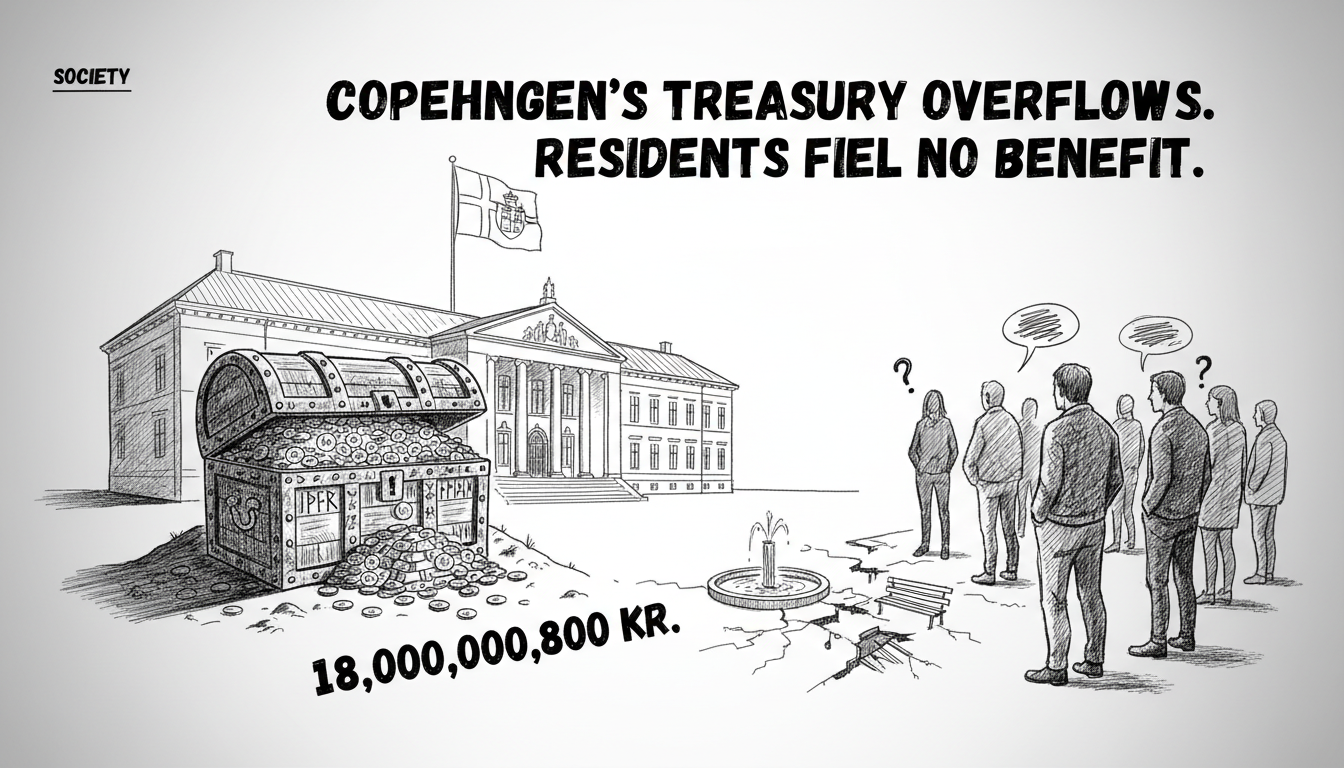
Copenhagen Municipality now holds one of the largest municipal savings in Danish history. The city's treasury contains over 18 billion kroner. This equals nearly 30,000 kroner for every Copenhagen resident. Yet citizens report seeing little improvement in public services.
The massive reserve raises questions about municipal financial management. Danish municipalities operate under a unique Scandinavian welfare model. They provide most public services directly to residents. These include schools, elderly care, and local infrastructure. The accumulation represents funds not spent on current public needs.
Why does Copenhagen maintain such substantial reserves? Municipal officials cite economic uncertainty and future investment needs. They point to upcoming infrastructure projects and potential economic downturns. But critics argue this approach contradicts Nordic welfare principles. The Danish system traditionally emphasizes direct public service provision over large cash reserves.
What does this mean for international observers? The situation demonstrates a tension within Nordic governance. Even prosperous Scandinavian cities face challenges balancing fiscal responsibility with service delivery. Copenhagen's case shows how traditional welfare models adapt to contemporary economic realities.
Local residents express frustration about the disconnect. They note ongoing issues with public services despite the financial surplus. Schools and healthcare facilities continue facing operational challenges. The municipal government faces increasing pressure to justify its savings strategy.
How do Danish municipal finances compare internationally? Nordic countries typically maintain higher local government reserves than many European nations. This reflects their decentralized welfare models and strong fiscal traditions. Yet Copenhagen's current position stands out even within this context.
The political implications are substantial. Municipal elections approach in Denmark. Opposition parties already highlight the reserve as evidence of misplaced priorities. The debate touches fundamental questions about public finance in welfare states.
What happens next? The municipality must decide whether to maintain its current strategy or increase spending. Both choices carry political and economic consequences. The outcome will influence similar debates in other Nordic cities facing comparable situations.