
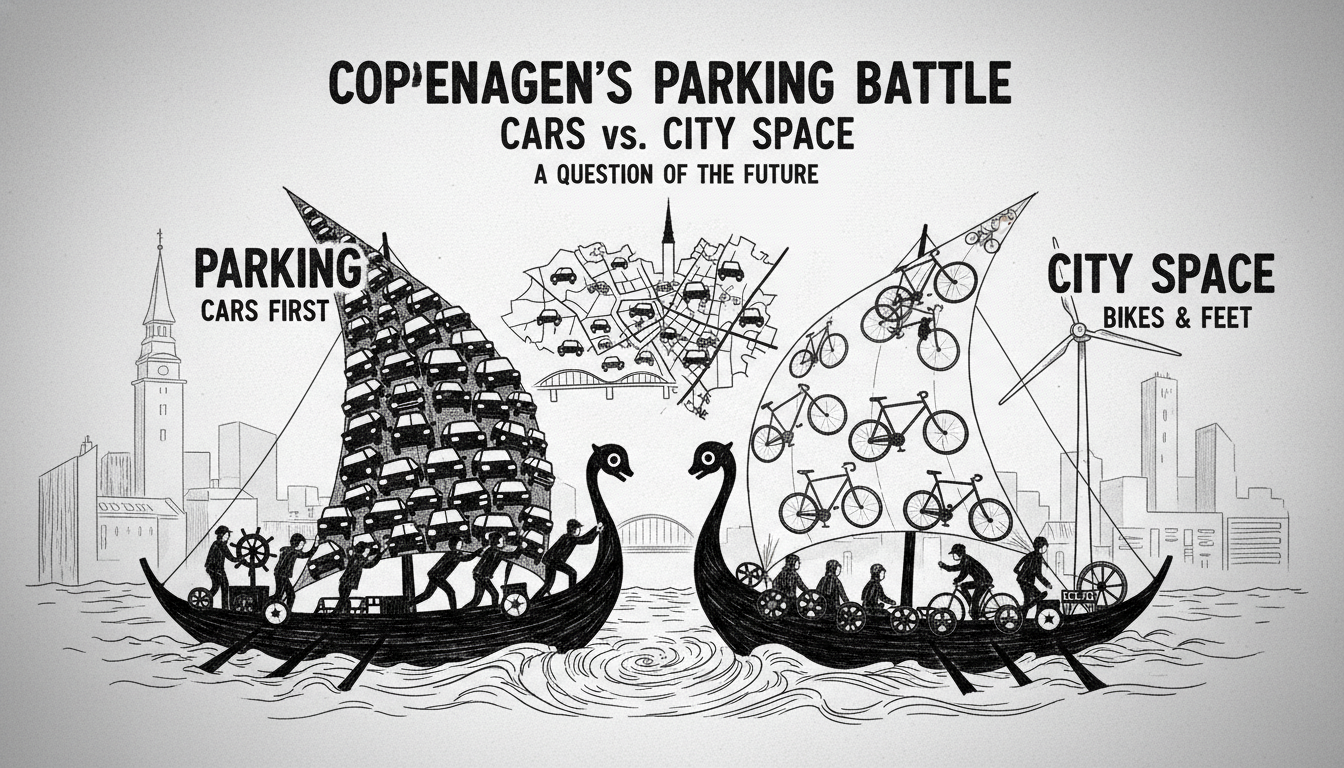
Copenhagen faces a fundamental urban dilemma. Should the city prioritize parking spaces for cars or reclaim that space for cyclists and pedestrians? The political parties at City Hall disagree sharply on this question.
Some parties fight for more parking spots. Others want fewer cars and more room for bicycles and people. This debate reflects a deeper conflict about Copenhagen's future identity.
Enhedslisten, currently the largest party at Copenhagen City Hall, views traffic and parked cars as obstacles to a modern city. They want to create an urban environment that prioritizes space for bicycles, trees, and city life. Johan Ørskov, the party's press officer, explained their vision for transforming Copenhagen's streets.
Socialdemokratiet, Copenhagen's second-largest party, supported removing one-third of all parking spaces after the 2021 municipal election. Now they advocate for more parking spots again. Their reasoning centers on electric vehicles making cleaner car ownership possible. Niels E. Bjerrum, the party's technical and environmental spokesperson, discussed their changing position.
This political shift reveals the complexity of urban planning in Scandinavia's capital cities. Copenhagen has long been a global leader in bicycle infrastructure and sustainable urban design. The current debate tests whether that commitment remains strong as new technologies emerge.
Electric vehicles present both opportunities and challenges for city planners. While they reduce air pollution, they still require parking space and contribute to traffic congestion. The fundamental question remains whether cities should accommodate private vehicles or prioritize alternative transportation.
International observers watch Copenhagen's decisions closely. The city often sets trends that other European capitals later follow. How Copenhagen balances parking demands with urban livability could influence city planning worldwide.
The municipal government's final decision will affect daily life for Copenhagen's residents. It will determine how people move through the city, where they can park, and what public spaces become available for community use.
This parking debate connects to larger questions about urban sustainability. Cities worldwide struggle to reduce their environmental impact while maintaining accessibility. Copenhagen's approach could offer valuable lessons for other metropolitan areas facing similar challenges.
The political negotiations at City Hall will shape Copenhagen's physical landscape for years to come. The outcome will reveal whether Denmark's capital continues its pioneering approach to urban design or adopts a more car-friendly stance.