
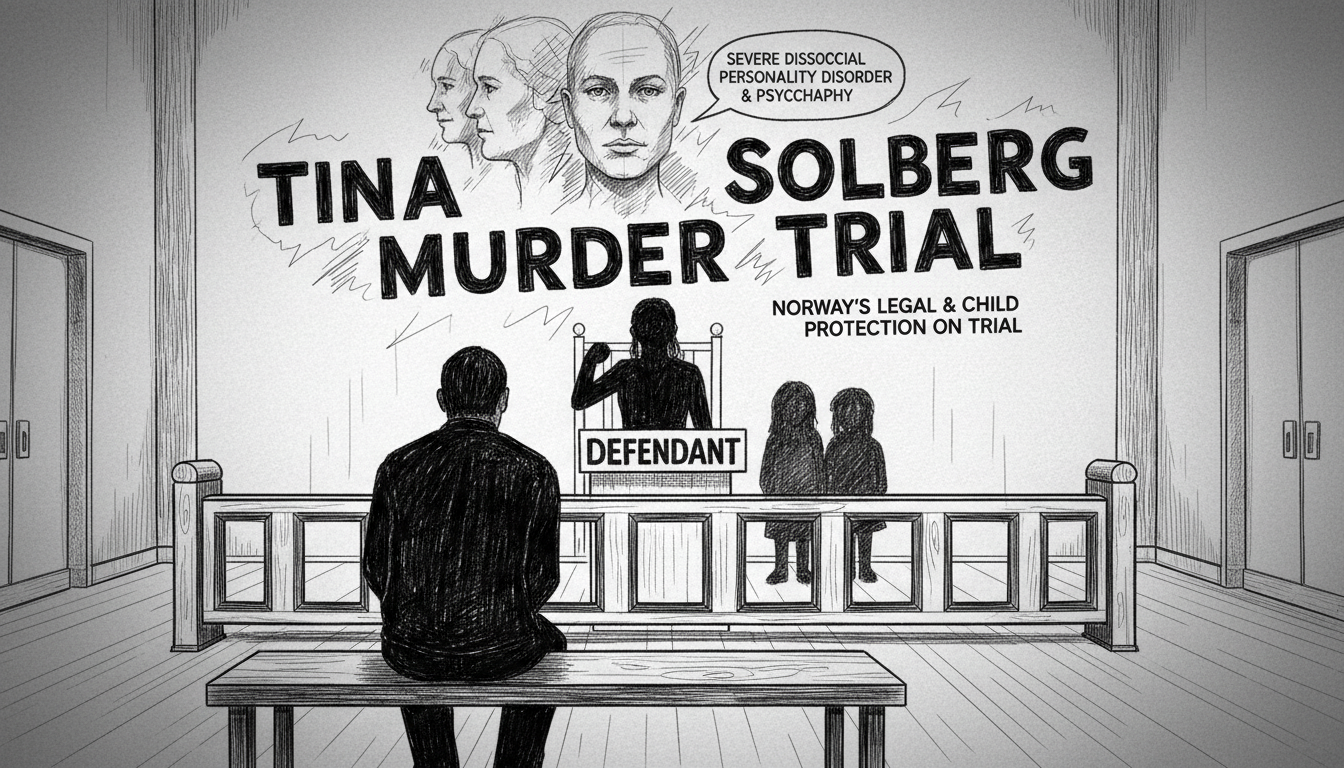
The trial for the murder of Tina Milena Solberg is nearing its conclusion. The 33-year-old mother of two was found dead in a burned-out car in Øygarden on January 7. Her former partner and father of her children has confessed to the killing and desecration of the body. He denies abusing the children. The children told police about a childhood marked by violence. They were in the house when their father killed their mother. The mother was strangled to death in one of the children's rooms. The defendant himself described this in the Hordaland District Court. On Thursday, court-appointed psychiatric experts presented their report. The report was signed by psychiatrist Gunnar Johannessen and specialist psychologist Ida Øverdal Stafsnes. They stated the defendant has a severe dissocial personality disorder. This diagnosis also includes psychopathy. The experts pointed to a particular lack of empathy and remorse. They also cited the defendant's threats and history of prior violence. The defendant discussed this violence himself during the trial.
This tragic case highlights critical aspects of Norway's justice and social welfare systems. Norway is often praised for its low crime rates and progressive social policies. Yet cases like this reveal severe failures in protecting vulnerable individuals. The children's testimony about a violent upbringing suggests multiple system failures. Child protection services, police, and social workers may have missed warning signs. The fact the murder occurred in the family home is deeply troubling. It points to a domestic environment where extreme violence was normalized.
The psychiatric assessment will play a crucial role in sentencing. Norwegian law considers the mental state of the defendant. A finding of severe personality disorder can influence the court's decision. It may affect whether the defendant receives a prison sentence or compulsory mental health care. The court must balance punishment with considerations of public safety and treatment. This case also raises difficult questions about parental rights and child protection. The children witnessed the ultimate act of domestic violence. Their long-term psychological care will be a significant concern. The Norwegian welfare state has a responsibility to support them fully.
For international observers, this case contradicts the idyllic image of Scandinavian societies. Norway consistently ranks high in global happiness and quality of life indexes. However, domestic violence and severe crime exist here as they do elsewhere. The Nordic model provides strong social safety nets. Yet it cannot always prevent interpersonal violence behind closed doors. The upcoming verdict will be closely watched. It will test Norway's legal approach to crimes involving severe mental disorders. The outcome will also signal how the system values the testimony of traumatized child witnesses. The priority must be the future safety and healing of the two children left behind.