
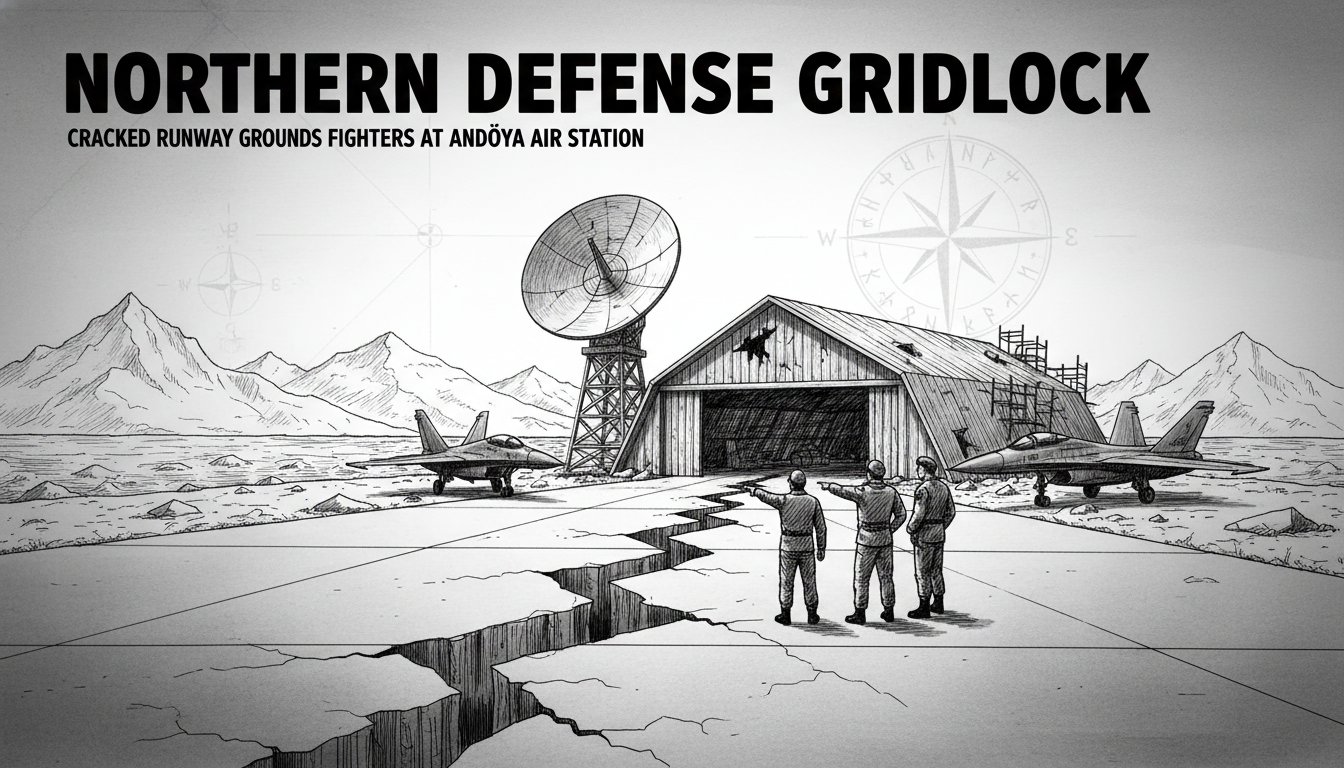
Norway's critical Arctic defense infrastructure faces a severe test. The Andøya Air Station in Nordland county can no longer receive fighter jets. Large cracks have appeared in the runway's concrete, forcing a partial closure. This failure comes just as the government plans a major strategic expansion of the base. The situation reveals deep challenges in maintaining Norway's northern flank.
The station's leadership expressed clear frustration. They receive weekly requests to land aircraft they must now refuse. The temporary chief sergeant, a veteran of Andøya, called the situation very unfortunate. The station chief confirmed the runway's condition was worse than initial assessments suggested. Officials stated the problems stem from years of deferred maintenance.
This decay has a direct political origin. The Norwegian Parliament, the Storting, voted to close Andøya Air Station eight years ago. Operations continued under a winding-down mandate. Maintenance budgets were systematically deprioritized during this period. The long-planned closure created a ticking time bomb for the base's physical infrastructure.
Policy then reversed dramatically last spring. The government's new long-term defense plan announced a massive investment in Andøya. The station is slated to become a hub for allied reception, activities linked to the adjacent Andøya Space center, and a base for new long-range surveillance drones. The announcement initially brought celebration to the isolated station.
The mood quickly sobered. Station personnel soon realized the scale of the task ahead. The station chief noted that the workload became apparent immediately. Each new inspection revealed more problems than expected. The gap between ambitious policy and degraded reality now stares defense planners in the face.
This failure carries significant implications for Norwegian security policy and NATO's northern posture. Andøya's location above the Arctic Circle is strategically vital for monitoring the North Atlantic and the Barents Sea. A non-functional runway undermines rapid response capabilities in a region of growing geopolitical tension. It also questions the feasibility of the government's new Arctic defense strategy if core infrastructure is crumbling.
The incident highlights a recurring issue in Norwegian public administration. Long-term planning cycles often clash with the immediate needs of physical assets. The oil and gas industry, familiar with maintaining installations in harsh environments, would rarely allow such decay. The government must now fast-track repairs. This will require diverting funds and resources in an already strained defense budget.
What happens next will test the government's commitment to its own Arctic policy. Quick, effective repairs are essential to restore confidence. The situation at Andøya serves as a stark reminder. Grand strategic announcements in Oslo must be matched by diligent upkeep on the ground, especially in the demanding Arctic environment.