
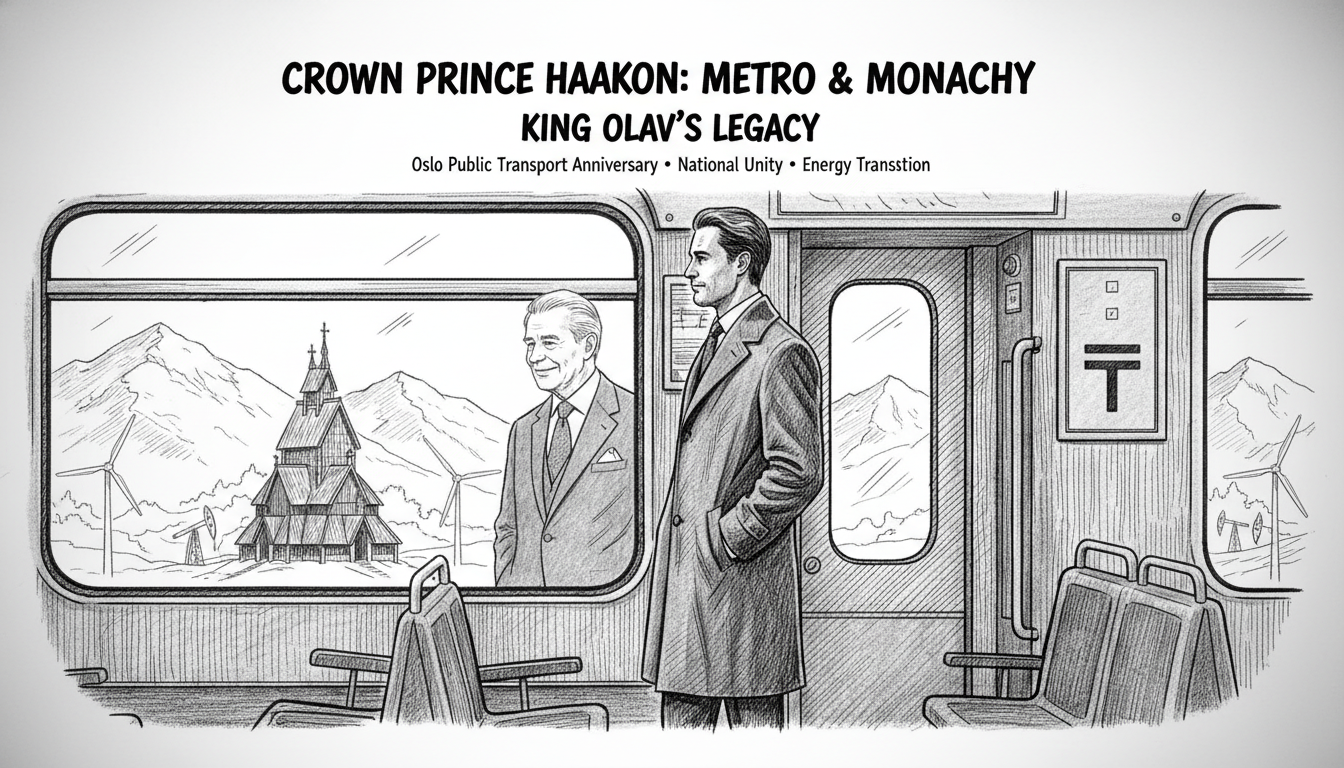
Crown Prince Haakon of Norway boarded a regular Oslo Metro train with fellow commuters on Tuesday. The event marked the 150th anniversary of public transport in the capital. His simple journey from Ryen to Majorstuen station sparked immediate comparisons to his grandfather, the late King Olav V. This deliberate act of public symbolism carries weight in Norway's political and cultural landscape. It connects the monarchy's modern role to a legacy of national unity, especially during times of economic strain.
The image of Crown Prince Haakon on the T-bane directly recalls an iconic moment from the 1973 oil crisis. Then, King Olav famously took a tram to go skiing in the Nordmarka forest. Weekend private driving was banned due to gasoline rationing. The king traveled with his skis under his arm, attempting to pay his fare with a ten-krone note. That photograph cemented his reputation as the 'people's king,' a monarch who shared in the nation's hardships. The current Crown Prince's journey is a conscious echo of that solidarity.
This symbolism arrives amid complex debates over Norway's energy future and Arctic policy. The Storting continues to balance its massive oil and gas industry, centered on fields like Johan Sverdrup in the North Sea, with a transition to renewable energy. Public transport investment is a key part of urban climate policy. By choosing the metro, the Crown Prince subtly aligns the royal house with values of sustainability and collective responsibility. It is a non-political gesture with deep political resonance.
Observers note the weather was cold and damp with sleet during the anniversary event. The Crown Prince first visited employees at the T-bane workshop on Ryen. These technicians maintain the wheels and systems for Oslo's transit authority. He then boarded a scheduled service train to Majorstuen. The act was carefully staged yet presented as ordinary. It demonstrates the Norwegian monarchy's enduring strategy of accessible dignity.
The monarchy's role in Norway remains constitutionally limited but culturally significant. It serves as a stable symbol above the daily fray of politics in the Storting building. Gestures like this travel reinforce that position. They connect the institution to everyday Norwegian life, from the fjord communities to the oil platform workers. In an era of high energy prices and geopolitical tension in the Arctic, such unifying symbols are carefully deployed. The Crown Prince's metro ride is less about transportation and more about continuity. It reminds the public that the monarchy sees itself as part of the national fabric, not separate from it. This is a calculated and effective piece of public relations that strengthens the institution's brand.