
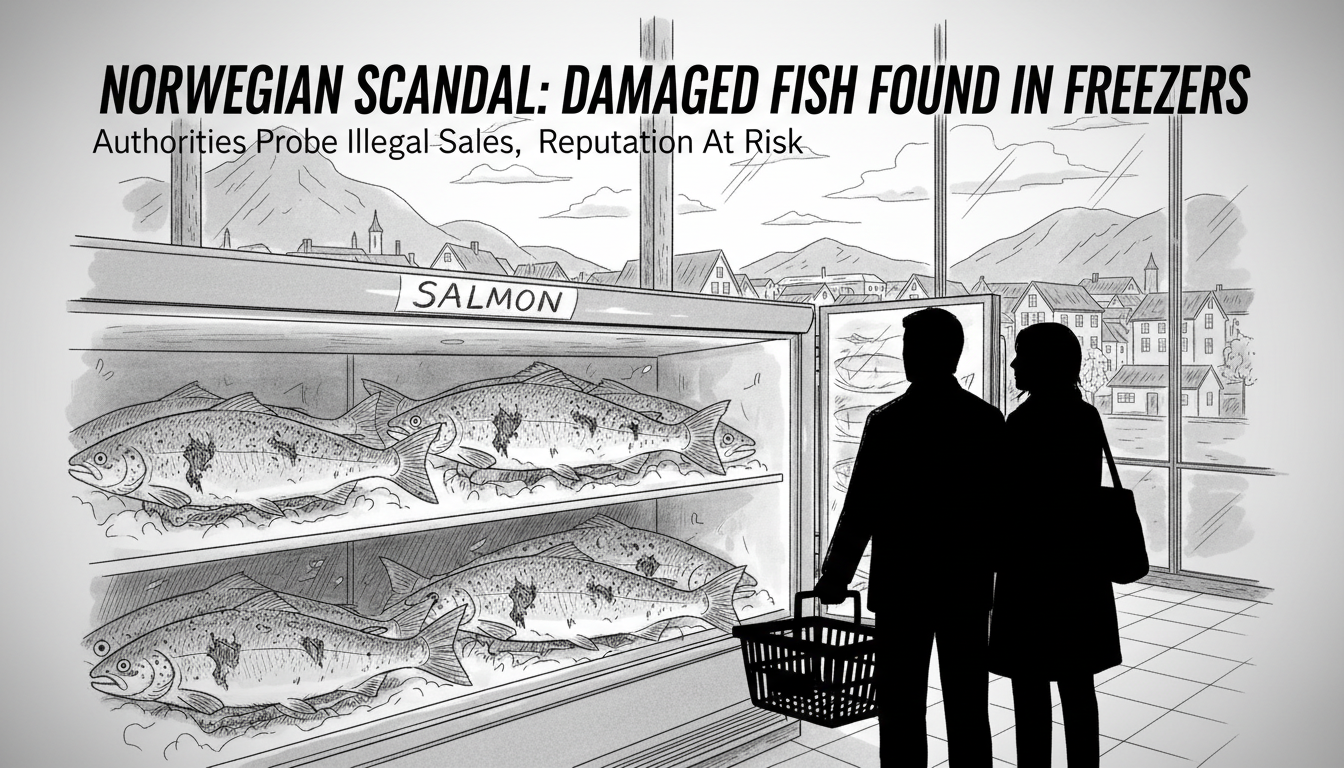
Norwegian food safety authorities are investigating the discovery of damaged farmed salmon in supermarket freezers. The fish, bearing deep dark lesions on its skin, was found in a Bergen discount store. This violates strict regulations prohibiting the sale of such fish for human consumption. The incident raises serious questions about supply chain oversight in Norway's vital seafood sector.
The fish was located in the frozen goods section of the Holdbart discount chain in Åsane, Bergen. It was labeled as premium quality but showed clear signs of skin damage. Nearly 1,000 kilograms of this product had entered the retail market. The fish had been frozen for nearly two years and lacked proper expiration date labeling, which is a separate regulatory breach.
Senior inspector Gunn Teigene from the Norwegian Food Safety Authority stated the situation was regrettable. The authority confirmed selling such fish contravenes established rules. The producer, Salten Salmon, acknowledged a failure in its quality sorting process. Managing director Jarle Solemdal explained the fillets were intended for a production line where the skin is removed.
This is not the first compliance issue for Salten Salmon. Israeli authorities previously flagged the company for exporting damaged salmon fillets. The broader industry context is concerning. Last year, 17 percent of all Norwegian farmed salmon had sores and injuries. This spring, that figure approached 40 percent in some periods. Causes include jellyfish attacks, bacteria, and the physical removal of sea lice.
The discovery follows recent revelations about the illegal export of damaged fish. The National Authority for Investigation and Prosecution of Economic and Environmental Crime believes such smuggling occurs on a large scale. The Customs Service suspects the worst cases involve organized crime. A recent documentary traced illegally exported fish from five different Norwegian processors to a European factory.
In response, Salten Salmon published a statement on its website. Jarle Solemdal wrote that the entire Norwegian processing industry benefits from cracking down on non-compliant actors. The company claims it has since invested in automatic equipment for better sorting. It maintains a strong self-interest in ensuring all fish is correctly processed, citing its factory's existence and over 100 employees.
The store chain, Holdbart, removed the fish immediately upon being contacted. Manager Thor Johansen said the chain was unaware selling such fish was forbidden. Holdbart specializes in selling bulk items at low prices. Johansen also admitted to a labeling failure, promising to improve routines so customers always receive dated products.
The Norwegian Food Safety Authority clarifies that salmon with sores is not necessarily dangerous to eat. The primary issue is consumer trust. Lesions increase the risk of a poor product experience, which can undermine confidence in Norwegian seafood. All food must have clear date marking.
The fish was sold through Seafood Brands to the wholesaler Domstein. Both companies stated they had no reason to doubt the product's quality based on the information provided. Domstein has taken self-criticism, admitting it should have inspected the shipment more closely before it reached Holdbart. The company confirmed systemic sores and faults on the fillets after examining the two pallets, totaling roughly 1,000 kilos. The salmon has been withdrawn from the market.
The Food Safety Authority will follow up with both Holdbart and Salten Salmon. This case exposes vulnerabilities in a high-value export industry. Norway's reputation for pristine seafood is a cornerstone of its maritime economy. Repeated failures in quality control and evidence of illegal exports suggest systemic problems that regulators and industry leaders must address with greater urgency. For international buyers and consumers, it highlights the importance of rigorous traceability in complex global food supply chains.