
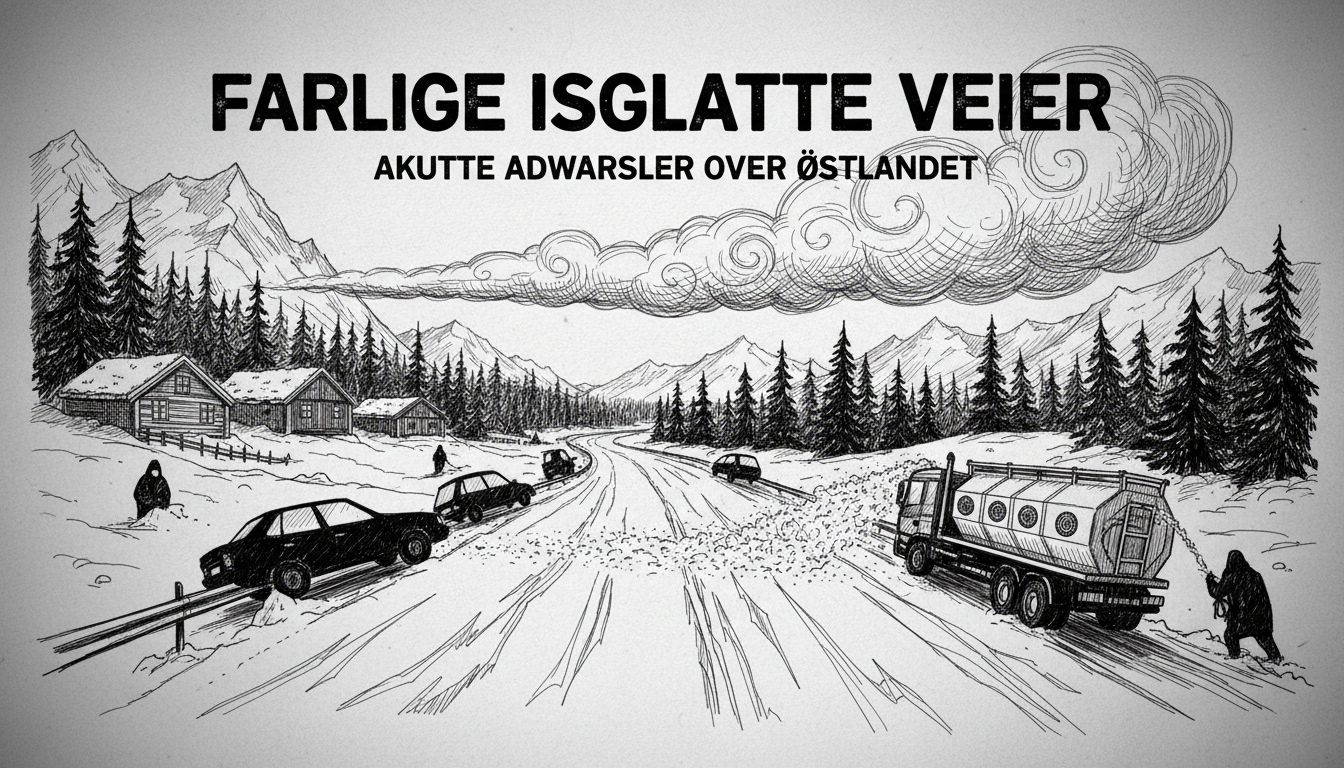
Transport authorities are urging drivers to avoid unnecessary travel as treacherous icy conditions grip Eastern Norway. Multiple vehicles have slid off roads and become stranded in ditches overnight.
Road conditions remain particularly hazardous in the Innlandet region. Areas around Elverum, Hamar, and Gjøvik are experiencing extremely slippery surfaces due to freezing rain. The challenging conditions have forced road maintenance crews to adopt unusual measures.
One salt truck driver had to reverse along the entire stretch of a major highway while spreading salt. This unusual approach demonstrates just how dangerous the road surfaces have become. Several other motorists have pulled over along highways 2 and 3, waiting for salt trucks to improve driving conditions before continuing their journeys.
In Haugesund, a traffic accident occurred on the slick roads. Police confirmed four people were in the vehicle involved, but fortunately none sustained injuries. The incident highlights the widespread nature of the hazardous conditions affecting multiple regions.
Norwegian winter driving conditions frequently challenge even experienced motorists. The country's mountainous terrain and coastal climate create unpredictable weather patterns. Freezing rain represents one of the most dangerous winter hazards, creating nearly invisible sheets of ice on road surfaces.
International drivers visiting Norway should note that winter tires are mandatory from November through April. Many rental cars come equipped with studded tires for additional traction. Still, authorities consistently advise against non-essential travel during severe weather events like the current freezing rain situation.
Local emergency services typically see increased call volumes during such conditions. The current situation reflects broader challenges facing Nordic countries as climate patterns shift. While Scandinavians are accustomed to harsh winters, freezing rain presents unique dangers that require extra caution from all road users.
Transport officials emphasize that the safest approach during such conditions involves postponing travel when possible. For those who must drive, reduced speed and increased following distance become critical safety measures. The current weather system appears likely to maintain its grip on the region through the morning hours.