
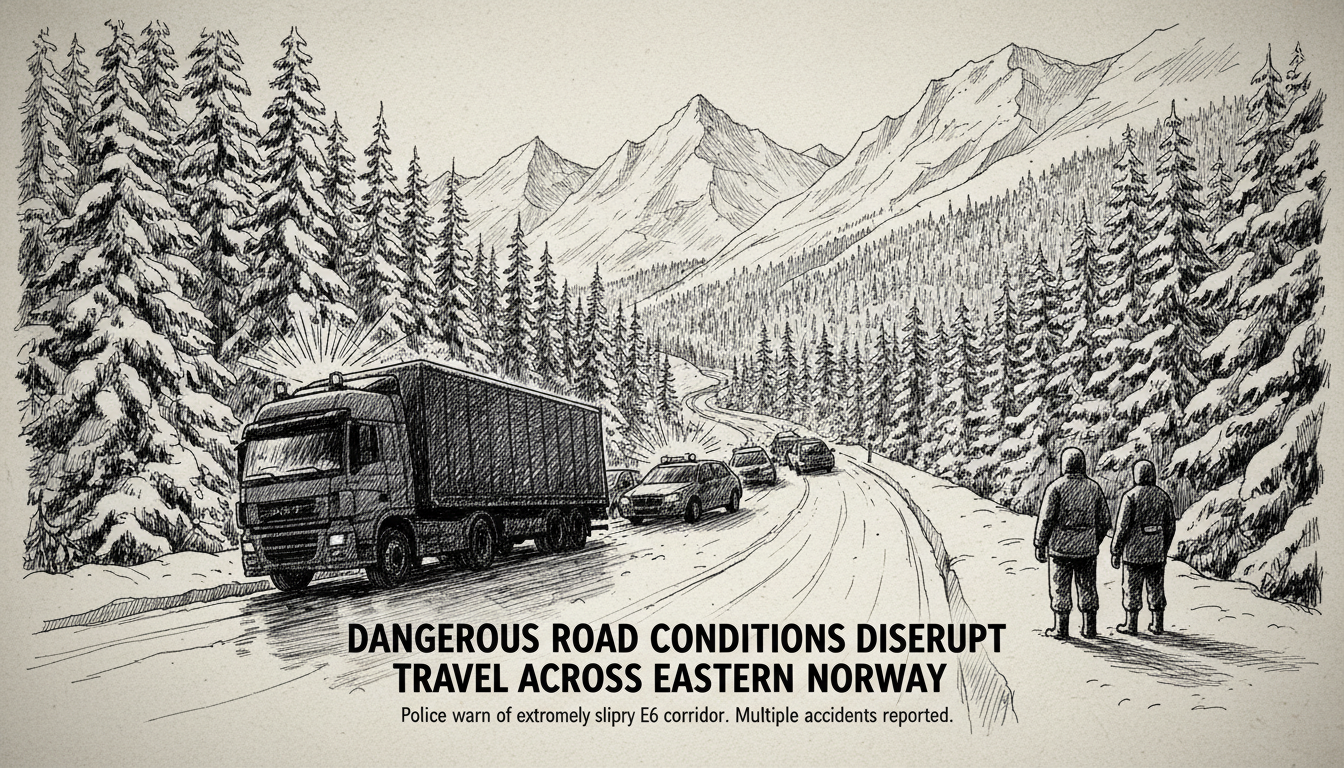
Police are warning drivers about extremely slippery roads across eastern Norway. Operations chief Pål Gjestvang issued a direct warning to motorists. He specifically highlighted hazardous conditions on the E6 highway between Hamar and Moelv. Authorities recorded multiple traffic accidents throughout the region. One incident occurred along National Road 25 at the Åkersvika roundabout in Hamar. No injuries were reported despite the dangerous conditions. The Road Traffic Center also cautioned drivers about Route 3 between Rena and Alvdal. These warnings come during peak morning travel hours when commuters fill the roads.
Eastern Norway's challenging winter conditions regularly test the country's infrastructure systems. The E6 highway serves as a critical transportation artery connecting major population centers. This vital route facilitates commerce between Oslo and northern regions. Road maintenance during winter months represents a substantial public expenditure. Norway's extensive tunnel and mountain pass networks require constant monitoring. The national road administration employs advanced weather monitoring technology. Yet sudden temperature shifts can create unexpected black ice conditions.
International visitors should understand Norway's unique driving challenges during winter months. The country experiences dramatic temperature fluctuations that create perfect conditions for black ice. Mountainous terrain and numerous fjords complicate road maintenance operations. Norwegian drivers typically use winter tires from November through April. Many vehicles also employ studded tires for additional traction. The government maintains an extensive network of roadside assistance services. Still, accidents increase significantly during transitional weather periods.
Transportation disruptions have broader implications for Norway's economy and energy sector. Delayed shipments can affect supply chains for offshore installations. The petroleum industry relies heavily on efficient land transportation. Key equipment often travels along these affected routes to coastal terminals. Any extended highway closures could impact operational timelines. This demonstrates the interconnected nature of Norway's infrastructure systems. Reliable transportation remains crucial for maintaining the country's economic output.
Norwegian authorities maintain sophisticated response protocols for winter emergencies. The national road administration deploys salt and gravel trucks strategically. Police coordinate closely with regional traffic centers during hazardous conditions. Drivers receive real-time updates through multiple communication channels. These systems generally prevent major incidents despite challenging weather. Today's conditions serve as a reminder that nature ultimately dictates travel safety. Motorists should always exercise extreme caution during Norwegian winters.