
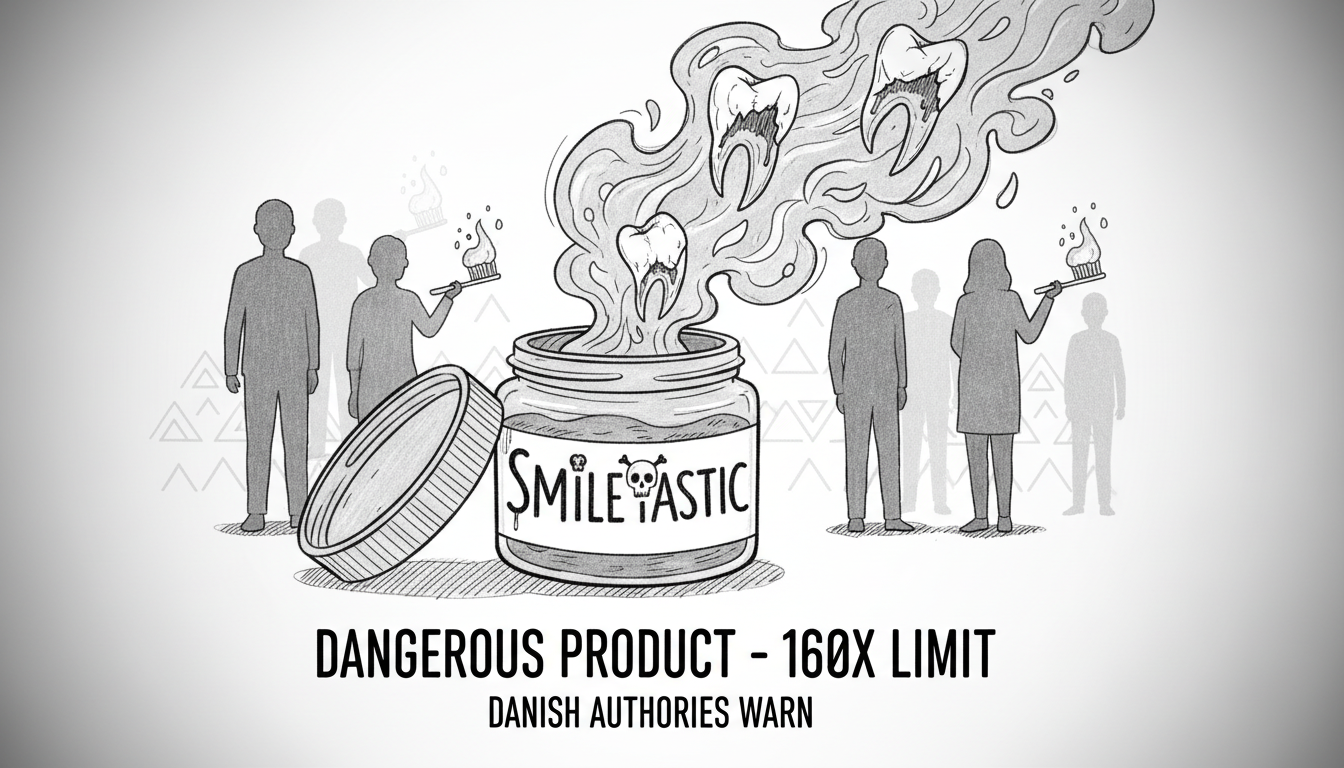
Danish environmental authorities have issued a strong consumer warning about Opalescence whitening gel sold online by Smiletastic. The product contains dangerously high levels of hydrogen peroxide that exceed legal limits.
The Environmental Protection Agency discovered hydrogen peroxide concentrations reaching 16 percent in the teeth whitening gel. This amount is 160 times higher than permitted levels under European safety regulations. The agency classifies the health risks as serious for consumers.
Using products with excessive hydrogen peroxide can cause multiple dental problems. Users may experience increased tooth sensitivity and gum irritation. The chemical can also damage tooth enamel and cause burns to mouth tissues.
Smiletastic previously received orders to recall the product from chemical inspectors. The company failed to comply with these recall instructions. This lack of action prompted the public warning from environmental authorities.
The specific products involved include Opalescence whitening gels in mint and melon flavors. Chemical inspectors identified the dangerous products during routine monitoring of online teeth whitening products sold to Danish consumers.
Authorities urge anyone who possesses these products to immediately stop using them. Consumers should dispose of the gels properly to prevent accidental use.
The agency also reminds online shoppers to exercise caution when purchasing personal care products. Recommended websites clearly display compliance with EU chemical and cosmetic legislation. This transparency helps consumers identify legitimate sellers.
Chemical inspectors have shared case information with authorities in other countries. This international cooperation aims to prevent cross-border sales of dangerous products.
This situation highlights ongoing challenges with unregulated online marketplaces. Despite EU-wide safety standards, consumers still face risks from non-compliant products sold through digital channels. The Danish case demonstrates how national authorities must actively monitor e-commerce to protect public health.
Nordic countries typically maintain strong consumer protection systems, but online sales create new enforcement difficulties. International cooperation becomes essential when companies operate across borders while ignoring safety regulations.
Danish consumers generally enjoy high levels of product safety, but this incident shows vulnerabilities in the digital marketplace. Authorities continue working to adapt traditional consumer protection methods to online shopping environments.