
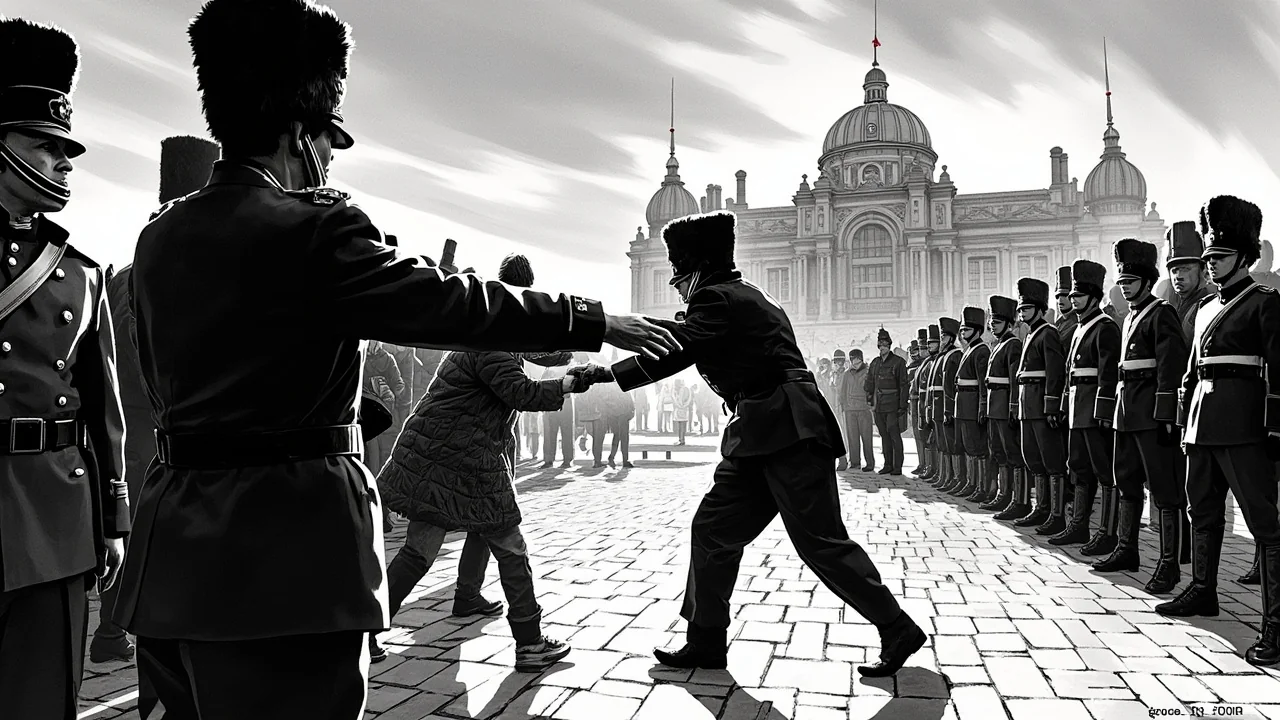
A Danish Royal Life Guard who pushed climate activist Oskar Kluge to the ground on New Year's Eve at Amalienborg Castle has been cleared of all charges. The incident, which occurred moments after King Frederik's New Year's speech, highlights the tension between protest rights and royal security protocols in Danish society.
Security Protocols Override Protest Rights
The Forsvarsministeriets Auditørkorps (Defense Ministry Prosecutor Corps) concluded that the guard acted within legal bounds when he shoved 24-year-old Kluge, who was displaying a banner reading "Climate Collapse, Pull the Emergency Brake." According to Kristeligt Dagblad, Kluge had entered a restricted area of the castle square to demonstrate.
The guard's actions followed a clear chain of command. An inspecting officer had already removed Kluge from the restricted zone and ordered him to leave. When Kluge returned and positioned himself close to the guard formation, the same officer ordered the guard to push the activist away to clear space for the royal parade.
"I have always been convinced that my action on New Year's Eve was correct within the framework we operate under," the anonymous guard stated on the Royal Life Guard's Facebook profile. "The process has been a personal burden, but I have been very grateful for the support I have received."
Danish Monarchy Gets Stronger Protection Than Nordic Neighbors
This case reveals how Danish authorities prioritize royal security over individual protest rights, even for peaceful demonstrations. The legal framework protecting royal ceremonies in Denmark grants security forces broad discretion to remove protesters, even when demonstrations remain non-violent. Kluge was subsequently charged with disturbing public order and removed from the area.
Public reaction strongly favored the guard's response. According to Jyllands-Posten, the guard was widely praised for his reaction, suggesting broad Danish support for protecting royal ceremonies from disruption.
This approach contrasts sharply with Sweden, where climate activists regularly protest outside the Royal Palace in Stockholm with minimal physical intervention. Norway's royal security similarly tolerates peaceful demonstrations near royal residences, focusing on dialogue over force.
Denmark's zero-tolerance stance toward royal disruption reflects the monarchy's central role in Danish national identity. Unlike Sweden's more ceremonial monarchy, Danish royals maintain higher public visibility and stricter security protocols. Climate activists targeting future royal events should expect immediate physical removal and criminal charges, regardless of their message's urgency.
Read more: Future of Danish Prison Reform Secured, Says Prison Service ....
Read more: New 'Classmate' Tage Hensyn Helps Danish Students Navigate C....