
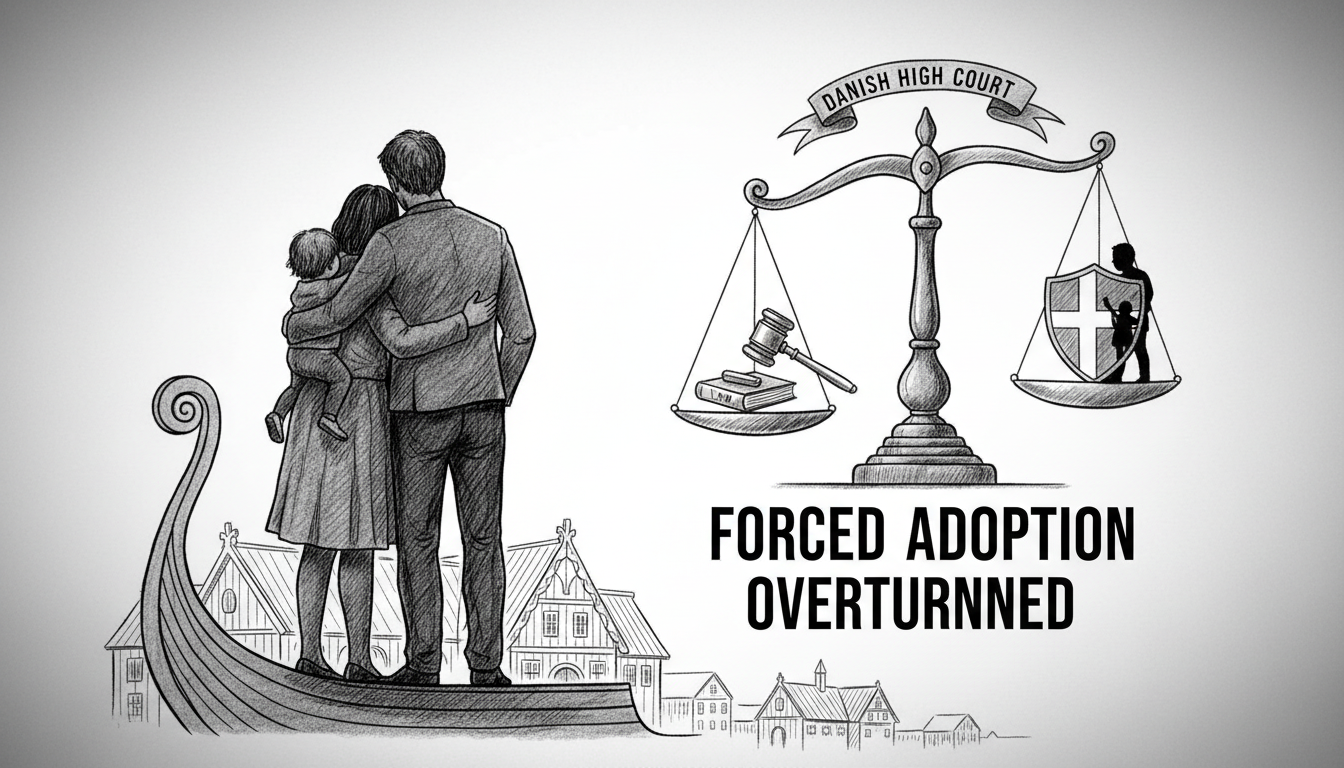
A Danish high court has overturned the forced adoption of a two-year-old boy from Brønderslev. The landmark decision questions the municipality's justification for removing the child from his biological parents. The ruling represents a rare victory for families challenging Denmark's child protection system.
The Western High Court annulled the adoption that occurred without parental consent. The child had lived with adoptive parents for eighteen months. This case highlights ongoing debates about parental rights in Denmark's welfare system.
Forced adoption remains controversial across Nordic countries. Denmark's system grants municipalities substantial power in child protection cases. This decision signals potential shifts in judicial oversight of such interventions.
The case began when Brønderslev Municipality intervened citing concerns about the child's welfare. Authorities placed the toddler with adoptive parents while legal proceedings continued. The biological parents maintained their capability to provide adequate care throughout the process.
Nordic child protection systems often face international scrutiny for their intervention rates. Denmark's approach typically emphasizes child safety over family preservation in risk assessments. This ruling may influence how municipalities document and justify future interventions.
What happens next for the family? The court's decision requires transitioning the child back to his biological parents. This process will involve careful planning and professional support. Child psychologists emphasize the importance of gradual transitions in such cases.
The case has sparked discussions about reform possibilities in Denmark's family law. Some legal experts suggest this could lead to stricter requirements for forced adoption cases. Others caution against drawing broad conclusions from a single ruling.
International observers often compare Nordic child protection models. Denmark's system shares similarities with Sweden and Norway but maintains distinct legal frameworks. This case demonstrates how courts can check administrative decisions in family matters.
The biological parents expressed relief at the court's decision. They described the lengthy legal battle as emotionally draining but necessary. Their case attracted support from parental rights advocates across Denmark.
Municipalities now face increased scrutiny when considering forced adoption. The ruling emphasizes the need for thorough documentation and alternative solutions before permanent separation. This could change how social workers approach complex family situations.
For expatriate families in Denmark, this case illustrates the importance of understanding local child protection laws. Cultural differences in parenting practices sometimes create challenges within Denmark's welfare system. The ruling reinforces that legal recourse exists for families disputing interventions.