
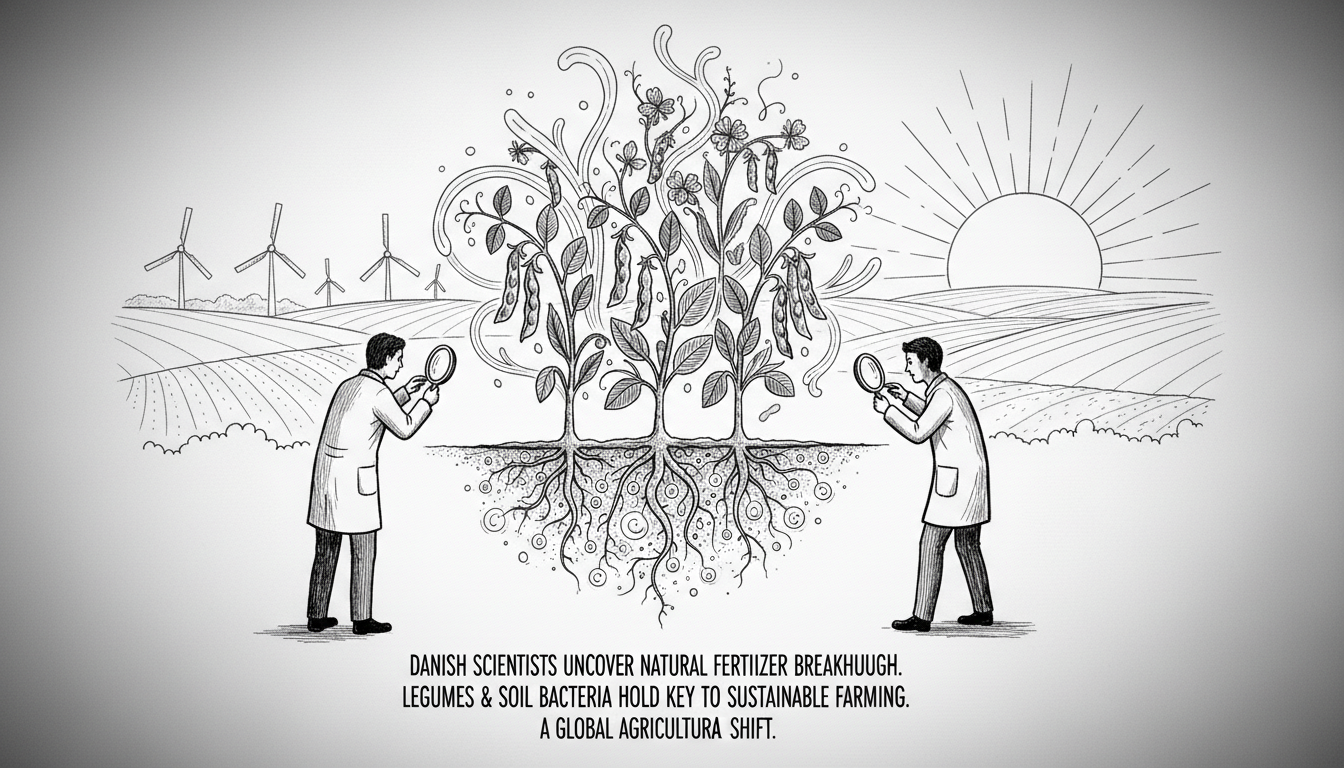
Danish researchers have uncovered how legumes grow large without synthetic fertilizers. Their discovery could transfer to vital crops like wheat, barley, rice, and corn. This breakthrough comes at a crucial time for global agriculture facing fertilizer shortages and environmental concerns.
Look closely at this legume with yellow flowers. It is a Japanese kudzu plant. This species does something most plants cannot achieve. It lives in close symbiosis with soil bacteria, just like peas, beans, and broad beans. These plants never need artificial fertilizer to thrive.
Soil bacteria reside in small nodules within the legume's root system. They extract nitrogen directly from the atmosphere. Then they convert it into nitrogen compounds the plant uses for growth. In return, the bacteria receive sugars from the plant's photosynthesis process.
This natural nitrogen fixation could revolutionize farming practices worldwide. Modern agriculture depends heavily on synthetic fertilizers. These fertilizers require massive energy to produce and can harm the environment. The Danish discovery offers a sustainable alternative.
Researchers now work to transfer this natural ability to staple food crops. Success could reduce farming's environmental impact dramatically. It would also lower production costs for farmers globally. The timing is critical with rising fertilizer prices and climate challenges.
Danish research institutions have long led agricultural innovation. Their practical approach to scientific problems often delivers real-world solutions. This latest finding continues that tradition of impactful research.
The implications extend beyond Denmark's borders. International agricultural companies monitor these developments closely. Widespread adoption could change global food production systems fundamentally. Farmers might eventually grow major crops without chemical fertilizers.
What comes next? Scientists must identify the specific genetic mechanisms enabling this symbiosis. Then they need to replicate these processes in non-legume crops. The research team anticipates several years of development before practical applications emerge.
This discovery represents a potential turning point for sustainable agriculture. It demonstrates how natural systems can inspire technological solutions. The Danish approach shows that sometimes the best innovations come from understanding nature's existing wisdom.