
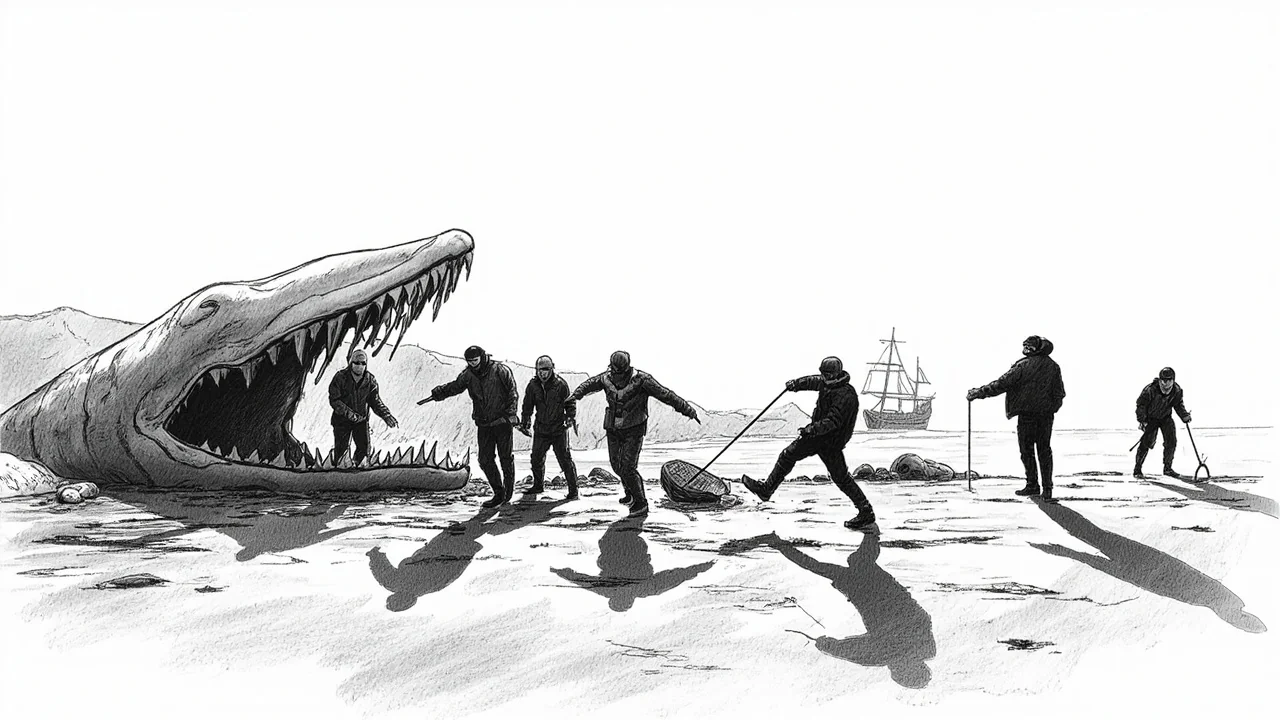
Denmark's theft of a sperm whale jawbone from Blåvandshuk Fyr presents a stark paradox: thieves have taken a item nearly worthless on illegal markets yet priceless for scientific research, crippling future studies at Copenhagen's Natural History Museum. As Danish business correspondent Lars Hansen, I see this not just as a crime but as a trade scandal that undermines Denmark's compliance with international conventions and threatens long-term economic value from research investments. The stolen jawbone, from one of two sperm whales stranded on Danish coasts within weeks, highlights vulnerabilities in protecting natural heritage that could ripple through trade and scientific sectors.
The Illicit Take and Immediate Fallout
Unknown perpetrators stole the jaw and teeth from the stranded sperm whale at Blåvandshuk Fyr this week, an act that immediately hampered research efforts. Conservator Mikkel Høegh Post from Statens Naturhistoriske Museum in Copenhagen called it "super ærgerligt" or very annoying, emphasizing the loss of critical data. The museum, located in the heart of Copenhagen's cultural district, relies on such specimens for expansive collections that drive future scientific inquiry. This theft reduces their series from two whales to one, limiting comparative studies essential for understanding species dynamics over time. In business terms, it's a direct hit to asset valuation in Denmark's knowledge economy, where museum collections represent untapped economic potential through tourism and innovation.
Scientific Setback in Copenhagen's Labs
Currently, researchers are processing the jawbone from the second stranded whale near Aalbæk in North Jylland, working amid a thick stench of rotten whale flesh. Mikkel Høegh Post described the scene: the jaw is placed in warm water to accelerate decay, separating bone and teeth from flesh, a process that will intensify. This meticulous work aims to preserve teeth for DNA extraction and future research, but the stolen jaw means a gap in data. Daniel Johansson, a collections employee, labeled the theft "a shame," noting that they collect for 100 to 300 years ahead. Teeth are particularly valuable for DNA, enabling studies on sperm whale distribution, lifestyle, and size changes over centuries. Historically, sperm whales were larger before 18th and 19th-century overhunting, and this research could inform conservation policies with trade implications for Denmark's marine sectors.
CITES: A Trade Barrier for Illegal Markets
The stolen whale jaw and teeth fall under the CITES convention, which controls international trade in wild animals and plants. Daniel Johansson stated, "They are very protected. You are not allowed to trade with them at all." This makes the thieves' loot difficult to sell legally, posing a trade dilemma: while illegal markets might exist, the risk of detection under CITES enforcement is high. For Denmark, as a party to CITES based in Copenhagen where international trade policies often resonate, such thefts could trigger scrutiny in trade reviews, affecting Denmark's reputation in global commerce. The Øresund region, a hub for biotech and green energy, relies on robust compliance with environmental regulations to attract investment, and incidents like this cast a shadow on regulatory oversight.
Museum's Ongoing Efforts and Economic Impact
Despite the theft, the Natural History Museum continues processing the Aalbæk whale jaw, a resource that will contribute to Denmark's scientific capital. Mikkel Høegh Post explained that whole jaws with all teeth allow for extensive research, from genetic analysis to ecological modeling. The loss of the second jaw means missed opportunities for serial comparisons, which could have driven innovations in marine biology or even renewable energy insights, such as bio-inspired designs from whale anatomy. Copenhagen's business districts, like Østerbro where the museum is situated, benefit from such research through collaborations with universities and companies, potentially boosting sectors like Danish renewable energy where natural data informs sustainability projects. However, without both specimens, the economic return on research funding may diminish, affecting grant allocations and public-private partnerships.
Future Research in Jeopardy and Trade Implications
Daniel Johansson emphasized that only imagination limits future uses of such specimens, from tracking climate change impacts to studying evolutionary shifts. The theft undermines this potential, posing a problem for Danish science that requires a solution: enhanced protection for stranded wildlife. As a business correspondent, I analyze this through a trade lens: illegal wildlife trade, even in isolated cases, can lead to broader economic consequences, such as strained international relations or reduced funding for Danish institutions. Copenhagen's stock exchange lists companies in life sciences and environmental tech that depend on reliable research data, disruptions here could indirectly affect investor confidence. Moreover, Denmark's economy today thrives on exports tied to green credentials, and lapses in natural heritage protection could tarnish that image, impacting trade deals in sectors like Danish renewable energy.
Broader Repercussions for Danish Commerce
This incident serves as a cautionary tale for trade and commerce in Denmark. The stolen jawbone, while not a traditional commodity, represents a breach in the chain of custody for protected species, which could have implications for Denmark's standing in conventions like CITES. In the Øresund region, cross-border trade with Sweden often hinges on environmental compliance, and such thefts might prompt stricter regulations, increasing costs for businesses. Quotes from museum staff like Mikkel Høegh Post and Daniel Johansson underscore the human impact, but from an economic perspective, the loss translates to missed revenue from future research publications, patents, or educational programs. As Denmark targets growth in knowledge-based industries, safeguarding scientific assets becomes crucial for maintaining competitive advantage in global markets.
Looking ahead, will Denmark strengthen enforcement against such thefts to protect its scientific and economic interests? The answer may lie in increased collaboration between museums, authorities, and businesses across Copenhagen's districts, ensuring that natural treasures contribute to both research and trade resilience.