
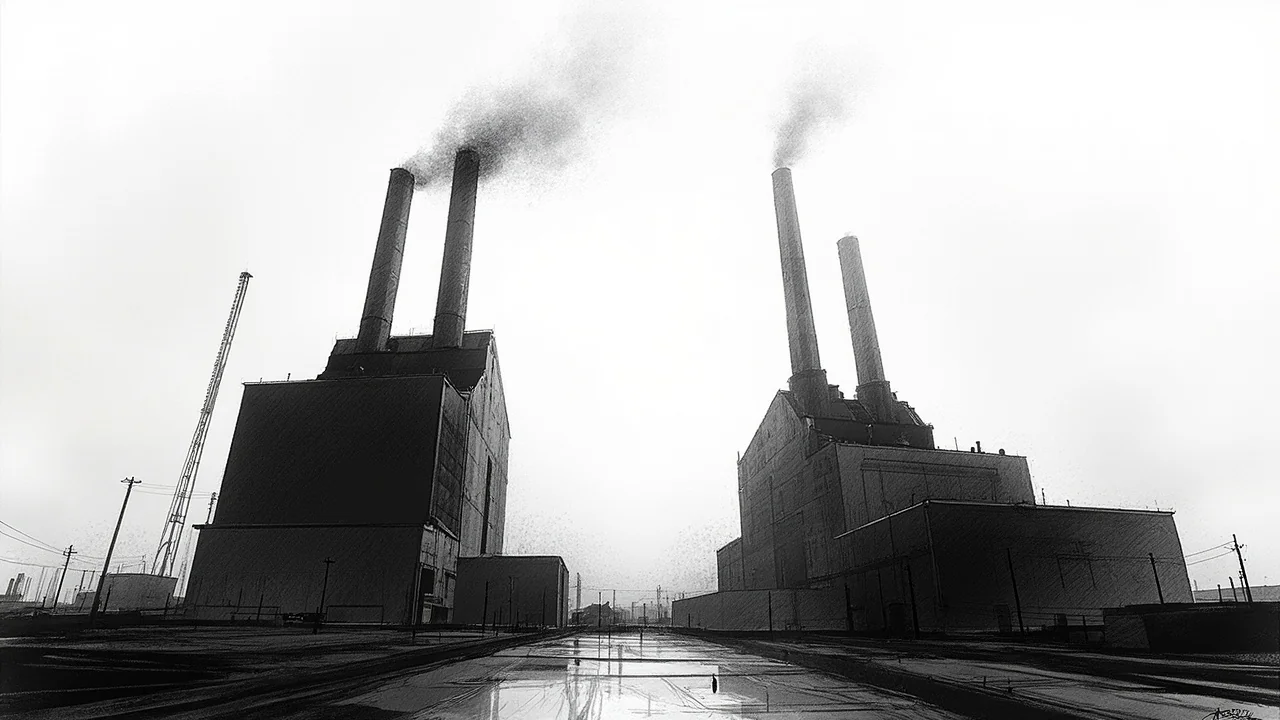
Norwegian metals producer Elkem ASA is halting all production at two of its major industrial plants in Northern Norway, citing unsustainable electricity costs and challenging market conditions that have forced the temporary layoffs of hundreds of workers.
The company announced a complete production stop at its facilities in Salten and Rana in Nordland county, effective Friday. The shutdown idles three furnaces in Salten and two in Rana, directly impacting 375 employees who face temporary layoffs.
A Complete Production Halt
Frode Berg, the plant director at Elkem Rana, confirmed the sweeping nature of the decision. 'We only have the two large furnaces that produce ferrosilicon, and these are being stopped. Consequently, all production is being halted at Elkem Rana,' Berg said. The Salten plant primarily produces silicon. The company states the measure will lead to the temporary furlough of employees, though Berg did not specify an exact number.
'When we take out both furnaces that produce our material, it is obvious that it will have consequences for many of our employees,' Berg added. The Rana plant manufactures ferrosilicon, a critical raw material for the steel industry. The Salten plant's silicon is used in products ranging from ceramics and batteries to aluminum alloys.
Workers Brace for Impact
Jan Harald Karlsen, the chief union representative at the Salten factory, said the 210 employees there have been through similar stoppages before and are taking the news in stride. 'We are familiar with the market being difficult, so it did not come as a surprise, but we had hoped we could avoid this,' Karlsen said. He noted that workers had sensed something was underway given the tough market climate.
The halt is a significant blow to local economies in the region, where such industrial plants are major employers. The decision underscores the vulnerability of energy-intensive industries to volatile power markets, even within Norway, a nation rich in hydroelectric power.
The Perfect Storm of Market Pressures
Company management pointed to a confluence of severe challenges forcing their hand. 'We are in a market that is very demanding. We have a high inventory of ferrosilicon in Europe and we do not have sufficient volume to sell the products we have,' explained Frode Berg.
High electricity prices are the most immediate pressure. 'The electricity prices we have today are above the level at which we are able to produce,' Berg stated. He elaborated that with a weak European market, the company must look to sell elsewhere, but that strategy is also thwarted by energy costs. 'That means the electricity prices are far too high to justify continued operation for those markets.'
Geopolitical factors, including trade barriers, have further complicated the situation. While tariffs on ferrosilicon have increased prices in Europe, Berg noted the core issue remains a lack of market volume to absorb production. 'The challenge is that there is not sufficient volume in the market to sell,' he said.
Norway's Energy Paradox
The shutdown highlights a persistent paradox in Norway's economy. The nation is a major exporter of oil, gas, and hydropower, yet its domestic industry can be crippled by high spot prices on the Nordic power exchange. These prices are influenced by European market dynamics, cable exports, and regional hydrological conditions. For energy-intensive 'grunnindustri' like metals production, which requires vast, consistent power, short-term price spikes can erase operational margins.
This incident is not isolated. It follows a pattern of temporary halts and operational adjustments in Norway's smelting and processing sector over recent years. Each event reignites the debate about long-term industrial policy, the structure of the power market, and how to preserve jobs in regions outside the major urban centers.
The factories in Rana and Salten are key parts of Norway's industrial footprint in the north. Their production feeds into global supply chains for steel, automotive, and technology sectors. A prolonged stoppage could have ripple effects beyond Norway's borders, tightening supply for specific grades of ferrosilicon and silicon.
An Uncertain Path Forward
Elkem ASA has framed this as a temporary, market-driven pause rather than a permanent closure. The duration of the stoppage and layoffs remains unclear, hinging on a drop in electricity prices and an improvement in European market demand for their products. Management's statements suggest they are waiting for the operational calculus to become viable again.
For the 375 workers and their communities, the wait begins. They face a period of uncertainty, reliant on a shift in complex international market forces and the volatile calculus of energy pricing. The situation places immediate pressure on local welfare services and raises broader questions about the future of foundational industry in Norway's high-cost energy environment. Can Norway's traditional heavy industry find a sustainable path forward, or will it continue to operate at the mercy of the power market's peaks and troughs? The idled furnaces in Nordland await an answer.