
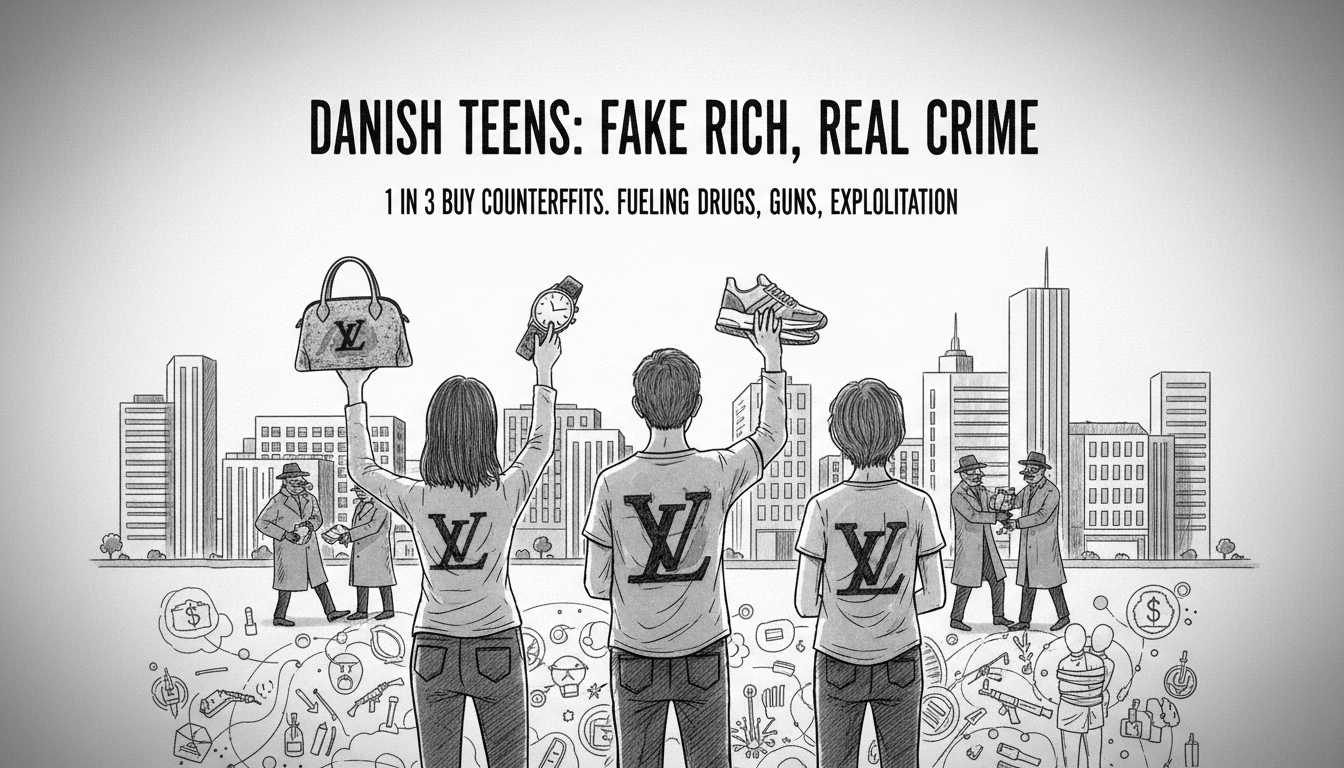
Nearly one in three young people in Denmark has purchased counterfeit goods. In a Copenhagen classroom, students say almost everyone buys fakes.
Thirteen-year-old Ayoub Elias Schmidt attends school wearing Christian Dior shoes. His classmates wear Chanel earrings and clothing from Ralph Lauren, Supreme, and Corteiz. Together, their outfits would cost thousands of dollars if they were genuine.
When asked how many would consider buying counterfeits, all the boys raised their hands. "Should I show you how it's done?" Schmidt asked, already pulling out his phone.
He demonstrated by finding a dark blue Stone Island sweatshirt in under one minute. The fake version cost about $8, while the authentic sweater sells for over $280.
"It's super easy," one boy explained.
These Copenhagen students are far from alone. A 2023 survey shows 29% of Danes aged 15-24 have knowingly bought counterfeit items. More than half consider the practice acceptable.
Barbara Suhr-Jessen, head of Denmark's Patent and Trademark Office, finds this trend concerning. She leads 11 authorities fighting counterfeit goods.
"It's extremely widespread among young people," she said. "Online shopping has made it easier for criminal networks to distribute fakes to everyone."
Buying counterfeit goods supports criminal organizations involved in drug trafficking, illegal weapons, money laundering, and human trafficking. Manufacturers use cheap, harmful materials since they prioritize profit over quality.
Counterfeit production often occurs illegally with no oversight of working conditions. This leaves workers vulnerable to exploitation. Fake goods also steal designs from legitimate brands, causing massive revenue losses.
In 2021, counterfeit products represented up to 4.7% of EU imports, totaling about $107 billion according to OECD and EUIPO reports.
Most fake clothing, shoes, and luxury watches now sell through sophisticated online platforms to global customers. China remains the primary source.
While buying counterfeits isn't illegal in Denmark, selling them carries penalties up to six years in prison.
"When a child buys a fake Gucci sweater online, they're dealing with organized crime," Suhr-Jessen explained. "Crime networks that also traffic drugs, weapons, and people."
The counterfeit market operates as a criminal ecosystem. Workers sew Adidas logos onto fake shoes in factories. Criminal purchasers place orders, shipping companies transport the goods, and they eventually reach webshops or obscure stores selling to children.
Back in the schoolyard, three boys considered whether they worry about funding criminals through their purchases.
"The whole world is doing it," said Nor Ejgreen Bothe. "If I stop, everyone else won't stop too."
Schmidt admitted he doesn't think much about the consequences when making purchases, at least not in the moment.
When asked what they hope people think when seeing them wear fakes, Bothe responded: "That he looks good."
"If you can't afford the real items, you can buy counterfeits and still look rich," he explained. "When everyone else does it, you do it too."
The boys showed they maintain accounts on platforms selling fake goods. Searching for Prada shoes brings up numerous lookalikes at fraction of the price.
"You just choose the Prada shoes you like and order them," Schmidt said.
Finding the best fakes sometimes requires intermediaries like social media contacts or chatbots that help locate specific counterfeit items.
The boys claimed they wouldn't buy fakes if it were illegal. So why isn't there legislation against purchasing counterfeits?
"It's not always easy to identify fakes," Suhr-Jessen said. "We prefer providing guidance and information while criminalizing the masterminds behind counterfeiting."
Young consumers clearly understand they're buying fakes but feel social pressure to wear luxury brands they cannot afford. This creates steady demand that criminal networks eagerly supply.