
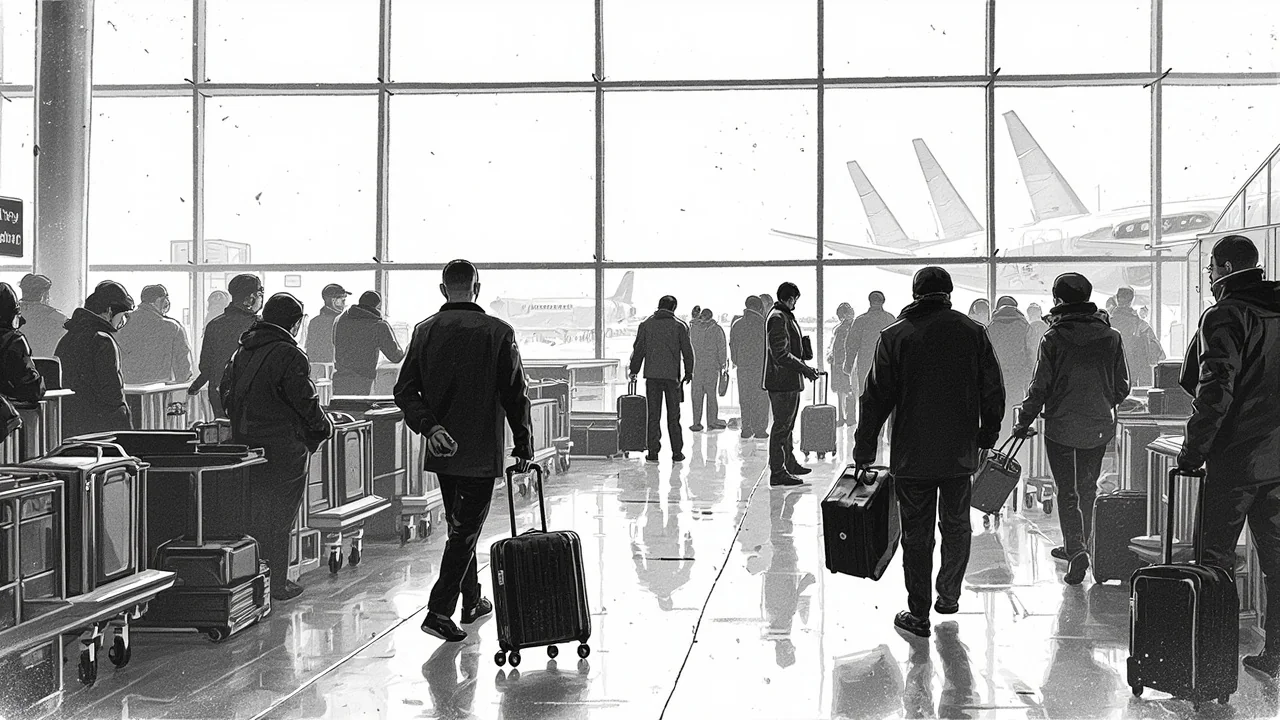
Denmark's Copenhagen Airport faces significant technical failures in its automated baggage sorting system, forcing staff to handle luggage manually and causing widespread delays for departing passengers. The airport confirmed the problems began on Friday and by Saturday afternoon, there was still no timeline for a fix, leaving travelers to pack essentials in their carry-on and hope for the best.
For any international hub, a baggage system failure is a critical incident. It strikes at the core of passenger trust and operational efficiency. Copenhagen Airport, or CPH, is Scandinavia's major gateway, processing tens of thousands of passengers daily. The statement from the airport's press officer, relayed through national media, indicated the system supplier is working "at high pressure" to locate and solve the fault. This technical breakdown transforms a streamlined, automated process into a labor-intensive and error-prone manual operation, inevitably creating bottlenecks.
A Weekend of Uncertainty for Travelers
The immediate human impact is clear: checked luggage is missing flights. The airport's official website advises that in some cases, bags will be sent on a later aircraft. This vague "some cases" phrasing is a source of major anxiety. Travelers heading for business meetings, family events, or connecting to long-haul flights are left in limbo, unsure if their belongings will arrive with them. The airport's primary advice is pragmatic but underscores the severity: pack vital items like medication in your hand luggage.
This incident disrupts the highly choreographed ballet of modern air travel. A plane can be fueled, boarded, and ready on time, but without passenger baggage loaded, it cannot depart. The manual handling process is slow, increasing the risk of bags being misrouted or left behind entirely. For passengers, the recommendation to arrive two hours before Schengen flights and three hours for non-Schengen journeys now feels like a minimum. The real waiting game begins after check-in.
The Fragile Technology Behind Modern Travel
Airport baggage systems are marvels of logistics, involving miles of conveyor belts, scanners, and automated sorting arms. They are designed to read bag tags and route each suitcase to the correct loading dock for its specific flight. When this technology fails, the contingency is starkly analog: human eyes reading tags, human hands moving bags. The scale of CPH makes a full manual operation nearly impossible to sustain without significant delays.
From a social infrastructure perspective, this failure is a reminder of our dependence on complex, centralized systems. Copenhagen Airport is a vital piece of Danish and Nordic infrastructure, facilitating not just tourism but crucial business connectivity. Its smooth operation is often taken for granted. A prolonged technical fault here has a ripple effect, potentially disrupting travel networks across Europe and beyond as flights wait for baggage or are delayed departing.
There is a notable contrast between the airport's calm, procedural advisories and the likely reality on the ground: frustrated passengers, long lines at baggage service desks, and overworked staff. The airport has apologized for the inconvenience and says it is working intensively to restore the system. However, the lack of a timeline, more than 24 hours into the crisis, points to a serious and complex fault.
Passenger Strategies in a System Failure
In this situation, passenger agency is limited. Following the airport's advice is the only course of action. Beyond packing essentials in carry-on, travelers should ensure bag tags are securely attached and consider taking photos of their checked luggage for identification. The financial and practical repercussions of delayed baggage fall under airline policies and travel insurance, adding another layer of administrative hassle for affected individuals.
The incident also tests the resilience of airline ground handlers and airport staff. They bear the brunt of passenger frustration while operating under ad-hoc, stressful conditions. Their ability to manage this manual process will directly influence how many bags ultimately make it onto the correct flights, even if late.
For the Danish public and regular users of CPH, this event might prompt a broader reflection. How robust are the critical systems we rely on? What level of technical redundancy is in place? While not a matter of national security, the functioning of a major airport is a matter of economic and social confidence. A swift resolution will be quickly forgotten, but a prolonged crisis could dent Copenhagen's reputation as a smooth and efficient transit hub.
Looking Beyond the Immediate Glitch
As the supplier's technicians work to diagnose the problem, questions will inevitably arise about system maintenance, age, and contingency planning. Is this a sudden hardware failure, a software glitch, or something more systemic? The answer will matter for future preparedness. Other major airports watching this situation will likely review their own system safeguards.
The true cost of this failure extends beyond apologies. It includes compensation paid by airlines to passengers, potential fines for delays, overtime for staff, and immeasurable reputational damage. For the affected traveler, the cost is measured in missed connections, ruined plans, and hours spent on the phone tracking down a suitcase.
Ultimately, this breakdown is a story about the vulnerability of hyper-efficiency. Copenhagen Airport's automated system is designed for speed and volume. When it stops, there is no graceful degradation—only a jarring shift to a much slower, manual world. The weekend's travel plans for thousands now hinge on the speed of a technical fix and the stamina of baggage handlers. It serves as a stark reminder that in our interconnected world, a single point of technological failure can still unravel the best-laid plans, leaving us waiting for our bags and for answers.