
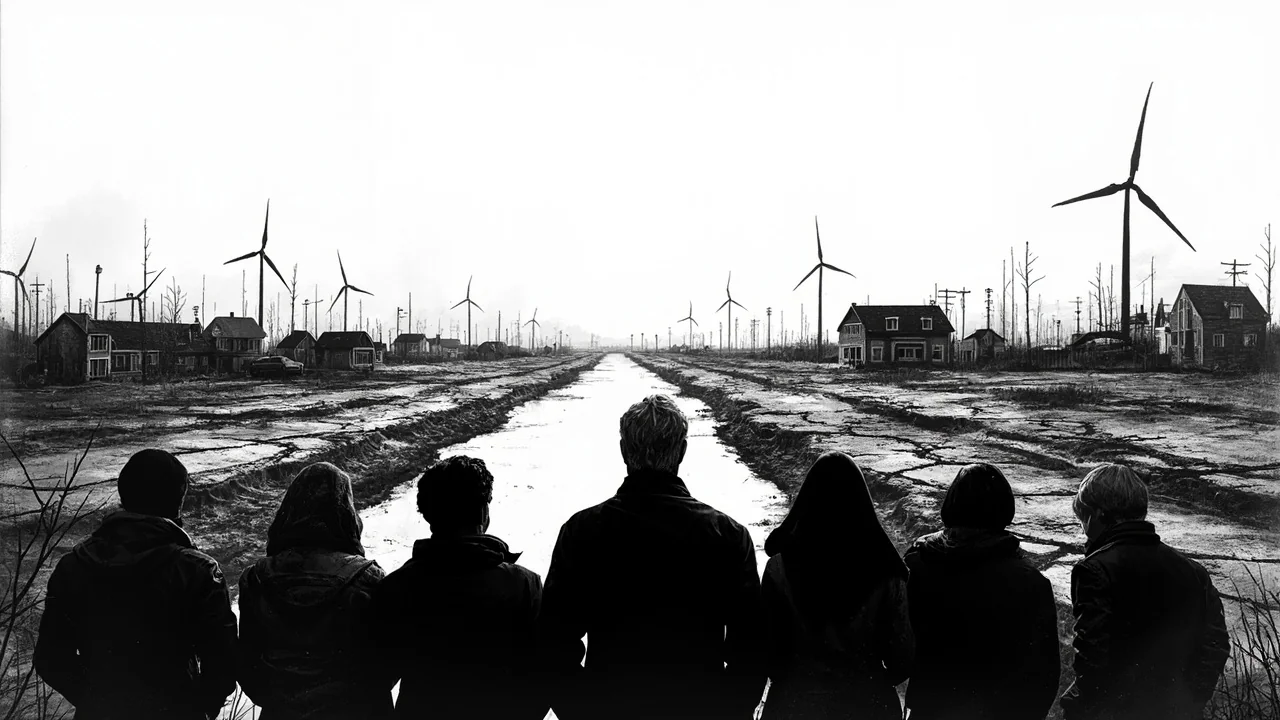
Denmark's normally reliable infrastructure fractured unexpectedly as residents across Jutland woke to darkness and dry taps. A widespread series of simultaneous power and water supply failures struck at least 16 towns in Mid- and North Jutland during the night and into Sunday morning. The uncoordinated collapse of basic utilities presented a rare and unsettling test of municipal crisis response in one of Europe's most stable nations. For thousands, the morning routine was replaced by confusion and a scramble for information, challenging the deep-seated societal trust in seamless public services.
The breakdowns were both scattered and puzzling. In Grindsted, the issue was particularly acute as the water supply failed completely. The local waterworks lost power, and its backup generator—the critical fail-safe—did not activate automatically as designed. This mechanical silence left the town's taps empty, transforming a power cut into a more urgent humanitarian concern. “We are investigating what the hell happened,” said a clearly frustrated René Heiselberg Gier, director of utility company GEV. His statement captured the bewildered urgency felt by officials and citizens alike. Neighboring communities experienced rolling blackouts or persistent outages, with grid operators initially suggesting high power demand as a potential, though vague, cause.
A Morning of Disruption and Questions
Across the affected region, the disruption was a blunt reminder of modern society's fragility. The incidents were not connected to a single storm or obvious external event, making the widespread nature of the failures more alarming. Local authorities activated emergency protocols, directing residents to gathering points and distributing bottled water in Grindsted. Social media channels lit up with reports from confused citizens, many expressing disbelief that such systemic failures could occur in Denmark. This breach of the expected social contract—where the state reliably provides fundamental services—generated immediate political and public scrutiny. The Danish welfare model is built on predictability, and this morning shattered that assumption for many.
From my perspective covering integration and social policy, such events expose hidden fault lines. Newcomers to Denmark are often introduced to a society portrayed as impeccably organized and efficient. A sudden breakdown in this basic order can be disproportionately unsettling for those still building trust in their new home's systems. It raises silent questions about resilience and preparedness that are seldom part of the national conversation. The incident moves beyond a technical failure into the realm of social psychology, testing the community cohesion that Danish integration policy heavily emphasizes.
Examining the Systems That Failed
The failure of Grindsted's backup generator is a focal point for investigators. Automated backup systems are engineering cornerstones for critical infrastructure, especially for water supply which is essential for public health. Their failure points to potential maintenance oversights, design flaws, or unforeseen technical complications. Meanwhile, the power grid operator’s reference to high consumption as a possible cause invites scrutiny of grid capacity and investment. Denmark, a leader in renewable energy transition, has a sophisticated but increasingly complex grid. Experts will need to determine if this was a coincidence of unrelated local faults or a symptom of broader strain on the system as it evolves.
Municipal crisis management is now under the microscope. How quickly did alerts reach vulnerable populations, such as the elderly or those with medical equipment reliant on power? Were communication channels effective in multiple languages, a key element of inclusive crisis response? The answers to these questions form a real-time audit of Denmark's much-vaunted social safety net at the municipal level. Community centers, often hubs for integration activities, likely shifted roles to become emergency information points. This demonstrates how social infrastructure is just as critical as technical infrastructure when things go wrong.
The Trust Equation and What Comes Next
For Danish society, the long-term impact may hinge on transparency and resolution. The Danish social contract is robust but relies on continuous proof of competence. Authorities must provide clear, honest explanations for the simultaneous failures and outline concrete steps to prevent recurrence. Public trust in utilities and municipal governance is not a given; it is earned and maintained through reliability and accountability. A thorough investigation must follow, and its findings must be communicated publicly to rebuild confidence.
The episode also highlights a paradox of highly developed societies. As systems become more advanced and interconnected, they can also become more opaque and vulnerable to cascading failures. Citizens become accustomed to flawless operation, making any disruption feel profoundly abnormal. This can be a learning moment for crisis preparedness at the household and community level. It prompts a necessary discussion about individual preparedness, community solidarity, and the realistic limits of systemic infallibility.
Ultimately, this Sunday morning served as a stress test. It tested hardware, software, and emergency protocols. More importantly, it tested the social fabric that holds communities together when the lights go out. The true measure of Denmark's societal strength will be visible in the coming days—not just in how engineers fix the generators, but in how neighbors checked on each other, how municipalities cared for all residents, and how authorities restore the frayed trust in the systems that define daily life. The quiet efficiency of a normal day is a remarkable achievement. Understanding what happens when that efficiency suddenly vanishes tells us even more about the society we have built.