
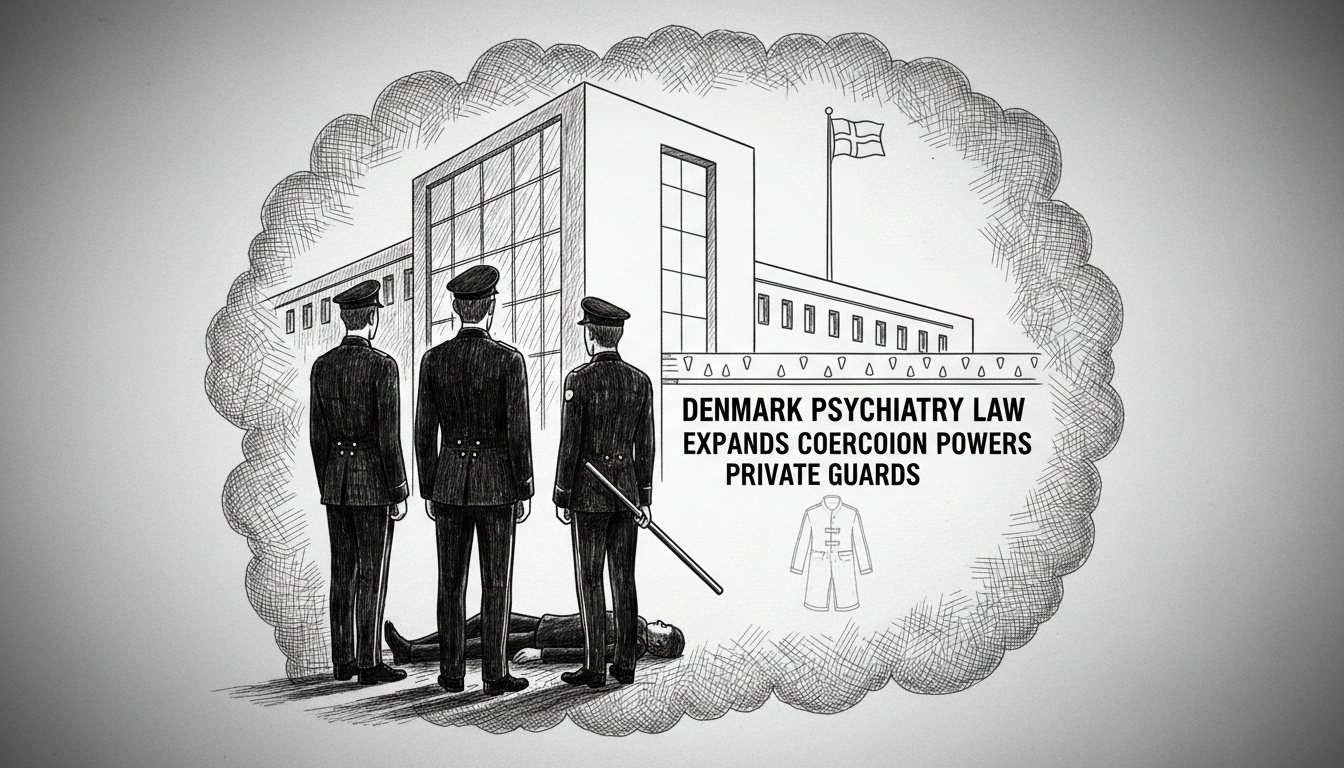
Denmark psychiatry law changes propose a controversial expansion of authority for private security guards in mental health wards. A new bill aims to allow private security personnel to actively participate in coercive measures against psychiatric patients. The government and regional health authorities argue this shift is vital for protecting overburdened staff from violence. Critics warn it could degrade patient care and erode trust within the nation's already strained psychiatric system.
For psychiatric nurse Lene Holst, the fear of being assaulted is a daily reality. She works on an acute ward in a Copenhagen-area hospital, where episodes of patient violence are not uncommon. “We are trained in de-escalation and therapeutic care, not physical restraint,” Holst explains. “When a situation turns violent, we currently must wait for specialized, in-house resources or police. That delay can feel dangerous.” Her experience underscores the workplace safety concerns driving the legislative push. Yet, she also expresses deep unease about the proposed solution. “Bringing in private security, who lack psychiatric training, feels like treating patients as a threat first and people second,” she adds.
A System Under Pressure
The proposed law emerges from a psychiatric care landscape under significant duress. Staff shortages and rising patient acuity have created volatile environments. Danske Regioner, the association representing Denmark's five regional health authorities, strongly supports the legislative change. They cite hundreds of annual reports of physical violence against healthcare workers in psychiatric settings. “Protecting our personnel is absolutely crucial,” a spokesperson for Danske Regioner said in a statement supporting the bill. “They must be able to work in a safe environment, and we need all available tools to ensure that.” The regions argue that trained private guards can provide a faster, more effective response than waiting for police, allowing clinical staff to focus on patient care.
However, patient rights organizations and psychiatric experts sound immediate alarm bells. “This is a deeply worrying development,” says Karen Pallesgaard, director of the Danish patient rights organization SIND. “Introducing private security into delicate care situations risks increasing the use of force and traumatizing vulnerable patients.” She emphasizes that coercion in Danish psychiatry is governed by strict legal and ethical frameworks designed as a last resort. These frameworks mandate oversight, specific training, and a focus on patient dignity. Pallesgaard questions whether private firms, operating under different mandates, can or will uphold these rigorous standards.
The Training Dilemma and Ethical Lines
At the heart of the debate is a critical question of training and purpose. Public healthcare security units, while not perfect, operate within the culture and protocols of the health system. Their training includes modules on mental health conditions, de-escalation techniques specific to psychiatric crises, and the legal boundaries of the Mental Health Act. Private security companies, conversely, are traditionally trained for crowd control, asset protection, and detainment. The government proposal stipulates that guards would receive "relevant training," but specifics remain vague. Critics argue no short course can bridge this fundamental ethos gap.
“A security guard’s instinct is to neutralize a threat. A healthcare worker’s instinct is to understand and treat a crisis,” explains Professor Magnus Kjølby, a medical ethicist at Aarhus University. “Merging these roles without fully integrated, continuous training is ethically problematic. It blurs the line between a healthcare facility and a detention space.” He points to research indicating that environments perceived as more coercive can exacerbate patient distress and hinder long-term recovery. The potential for reputational damage is also significant, potentially deterring people from seeking help early.
Weighing Safety Against Sanctuary
The Danish welfare system prides itself on balancing collective security with individual rights. This proposal strains that balance. Proponents frame it as a pragmatic workforce protection measure. They point to practical realities where nurses, like Lene Holst, are left vulnerable. The alternative, they say, is continued risk of injury and worsening staff attrition in a critical sector. The state has a clear duty to provide a safe workplace.
Opponents counter that the solution may worsen the core problem. Introducing less-specialized personnel could lead to mismanaged situations, escalating rather than calming crises. It might also institutionalize a more punitive approach to mental health care. The financial model is another concern. Would outsourcing this function to private contractors, potentially bidding for contracts, create incentives to prioritize cost over quality of intervention?
A Fork in the Road for Danish Care
As the bill moves toward parliamentary debate, its passage is uncertain. It will likely face scrutiny from left-leaning and centrist parties sensitive to patient advocacy concerns. The outcome will signal a broader direction for Danish social policy. Will Denmark adapt its renowned welfare model by integrating private security into sensitive care areas? Or will it seek alternative, system-based solutions to protect staff, such as significantly boosting investment in specialized, in-house psychiatric security teams and patient-focused facilities?
For those on the front lines, the stakes could not be more personal. “I don’t want to be afraid at work,” says Nurse Holst. “But I also became a nurse to heal, not to watch patients be manhandled. There must be a better way that does both.” Her conflicted hope captures the central dilemma. The final law will reveal whether Denmark chooses to arm its psychiatric wards with private guards, or chooses to reinforce them with more profound systemic support. The decision will define the character of its mental health care for years to come.