
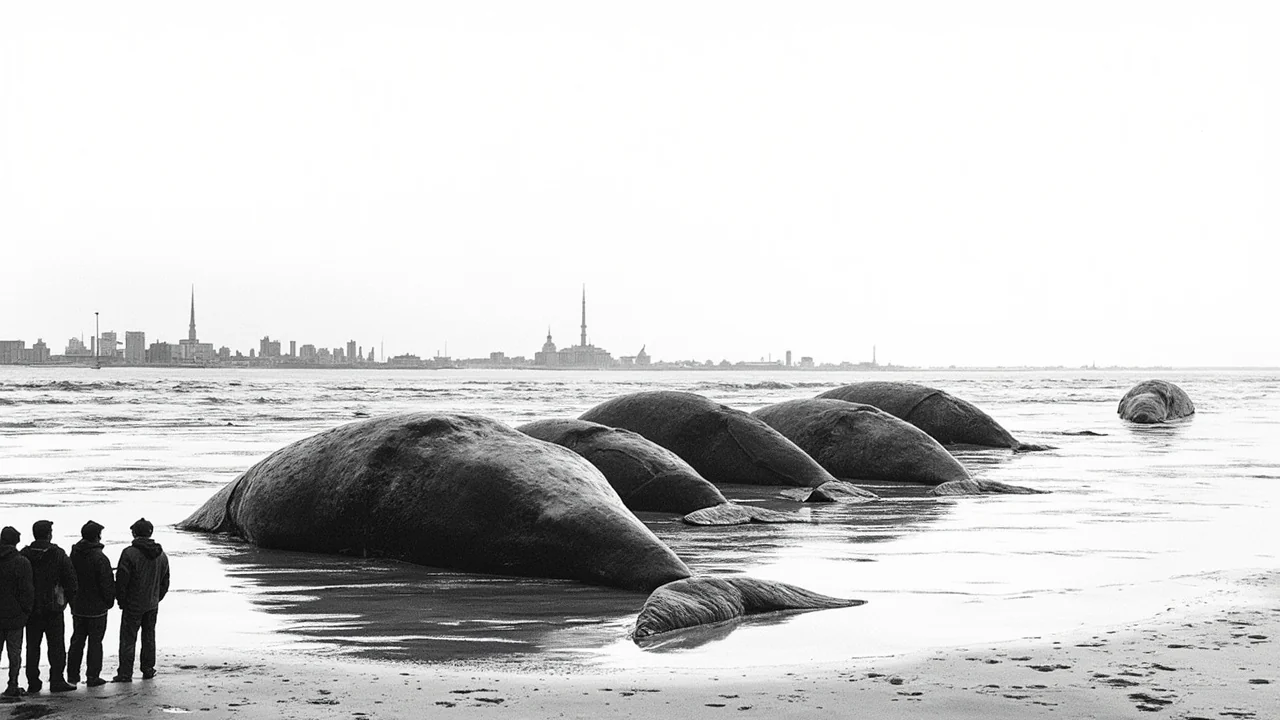
Five sperm whales have stranded along Denmark's west coast near Fanø, with three confirmed dead and at least one left to die naturally after authorities determined rescue attempts would be unsafe and inhumane. Source: Miljøstyrelsen (Danish Environmental Protection Agency).
The massive marine mammals washed up at multiple locations around Fanø and the Skallingen peninsula near Esbjerg, according to Miljøstyrelsen. Three whales died at Skallingen Strand and Søren Jessens Sand. One whale remains alive at Sønderho on Fanø, while a fifth was spotted near Langli Sandbanke but remains inaccessible to authorities.
This incident exposes Denmark's stark policy reality: when nature's largest predators strand themselves, human intervention often causes more harm than help.
Denmark's pragmatic whale policy draws hard lines
Miljøstyrelsen (Denmark's Environmental Agency) has established a four-meter limit for whale rescue attempts, citing animal welfare and safety concerns. Whales larger than this threshold are left to die naturally rather than risk traumatic handling that could prolong suffering.
"The boundary for euthanizing whales is approximately four meters, as handling whales larger than this cannot be done in an animal-ethically and safety-wise responsible manner," the agency stated. This policy reflects Denmark's typically pragmatic approach to wildlife management, prioritizing measurable outcomes over emotional responses.
Emergency crews removed jawbones from the three dead whales Saturday, both to preserve them for museum research and prevent theft. The precaution follows February's incident when parts of a stranded sperm whale's jaw disappeared near Blåvandshuk Fyr, prompting a police investigation.
The living whale at Sønderho will be monitored by veterinarians Sunday but left undisturbed to minimize stress during its final hours.
Public safety concerns override wildlife tourism
Authorities maintain strict public exclusion zones around all five whales, living and dead. The restrictions stem from disease transmission risks and explosion hazards as gases accumulate in decomposing carcasses.
Environment Minister Magnus Heunicke issued public guidance instructing citizens to maintain distance from the stranding sites. The directive reflects Denmark's systematic approach to crisis management, where clear institutional authority prevents the chaotic wildlife spectacles seen in other countries.
Sperm whale strandings in Northern European waters often involve multiple animals, with researchers theorizing that the massive mammals enter shallow North Sea waters accidentally due to echolocation difficulties in unfamiliar terrain.
Initial confusion about whale numbers stemmed from overnight tidal movements that shifted carcasses to new locations, causing double-counting by observers. Strandfoged Michael Baun explained that the whales likely moved during Friday night's high tide, creating uncertainty that persisted through Saturday morning.
Denmark's institutional response demonstrates the country's preference for evidence-based wildlife policy over rescue theater. Expect similar pragmatic decisions as climate change drives more marine mammals into Danish coastal waters where survival becomes impossible.
Read more: Danish Opposition Forces Pesticide Ban Vote After Water Cris....
Read more: Danish Opposition Demands Ombudsman Review Property Tax Pena....