
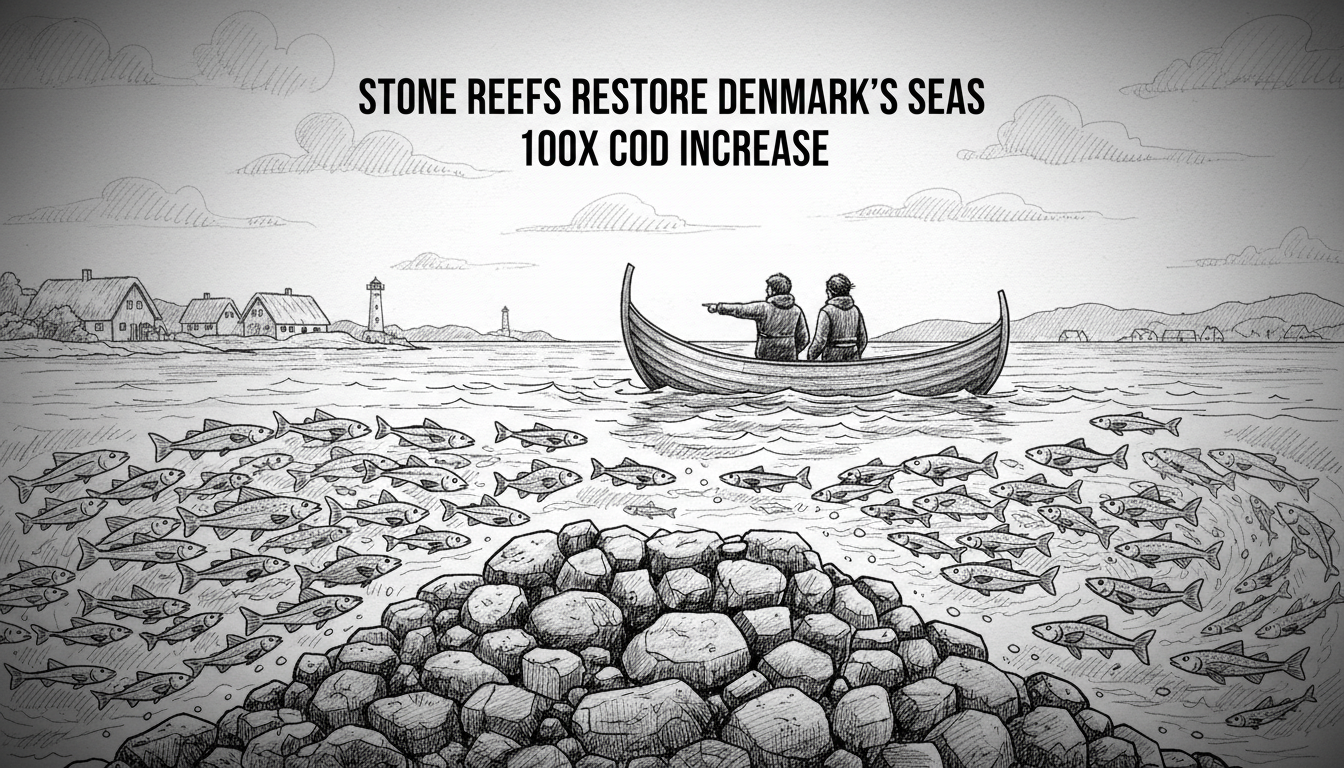
Danish coastal stone reefs suffered extensive damage over many decades. New restoration efforts now show remarkable results. Marine life returns quickly when these underwater habitats receive proper attention.
In Sønderborg Bay, scientists documented an extraordinary recovery. They restored one reef area and monitored the changes. The number of cod increased one hundred times within just six months. This dramatic improvement demonstrates the potential for marine restoration.
Stone reefs create essential habitats for numerous fish species. They provide shelter, breeding grounds, and feeding areas. Denmark's coastal waters historically supported rich marine ecosystems. Industrialization and coastal development gradually destroyed many natural reefs.
Modern conservation methods enable efficient reef restoration. Workers place stones in strategic patterns on the seafloor. These structures quickly attract marine organisms. The process costs less than many assume and delivers rapid environmental benefits.
Denmark faces ongoing challenges with marine biodiversity. The country's coastal waters have experienced declining fish stocks for years. This restoration success offers a practical solution that could scale nationally.
Fisheries organizations welcome these developments. Healthy reefs support commercial fish populations. They also benefit recreational fishing and coastal tourism. Local communities see economic advantages when marine ecosystems thrive.
Environmental agencies now consider expanding restoration projects. Other Danish coastal areas could implement similar programs. The Sønderborg Bay example provides convincing evidence of what works.
International marine scientists observe these Danish efforts with interest. Other countries with similar coastal environments might adopt comparable approaches. The methods prove relatively simple and highly effective.
Some questions remain about long-term sustainability. Will these restored reefs maintain their productivity? Can they withstand changing ocean conditions? Monitoring continues to assess the project's durability.
The Danish government recently increased funding for marine conservation. Political support grows as results become visible. Public awareness about marine protection also increases steadily.
This story represents more than just environmental recovery. It shows how human intervention can repair ecological damage when properly directed. The lessons from Denmark's stone reef restoration could influence marine conservation worldwide.