
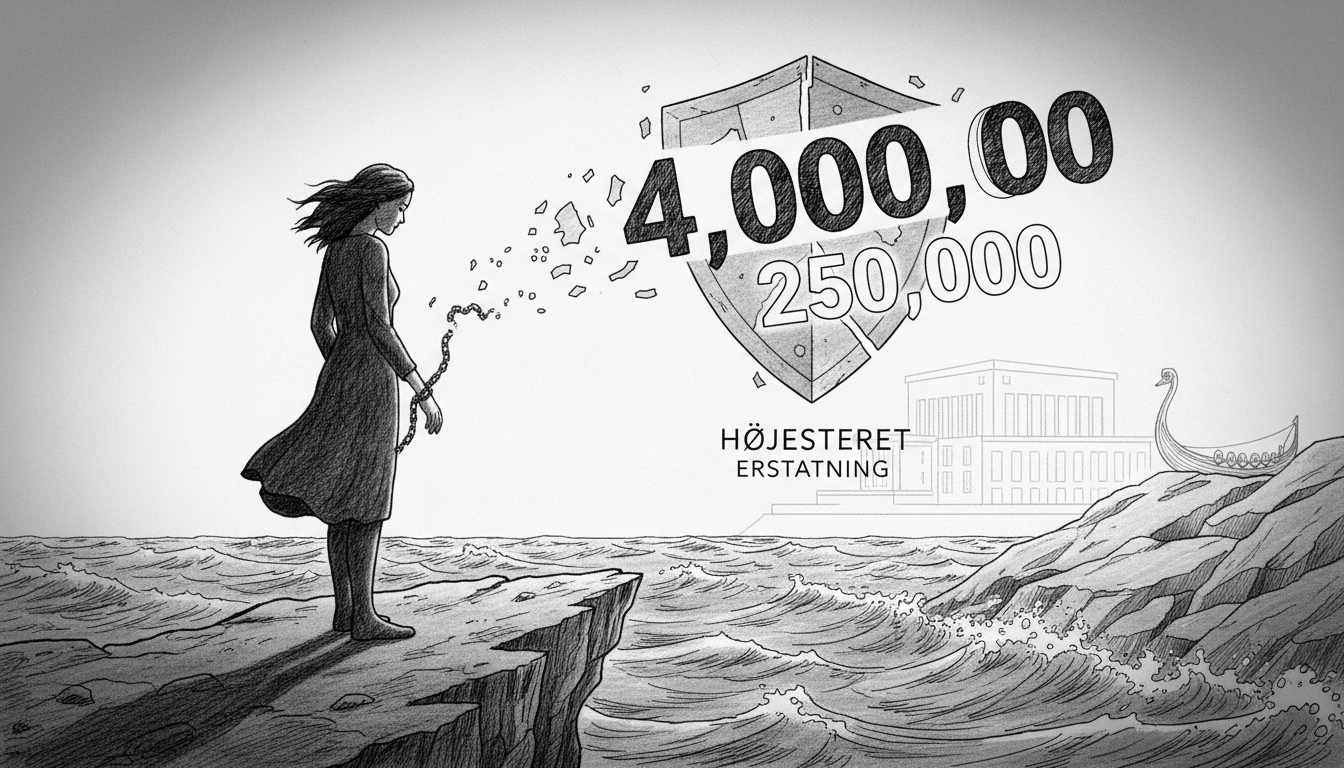
Denmark's Supreme Court has slashed a woman's compensation debt from four million kroner to 250,000 kroner. The ruling came Tuesday in a case dating back to 2007.
The woman originally received a three-month prison sentence for violence, unlawful coercion, and witness threats against another woman. Her victim later received four million kroner in compensation from the state.
This compensation primarily covered the victim's 85% loss of earning capacity due to PTSD from the attack. The state then sought reimbursement from the convicted woman through a legal mechanism called 'regres'.
Regres allows the state to recover compensation payments made on behalf of convicted individuals. In this case, the state had paid the victim and then demanded repayment from the offender.
The Supreme Court examined whether grounds existed to reduce or cancel this reimbursement claim. They referenced Section 24 of Denmark's Compensation Liability Act.
This law permits reducing or canceling compensation when liability would prove 'unreasonably burdensome' for the responsible party. Courts must consider the damage extent and the offender's circumstances.
Denmark's highest court determined the woman could never realistically repay the full amount. The dramatic reduction reflects practical reality rather than diminished responsibility.
Legal observers note this case shows how courts balance victim compensation with offenders' actual payment capabilities. The ruling acknowledges that impossible debts serve neither justice nor practical purpose.