
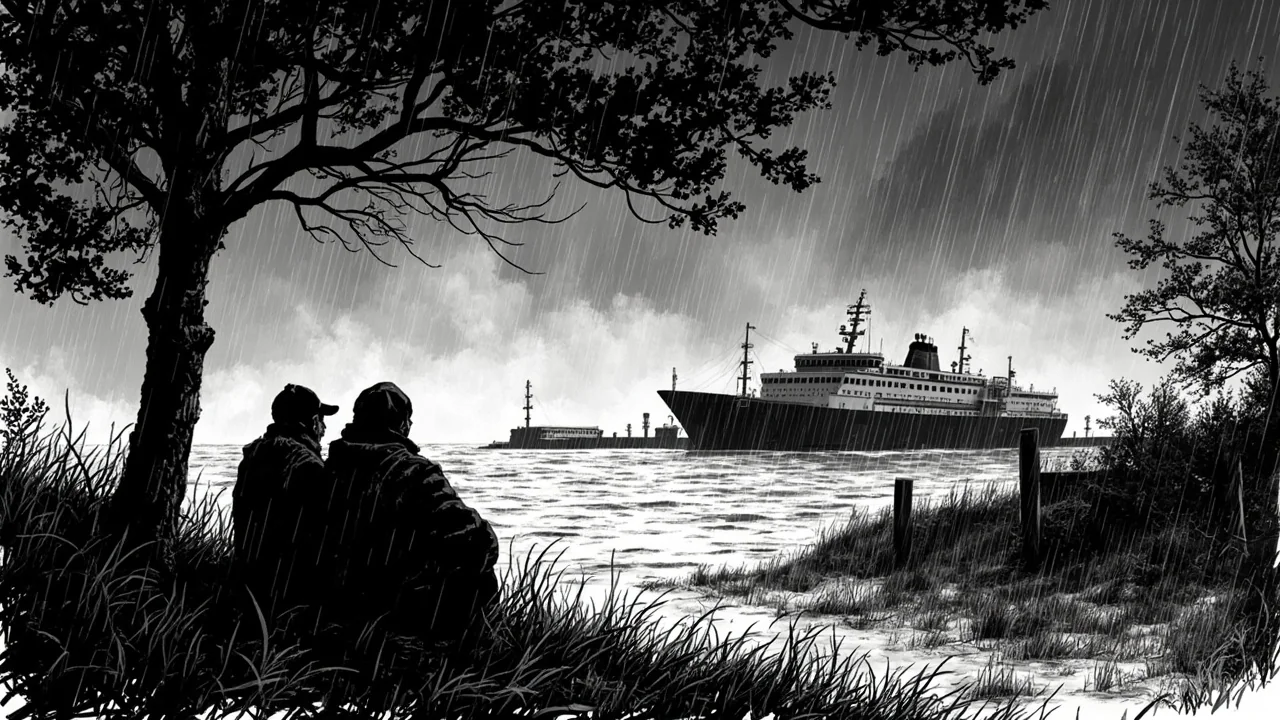
Denmark's island of Bornholm became a temporary shelter for 12 stranded ferry passengers overnight Friday, as severe winter weather cut the island off from the mainland. Powerful winds, heavy snow, and high water levels forced authorities to raise emergency preparedness levels to their highest, leaving a small group of travelers bedding down on field mattresses in the Rønne ferry terminal. The incident highlights the perennial vulnerability of Denmark's outlying islands to extreme weather, testing the limits of local emergency response and community resilience.
A Night in the Terminal
For the passengers, what began as a routine crossing turned into an unexpected adventure. With all bus services canceled and police strongly advising against any non-essential travel, the ferry terminal became their impromptu hotel. Authorities provided blankets and field mattresses, transforming the functional space into a dormitory. Passenger Anders Vestergaard Madsen captured the prevailing mood, telling local media, "It's quite fun. Good heavens. It's not the end of the world." This pragmatic, almost cheerful, acceptance reflects a familiar Danish societal trait of making the best of a difficult situation, a concept deeply ingrained in the welfare state's emphasis on collective responsibility and practical solutions.
Police Vagtchef Mathias Buus Kofoed explained the logistical standstill early Saturday morning. "We have sent some Home Guard personnel down there, so there is some authority presence on site," he said. "No buses are running from there, and we still advise against unnecessary driving, so I don't think they will be picked up until late morning." His statement underscores the complete paralysis caused by the conditions; even the authorities tasked with helping were constrained by the same forces of nature.
Emergency Services on High Alert
The situation on Bornholm escalated throughout Friday evening. The island's fire service announced on social media that it had heightened its emergency readiness in response to the forecast. A low-pressure system moving from the English Channel toward Holland was responsible for the powerful gusts battering Denmark, with Bornholm expected to bear the brunt of the strong winds for most of Saturday. This meteorological pattern followed several days of significant snowfall across the country, creating perfect conditions for snowdrifts and whiteouts.
Bornholm Police took the rare step of issuing a stark warning to residents. "We discourage it in the strongest possible terms," Kofoed stated regarding any travel. "You will get stuck if you drive out - especially on the small roads. And that just puts pressure on the emergency services and on people themselves if they don't have warm clothes and necessities with them." This directive, emphasizing personal responsibility to avoid burdening public resources, is a cornerstone of Danish crisis management. The strategy proved effective overnight, with police reporting no calls regarding traffic accidents or stranded motorists.
The Logistics of Island Isolation
Events like this expose the inherent challenges of governing and servicing Denmark's island communities. While the Danish welfare system is designed for equity, geography can create unavoidable disparities in service delivery during crises. The swift deployment of Home Guard personnel to the terminal was a critical move, providing not just authority but a tangible link to the state's support apparatus for those stranded. It is a standard protocol in such situations, blending civilian and military resources to manage local emergencies.
The establishment of a local emergency management staff, scheduled to meet Saturday morning, is another key step in the Danish model. These municipal-level groups assess damage, coordinate cleanup, and decide when to lift travel advisories. "When they have held a meeting, we will report out again," Kofoed said, highlighting the structured, communicative approach to crisis resolution. The uncertainty for residents and travelers—"It is still unclear when there will be a green light for motorists on Bornholm again"—is the most difficult aspect, a waiting game dictated by nature.
Community and Calm in Crisis
The reaction of the stranded passengers offers a microcosm of a broader societal attitude. Their reported good humor and perspective—viewing it as an experience rather than an ordeal—align with a cultural tendency toward ligevægt (balance) and practical problem-solving. There was no reported panic or anger, only adaptation. This social cohesion, the expectation that the system will provide basic necessities like blankets and that individuals will remain calm, is what allows Danish municipalities to manage these events without scenes of chaos.
From an integration and social policy perspective, such incidents are a subtle test of societal inclusion. Were all passengers familiar with this unspoken social contract of patience and cooperation? Did everyone feel equally assured by the presence of the Home Guard? While not a direct immigration story, any crisis response in Denmark operates within a context of a diverse population, requiring clear communication and equitable treatment to maintain the trust that underpins the welfare state's functionality. The successful, quiet night in the terminal suggests these protocols held firm.
A Recurring Winter Challenge
This is not an isolated event for Bornholm or Denmark's other islands. Severe winter weather frequently disrupts ferry links to Læsø, Anholt, and the smaller communities in the Limfjord. Each event prompts a review of contingency plans, the adequacy of shelter spaces, and communication strategies. The use of a ferry terminal, while not ideal, is a pre-identified solution—a large, owned public space that can be quickly repurposed. The alternative, attempting to transport people to hotels on treacherous roads, was deemed far more dangerous.
The incident concludes not with a dramatic rescue, but with a gradual return to normalcy as winds subside and plows clear roads. The passengers will eventually be collected, the field mattresses stored away, and the terminal will revert to its usual role. Yet, it serves as an annual reminder of the power of nature over even one of the world's most organized societies. It tests infrastructure, emergency preparedness, and the social compact that binds citizens to the state and to each other in times of inconvenience. The quiet night in Rønne's terminal, marked by blankets and patience, shows that compact, for now, remains strong. How Denmark continues to adapt its renowned welfare and crisis models to the increasing volatility of climate-related events will be the larger question looming over future winters.