
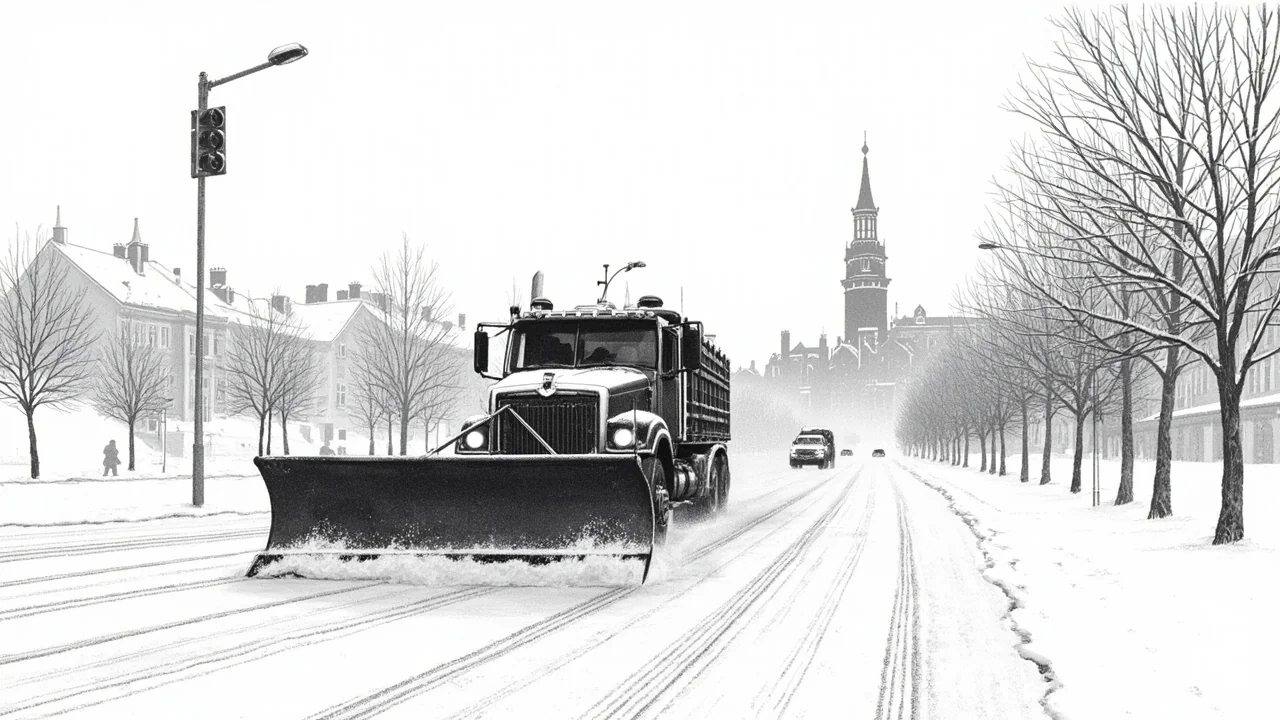
Denmark's capital Copenhagen has activated its snowplows for the first time in 15 years to combat heavy snowfall. The city's Climate, Environment, and Technical Administration confirmed the unprecedented move, deploying around 160 machines to clear roads, cycle paths, and pavements. This rare winter event has immediately disrupted daily life, highlighting the city's response to extreme weather.
A Historic Snowfall Event
Copenhagen is experiencing a significant snow event that has necessitated snowplow use for the first time since 2009. The municipality's technical administration stated that workers are operating under high pressure to create passable conditions. The last comparable snowfall occurred over a decade ago, making this a notable departure from the city's typically mild winters. Residents are witnessing a scene unfamiliar to many, with dedicated vehicles tackling accumulations that have quickly piled up.
The administration emphasized the uniqueness of the situation in a communication. They noted that the deployment of snowplows marks a special circumstance requiring public attention. Citizens are urged to orient themselves and travel according to the conditions. The scale of the operation underscores the severity of the snowfall, which has blanketed streets and infrastructure.
Widespread Transport Disruptions
Public transport has been severely impacted by the snowy conditions. Early Friday morning, multiple bus lines in Copenhagen were called back to their depots. Christopher Blomsterberg-Thaysen, press officer for GoCollective, confirmed that all buses from line 5C were withdrawn due to insufficient clearance. He indicated that most buses would be recalled until 10:00 AM, with some potentially remaining out of service until noon.
Blomsterberg-Thaysen explained that the company is continuously monitoring the weather situation. They are assessing when it becomes safe to return buses to the roads. This disruption affects countless commuters and underscores the immediate logistical challenges posed by the snow. The decision prioritizes passenger safety, but it leaves many seeking alternative travel methods during the morning rush.
The bus service suspension reflects the broader transportation hurdles. Cyclists and pedestrians are also navigating treacherous paths, despite the clearance efforts. The municipality's focus on making roads and cycle lanes passable is critical for maintaining city mobility. However, the abrupt halt to bus services shows that conditions remain hazardous.
Municipal Response and Public Guidance
Copenhagen's municipal authorities are coordinating a large-scale response to the snowfall. The deployment of 160 machines includes various vehicles tasked with clearing key thoroughfares. The Climate, Environment, and Technical Administration is leading the effort, emphasizing the high-pressure work environment. Their goal is to restore basic accessibility across the city's network of streets and sidewalks.
The administration has directly advised residents to stay informed about the evolving situation. They encourage people to adjust their travel plans and exercise caution. This guidance is vital for preventing accidents and ensuring public safety during the unusual weather. The response highlights the municipality's role in crisis management, especially for infrequent events like heavy snow.
Officials are balancing resource allocation with the need for swift action. The snowplow operation is a visible sign of municipal intervention, but it requires time to take effect. Residents are seeing firsthand how the city mobilizes its technical departments to address natural challenges. This event tests the preparedness and adaptability of Copenhagen's infrastructure systems.
Community Impact and Daily Life
The snow has transformed daily routines for Copenhagen's residents. With bus services curtailed, many are facing extended commutes or opting to work from home. The situation prompts reflections on urban resilience and how cities cope with extreme weather. For long-term residents, the snowplows' return is a nostalgic reminder of winters past, while newer inhabitants experience it for the first time.
Community interactions are also influenced, as people navigate shared spaces carefully. The municipality's efforts to clear pavements aim to support pedestrian safety, but ice and snow remain concerns. Local businesses may see reduced foot traffic, and schools could adjust schedules if conditions persist. The event touches on broader themes of social infrastructure and how weather disruptions affect community cohesion.
Public adherence to safety advisories is crucial. By following municipal guidance, residents can minimize risks and support the clearance operations. The collective response to the snowfall reveals the interplay between individual responsibility and public service provision. It is a moment where Danish societal values of practicality and community care are put into practice.