
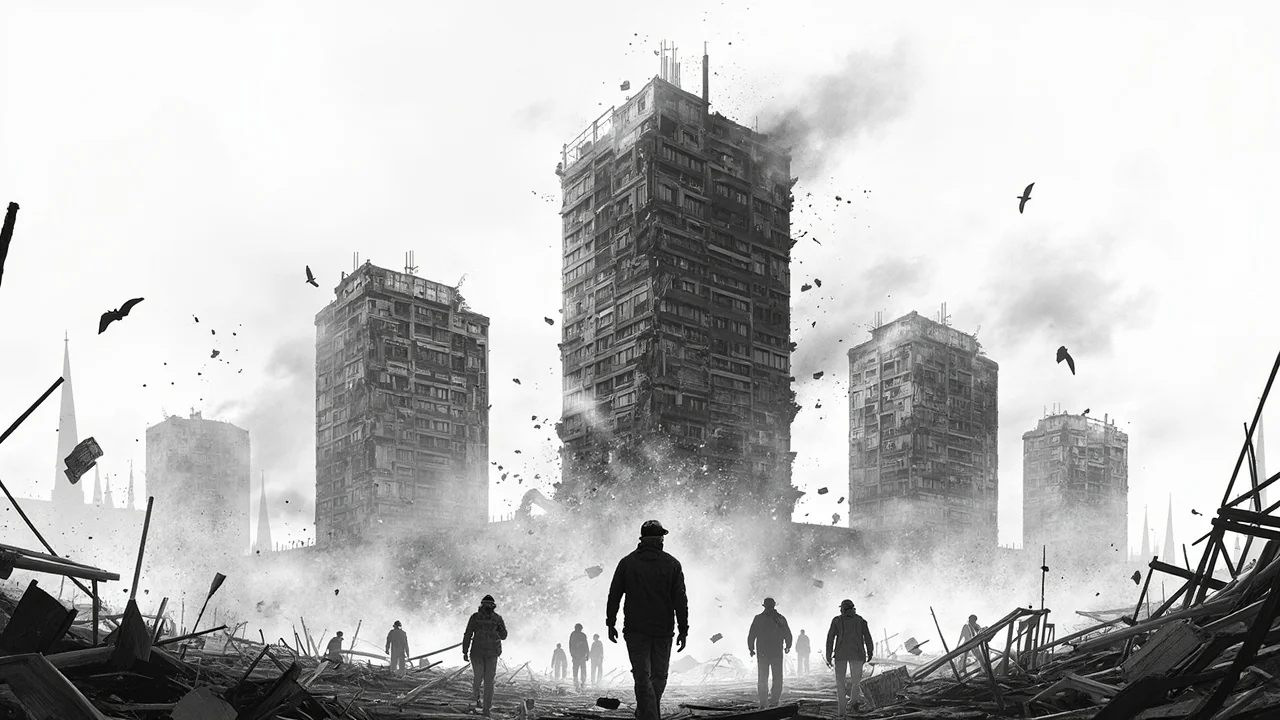
Denmark faces the contentious demolition of 10 protected high-rise buildings in Copenhagen after a housing association declared them at imminent risk of collapse. The decision targets the nation's first high-rises, iconic symbols of post-war welfare architecture perched on the city's highest ridge. Residents and local politicians are protesting, demanding independent structural investigations before any wrecking balls swing.
A Legacy in Peril
The threatened buildings represent a foundational chapter in Danish social history. Conceived in the late 1940s and constructed throughout the 1950s, they were pioneering examples of modern housing for a growing population. Their paired silhouettes on the Bellahøj ridge became physical manifestations of the burgeoning welfare state's promise—offering light, air, and modern amenities. Their preservation status acknowledges this significant architectural and social value, making the call for demolition not merely a property decision but a confrontation with national heritage.
The housing association, which manages the properties, states the move is a dire necessity. It has assessed the structures as 'sammenstyrtningstruede,' or collapse-prone, presenting an unacceptable safety risk to inhabitants and the public. This diagnosis, if accurate, triggers an urgent duty of care, placing resident safety above historical preservation. The association's responsibility is to provide safe housing, a core tenet of the Danish welfare system, potentially justifying this drastic measure.
Community Outcry and Political Pushback
For residents, the announcement is a profound shock that disrupts lives and severs community ties. These are not merely apartments but homes embedded with decades of personal and collective memory. The demand for independent assessments reflects deep skepticism and a desire for transparency. Residents argue that the full spectrum of options—from comprehensive reinforcement to partial demolition—must be exhausted before destroying culturally significant buildings. Their protest underscores a frequent tension in Danish society news between top-down administrative decisions and citizen agency.
Local politicians have joined the chorus of opposition, questioning the technical conclusions and the process. In Copenhagen's political landscape, where integration of new and old is a constant theme, this case touches on broader themes of urban identity and sustainable development. Politicians are leveraging their oversight role, insisting that municipal authorities scrutinize the engineering reports and explore all avenues for saving the structures. This political layer adds complexity, ensuring the housing association's decision will face rigorous democratic examination.
The Unavoidable Safety Imperative
At the heart of the dispute lies a fundamental, non-negotiable principle of the Danish welfare model: security. The state and its delegated entities, like housing associations, bear a foundational obligation to guarantee safe living conditions. If the structural assessments are correct and the buildings genuinely risk catastrophic failure, the path forward narrows dramatically. Danish building and safety regulations are notoriously stringent, designed to prevent tragedies, leaving little room for compromise when collapse is deemed probable.
This situation presents a painful trade-off familiar in social policy debates. It pits the tangible, immediate safety of individuals against the preservation of intangible cultural heritage and community cohesion. The housing association, in its role as steward, must prioritize the former. Their stance suggests that ongoing maintenance and repair may no longer be viable or economically feasible, pointing to potential long-term failures in upkeep that have led to this critical juncture.
A Broader Reckoning for Social Housing
The controversy extends beyond Bellahøj, prompting uncomfortable questions about the state of Denmark's vast post-war social housing stock. These high-rises are among the oldest of their kind. If these iconic, protected buildings have deteriorated to the point of no return, what does that imply for thousands of other similar, less celebrated structures built in subsequent decades? The crisis suggests a looming, nationwide challenge of renovating or replacing aging concrete welfare-era architecture, a massive undertaking with immense financial and social costs.
This case may force a national conversation about investment in public housing infrastructure. It highlights a potential gap between the desire to preserve historical social landscapes and the practical, enormous expense of maintaining them to modern safety standards. The outcome here could set a precedent for how other municipalities across Denmark handle their own aging, historically significant housing blocks, balancing legal safety mandates with cultural preservation.
An Uncertain Future for an Iconic Skyline
The coming weeks will involve intensified technical reviews and political negotiation. The residents' call for independent experts is a reasonable next step to either validate or challenge the housing association's alarming assessment. Copenhagen's municipal authorities hold significant power in this process, as their planning and preservation committees will ultimately need to approve any demolition permits, especially for listed buildings.
This story is more than a local zoning dispute. It is a poignant moment where Denmark's proud social housing heritage literally cracks under the weight of time. The final decision will reveal much about current priorities: whether the symbolic architecture of the past welfare state can be saved, or if safety concerns will irrevocably reshape a piece of Copenhagen's identity. The community's fight is not just for bricks and mortar, but for the preservation of a lived idea of home, a concept central to Danish society itself.