
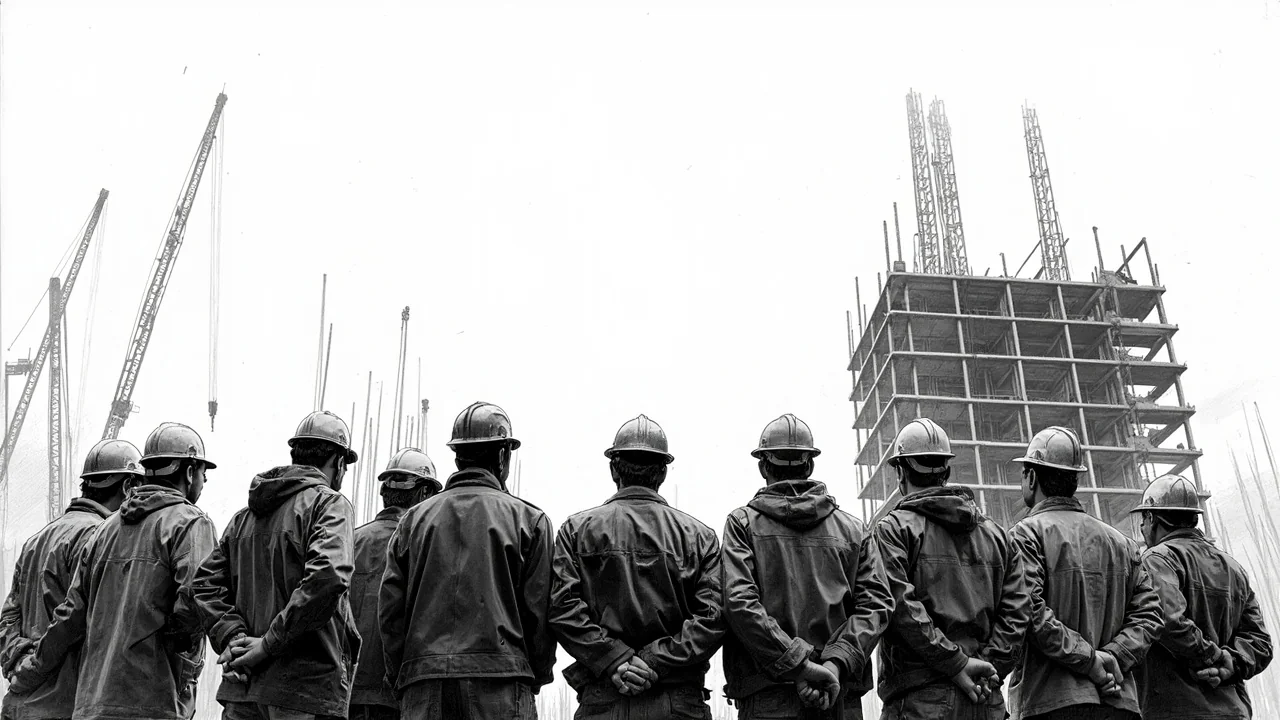
Denmark's construction sector faces a major disruption as freezing temperatures halt 70% of outdoor work, sending thousands of skilled tradespeople home. The deep frost, described by industry leaders as the worst in two decades, has paralyzed building sites across Jutland and the islands, creating a significant and unexpected economic shock for companies and employees alike. This prolonged cold snap is not just an inconvenience. It represents a direct hit to the productivity of a key industry, forcing a standstill that ripples through local economies and delays vital projects.
The Human and Economic Cost
On a quiet building site in Haderslev, Murermester Stig Thomsen surveys an empty plot. His team of masons has been at home for over a week. This scene is repeating itself nationwide. "It's irritating because it destroys our workflows," Thomsen explains. The personal impact is severe. Workers like Dennis Thorsted Jensen, a mason with Fynsk A/S in Nordborg, face weeks at home on reduced unemployment benefits. "For them, it's lousy to have to go home on benefits. And for us, it means we have no revenue in the company," Stig Thomsen states, outlining the double blow.
The financial toll is immediate. With no outdoor work possible, company turnover grinds to a halt. This freeze affects not just large contractors but the countless small and medium-sized enterprises that form the backbone of Danish construction. The pause in activity interrupts supply chains, delays payments, and creates scheduling chaos for the rest of the year. Project managers are now forced to replan entire spring and summer calendars, compounding the initial revenue loss with long-term inefficiency.
A Technical Standstill
The decision to stop work is not taken lightly. It is a matter of quality and safety. The core materials of construction simply fail in the extreme cold. "The mortar freezes, the water freezes, everything freezes," says Dennis Thorsted Jensen. Stig Thomsen details the technical reasons. Materials are filled with ice crystals, and tile adhesive does not bond properly. "The glue doesn't dry. It simply freezes into ice. It's no good, it won't hold," he states bluntly. Building under these conditions would be irresponsible. Any work completed now would likely have to be torn down once the thaw arrives, a costly and wasteful exercise.
Another critical issue is ground frost. Thomsen explains the problem with the fill sand used to replace topsoil on his site. "When it freezes, the moisture in the sand crystallizes and separates the sand layer. It simply heaves up. When it dries, it sinks again." Building on this unstable, frozen base would guarantee future structural problems as the ground settles unevenly. These are fundamental engineering principles that cannot be ignored, forcing the industry-wide shutdown despite the financial pain it causes.
An Unprecedented Weather Event
According to Michael Mathiessen, chairman of the industry organization DI Byggeri Sydjylland, this situation is highly unusual. "It must be 20 years or something since we last had to send people home because of frost for this long, so it has come as a bit of a surprise," he notes. This underscores that the current crisis is not a standard winter slowdown. The prolonged intensity of the cold has exceeded normal operational planning. Most firms have contingency plans for a few days of frost, but a multi-week shutdown was not in any business forecast for this season.
The rarity of the event highlights potential vulnerabilities. Building techniques and project timelines are typically designed around Denmark's moderate maritime climate. An increase in such extreme cold events, though statistically uncertain, would force a reconsideration of construction methods, seasonal staffing, and even the types of materials used. The current freeze acts as a stress test, revealing where the industry's operational models are brittle when faced with exceptional conditions.
Broader Sector Implications
The freeze's impact extends beyond masonry. All trades reliant on outdoor work or unheated structures are affected, including roofing, steel erection, and groundwork. This synchronizes the economic damage across multiple disciplines. Furthermore, the timing is particularly difficult. It comes after the holiday break, a period when companies were poised to ramp up activity for the new year. The lost weeks represent a significant portion of the early-year productivity that firms count on to build momentum.
The ripple effects touch material suppliers, equipment rental companies, and transport firms. Orders for concrete, bricks, and scaffolding are postponed or canceled. This secondary economic impact spreads the financial strain to supporting industries, amplifying the initial shock from the silent building sites. For regions heavily reliant on construction, the local economic engine has temporarily seized.