
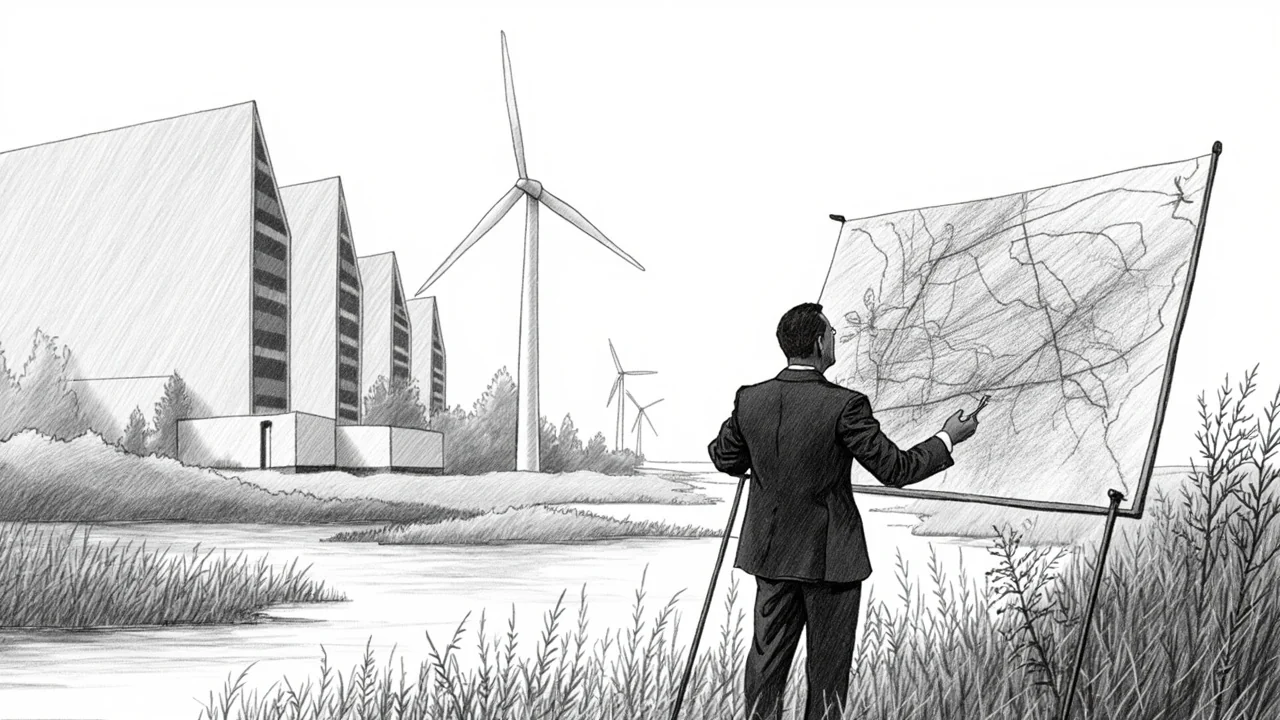
Denmark's Energy Minister Lars Aagaard wants to ensure American tech giants' data centers do not monopolize the national electricity grid. His concern follows a warning from the national grid operator about limited remaining capacity in the existing transmission network in some parts of the country. This could lead to a political move to prioritize private Danish customers and domestic companies over large data centers for new grid connections.
A Minister's Suspicions and a Grid Under Pressure
Lars Aagaard told business media he suspects data centers and battery parks are claiming much of the spare capacity in the Danish electricity grid. His comments came after the national grid operator, Energinet, reported on Friday that available capacity in the existing transmission network is now limited in certain areas. The minister plans to first investigate the scale of the problems before deciding on the best political course of action. This investigation will determine if and how the government can legally intervene to manage grid access.
Danish Businesses Reportedly Facing Connection Denials
According to reports from business media, there are examples in both Jutland and Zealand of Danish companies being denied connection to the electricity grid due to a lack of capacity. These incidents highlight the tangible business impact of the infrastructure squeeze. For local enterprises in areas like the Copenhagen business districts or the Øresund region, a 'no' to grid access can stall expansion plans, halt new production lines, and directly affect revenue and export potential. The minister's initiative aims to protect these domestic commercial interests from being crowded out by large, power-intensive newcomers.
The Rising Tide of Data Centers in Denmark
Denmark has become an attractive location for data centers due to its political stability, advanced digital infrastructure, and, crucially, its abundant renewable energy. Major international technology companies have invested heavily, seeing the country as a green hub for their cloud operations. However, these facilities are immense consumers of electricity. A single large data center can use as much power as a medium-sized city. This rapid growth in demand is now colliding with the physical limits of the national grid's transmission cables and substations, which cannot be expanded overnight.
The Core Dilemma: Growth Versus Grid Capacity
The situation presents a classic infrastructure dilemma. On one hand, data center investments bring significant capital, jobs, and technological prestige. On the other, they consume a critical resource—grid capacity—that is also essential for the green transition of existing Danish industry, for powering new Danish businesses, and for the daily needs of households. The minister's statement signals a potential shift in policy, where the national economic interest might be defined as prioritizing the power needs of the established economy and its green transformation over exporting green power in the form of data services.
What Could Political Intervention Look Like?
While the minister has not detailed specific measures, the concept of 'queue management' is on the table. This could involve legislative tools that allow grid operators or authorities to deprioritize connection applications from extremely power-intensive users like data centers when regional grid capacity is near its limit. Another approach could involve stricter requirements for new data centers to build their own direct connections or contribute financially to grid reinforcement. Any such move would be closely watched by the tech industry and could influence Denmark's reputation as a destination for digital infrastructure investment.
The Broader Business Community Reaction
The proposal will likely receive support from sectors that have felt sidelined by the data center boom. Danish manufacturing companies, particularly in energy-intensive fields, have long expressed concerns about rising electricity prices and grid reliability. The Confederation of Danish Industry (DI) has previously called for massive investments in the grid to support both green transition and business growth. The minister's stance partially aligns with these concerns, reframing grid access as a competitive issue for Danish trade and commerce. However, it also creates a new layer of regulatory uncertainty for all large-scale investors.
The International Context and Green Ambitions
Denmark's challenge is not unique. Similar grid capacity debates are occurring in Ireland, the Netherlands, and parts of Germany, where data center growth has surged. How Denmark navigates this issue will test its ability to balance its ambitious renewable energy targets with the practicalities of distribution. The country aims to be a green energy exporter, but first it must power its own economy. The coming political investigation will need to weigh the export revenues and geopolitical ties fostered by tech giants against the immediate needs of Danish companies on the ground.
A Look Ahead: Investigation and Implications
Minister Aagaard's next step is a formal investigation into the true extent of the grid capacity shortage and its attribution. The findings will determine whether legislation is drafted. If implemented, a priority system for the Danish electricity grid would represent a significant intervention in the free market for connections. It would mark a state-led prioritization of economic actors, favoring small and medium-sized enterprises (SMEs) and domestic industry over large, often foreign, capital. The ultimate question is whether Denmark's grid should be a public utility for its homegrown economy first and a platform for global tech second. The answer will shape the country's business landscape for years to come.