
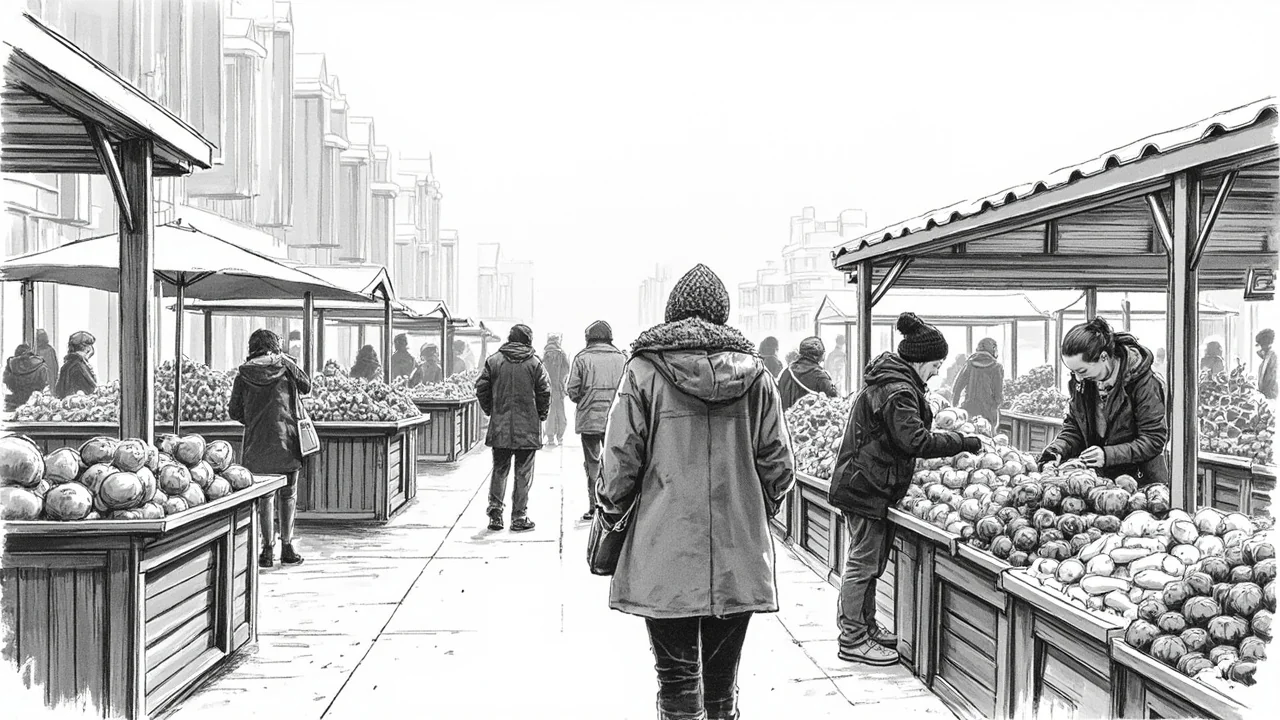
Denmark's organic food sector saw consumer purchases fall by 1.8 percent in 2025, new figures reveal, marking a continued stagnation for the once-booming industry and putting a key government strategy at risk. The data from the Organic Association (Økologisk Landsforening) shows a decline in the volume of organic goods like vegetables, eggs, and milk hitting shopping baskets, a trend industry leaders blame squarely on high consumer prices and a lack of political action.
A Stalling Market and Political Wake-Up Call
“When we look at the actual volume of organic goods being sold, there is a declining trend. And that is really disappointing, because we know that Danes really want to buy more organic goods,” said the director of the Organic Association, Rasmus Prehn. He issued a stark warning to politicians, stating the national goal to double organic consumption and export by 2030 is now in serious jeopardy. “It's going to be really difficult, and it requires political action. Denmark has been good at putting organic on the agenda, and now we have seen it stall a bit. Therefore, it is now about waking up at Christiansborg,” Prehn said.
The downturn comes despite the 2023 launch of a government organic strategy designed to double the organic agricultural area, domestic consumption, and exports of organic food from 2018 levels by the end of the decade. Minister for Green Transition and Business, Jeppe Bruus of the Social Democrats, acknowledged the slowdown. “It is fair to say that we are seeing a stagnation and, percentage-wise, a small decline. I think it is mostly due to rising food prices,” Bruus said.
The Price Barrier and VAT Debate
At the heart of the debate is the cost to consumers. Rasmus Prehn argues that the additional VAT on organic products acts as a penalty for making a sustainable choice, creating an unfair market disadvantage. “Besides the fact that it is already more expensive to produce organically, society has also decided that there should be VAT on organic goods. As a consumer, you get a kind of penalty postage for buying organic,” he stated. His primary solution is a political one: a reduction or complete removal of VAT on organic food to stimulate demand.
Minister Jeppe Bruus confirmed that funds have been allocated to continue work on a potential VAT reduction, a measure he looks forward to examining closely. However, he stressed that supply-side measures are equally critical for long-term competitiveness. “But regardless of whether VAT is reduced on organic or not, the premise is that we get more production of organic food. Therefore, we are already working specifically to double the organic agricultural area. In this way, more organic food will be produced and make it more competitive compared to conventional,” Bruus explained. This push for more production aims to achieve economies of scale, potentially lowering wholesale and retail prices over time.
Economic Context and Sector Impact
The sales dip reflects broader economic pressures on Danish households. While Statistics Denmark has not yet finalized the full revenue figures for 2025 organic food, the trend of flattening sales since 2020 indicates a sector hitting a ceiling amid inflation and cost-of-living concerns. For Danish agribusiness giants like Arla Foods and Danish Crown, which have significant organic product lines, and for specialized retailers and exporters, the trend signals a need for market adaptation. The export ambition, a cornerstone of the national strategy, depends on a strong and innovative domestic market to build brand credibility and volume.
The stagnation poses a direct challenge to Denmark's green brand, both domestically and in key export markets like Germany and Sweden. The organic sector is not just a food market but part of a larger green trade portfolio that includes renewable energy technology. A failure to reinvigorate growth in this foundational sector could have knock-on effects for Denmark's overall reputation as a sustainable economy.
The Path Forward: Production vs. Demand
The government and industry now face a classic economic puzzle: which comes first, increased supply or stimulated demand? Minister Bruus's focus is firmly on boosting production area, believing that greater supply will naturally drive down costs and invigorate the market. The industry association, however, sees immediate consumer price relief as the essential lever to pull to reverse the decline in purchase volumes. They argue that without addressing the final price at the checkout in Føtex, Bilka, or local grocers, even increased production may struggle to find a market, potentially leading to waste or discounted exports that undermine value.
This debate will play out in the coming political negotiations over finance and green transition policies. The allocated funds for investigating a VAT cut will be scrutinized, and pressure will mount for a definitive decision. The coming year's sales figures will be closely watched to see if 2025 was a temporary dip or the beginning of a longer-term retreat from organic consumption. For a nation that has positioned itself as an organic pioneer, the next moves by policymakers in Copenhagen will be crucial. Can they realign price signals with environmental ambitions, or will economic reality force a recalibration of Denmark's organic dreams? The goal of doubling consumption by 2030 now looks significantly harder than it did just a few years ago.