
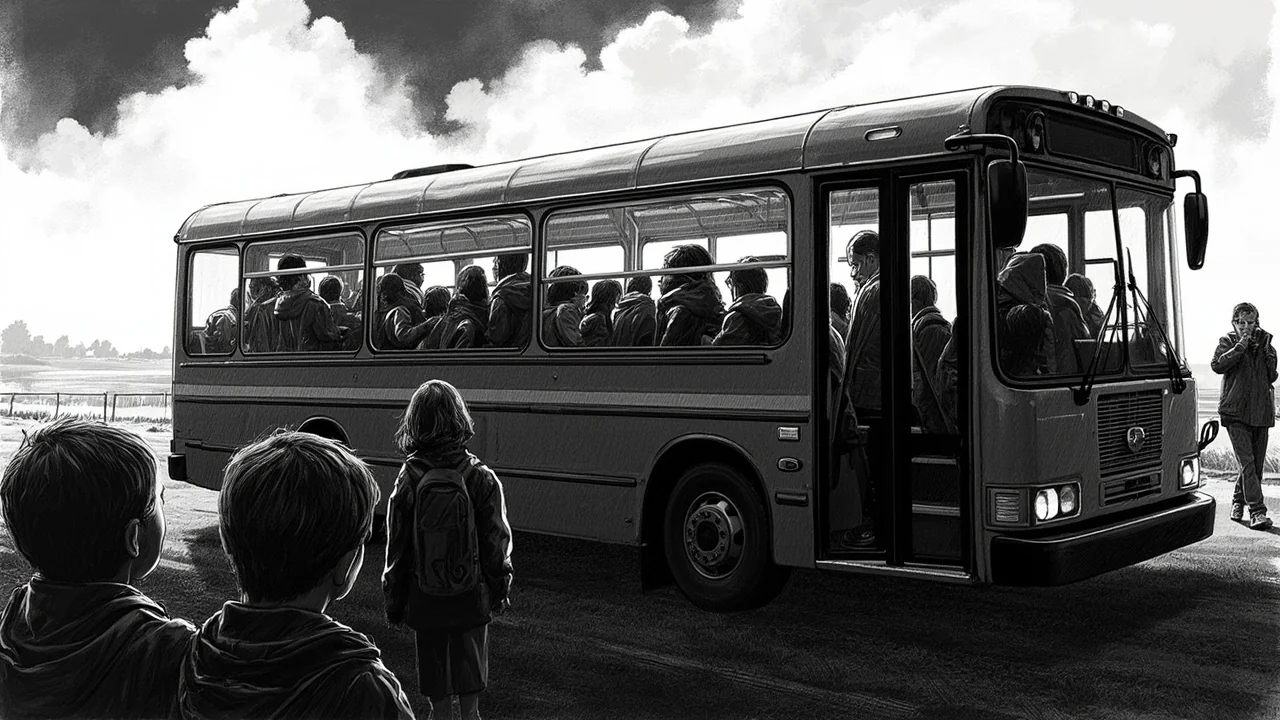
Danish school bus safety is under intense scrutiny after a fatal crash. The debate focuses on the rural route 123 on Djursland where one in six afternoon trips carries more passengers than there are seats. This statistic has sparked a fierce local discussion about young children standing on buses traveling at 80 km/h on winding country roads.
A Mother's Fear After Tragedy
Anna Bundgaard has children in the 2nd and 4th grade who use the bus daily. They often stand for 20 minutes on journeys to and from school. 'The children find it very uncomfortable because they have to try to stay standing while the bus drives between 60 and 80 kilometers per hour through Mols Bjerge with curves and hills,' says Bundgaard. She notes the youngest children, some as young as six, are the last to board. When the bus is filled with high school students and others, it is the smaller children who must stand.
The fatal bus accident near Hornslet happened on route 123, the very line her children use. After that tragedy, Bundgaard dares not consider what would have happened if school children had been standing in a packed bus during the collision. 'That is a thought you cannot think through to the end…' she says. Her concern reflects a wider tension in Danish society between policy planning and the human reality of daily life.
The Policy Versus The Practice
Bundgaard believes traffic planning must ensure no one has to stand. 'When you know there are children on the bus, it should not be part of your planning to run at full capacity,' she argues. This holds true even though it is legal to have standing passengers on a bus. 'But the conditions are not right for it when you're driving 80 km per hour. It's different if you're sitting in a city bus that stops every 100 meters and never really picks up speed,' she explains.
She has previously contacted the public transport company Midttrafik to request an extra departure or longer buses to ease the crowding. Last week's accident has prompted her to reopen the case. In Denmark's welfare system, reliable and safe public transport is a cornerstone, especially in rural areas where alternatives are few. This incident tests the integration of safety protocols with the practical demands of regional transit.
Transport Company's Response
Midttrafik expressed in a written reply its understanding of the concern the accident has caused among many customers. 'Regarding standing school children on route 123, we can report that route buses are approved to carry standing passengers - even when driving on country roads. We continuously monitor capacity in the buses to ensure our capacity limits are maintained,' the statement said.
According to Midttrafik's own counts, it is approximately every sixth departure on route 123 after school at 14:14 that has more passengers than seats. This data point is central to the community's worry. It highlights a gap between official approvals and the lived experience of safety. In Danish social policy, such monitoring is meant to prevent systemic failures, yet local parents feel the current measures are insufficient.
Community Mobilizes for Change
In a local Facebook forum, around 100 citizens have shared experiences and concerns about packed buses, standing passengers, and high-speed travel on hills and sharp bends. This digital town hall meeting shows how Danish communities often mobilize to address gaps in public services. The conversation goes beyond a single route, touching on broader questions of resource allocation in municipal planning and the priorities within the Danish welfare system.
The tragedy has acted as a catalyst, transforming private anxiety into public advocacy. Parents are now questioning if the legal framework for bus passenger safety is adequate for the specific risks of rural road travel. They are demanding that planning considers the most vulnerable users, not just the maximum legal capacity.
Looking for Solutions on the Road Ahead
The core question remains whether monitoring alone is enough. Anna Bundgaard's campaign for an extra bus or longer vehicles is a direct solution proposed from the ground up. It represents a classic Danish approach to social policy: identifying a practical problem and seeking a functional, systemic fix. The response from Midttrafik will be a test of how responsive the system is to localized, evidence-based concerns raised by its users.
As the community on Mols processes the recent tragedy, the issue of standing children has become a symbol of a larger need. It is about ensuring that the infrastructure of everyday life—the journey to school—is not left to chance or mere regulatory compliance. The weeks ahead will show if the data from the bus counts leads to a change in the timetable or if the status quo, deemed legal but felt as unsafe by families, will persist on the winding roads of Djursland.