
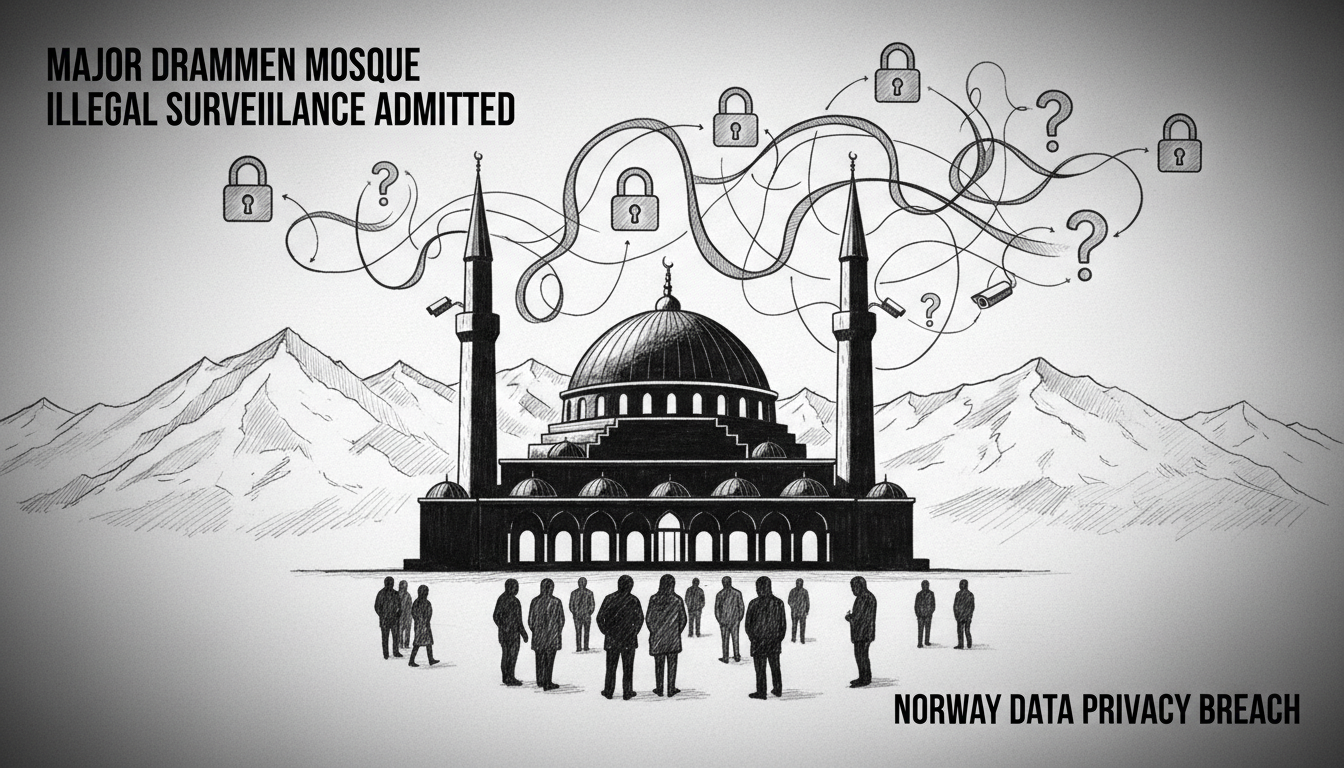
A major Muslim congregation in Drammen has admitted to illegally surveilling its own members for years, prompting a police investigation and raising serious questions about privacy and religious freedom in Norway. The case has been transferred from the local South-East police district to Oslo authorities after the district declared itself incompetent to handle the investigation. This move suggests potential conflicts of interest or local sensitivities complicating the legal process.
The congregation, with 1,500 members, is located in central Drammen. Internal documents obtained by media reveal the leadership described its own surveillance activities as unlawful. The monitoring included both audio and video recordings taken inside the mosque's prayer room over a four-year period. A current board member stated the audio recording function has now been deactivated.
Kjell Johan Abrahamsen, the public prosecutor for the South-East police district, confirmed the transfer in a written statement. He said the district had received a formal complaint about illegal eavesdropping, surveillance, and serious threats. After assessment, the district declared itself incompetent to investigate and prosecute the case. All further inquiries must now be directed to the appointed Oslo police district. Abrahamsen declined to elaborate on the reasons for the recusal.
The implications extend beyond local law enforcement. The Norwegian Data Protection Authority has opened its own case. Senior communications advisor Anders Ballangrud emphasized that surveillance is only legal for specific purposes with a legal basis. He noted monitoring places where people practice religion is particularly intrusive and raises the legal threshold for such activities. The affected group must also receive clear information about why surveillance is occurring.
Members have expressed profound discomfort. One congregant questioned the purpose of audio and video surveillance in an environment frequented by children and women for confidential prayers. The current board chairman, Orhan Al, issued a statement acknowledging the seriousness of the matter. He wrote that members and visitors should feel confident their privacy is handled correctly and legally, a responsibility the board takes very seriously.
This incident touches on core Norwegian values regarding personal privacy, known locally as 'personvern'. Norway has strict laws derived from both national legislation and the European GDPR framework. Surveillance within a trusted religious community represents a significant breach of social contract, not just legal code. It also tests the operational independence of local police districts when investigating powerful community institutions.
The case's transfer to Oslo indicates its complexity. It may involve examining whether the surveillance was used to monitor or control members, perhaps related to internal governance or doctrinal disputes. The police will need to determine if any collected data was misused. For Norway's Muslim communities, this public scandal could fuel existing debates about transparency, modernization, and the integration of religious practices within a strict secular legal framework.
The congregation's leadership now faces dual scrutiny from criminal investigators and data protection officials. Their commitment to lawful conduct will be measured against the four years of admitted illegal recording. The outcome will signal how effectively Norwegian institutions can safeguard individual rights within all community spaces, regardless of their religious or cultural character.