
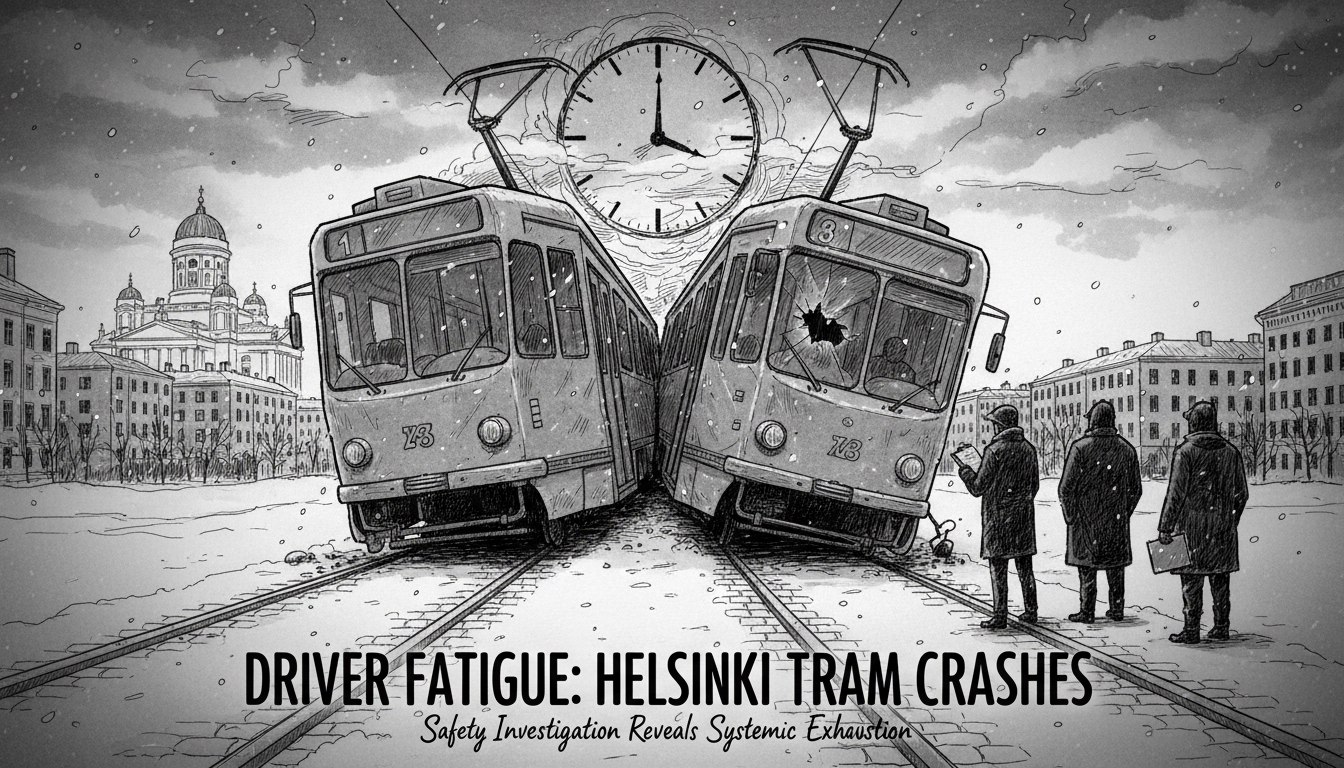
A safety investigation reveals that driver fatigue caused two serious tram accidents in the Helsinki metropolitan area during the final months of last year. The incidents involved the popular Raide-Jokeri light rail line, raising concerns about public transportation safety protocols.
The Safety Investigation Authority found that both collisions resulted from exhausted operators. In Espoo's Keilaniemi district, a tram crashed into a concrete barrier at the end of the line, injuring four people with one suffering serious injuries. The investigating director stated the driver lost consciousness approaching the terminal stop.
A second collision occurred in Helsinki's Itäkeskus district when two trams collided near the terminal station. One passenger sustained injuries in that incident. Officials confirmed human error contributed to this accident, with fatigue likely playing a role.
The investigation uncovered systemic issues within tram operator scheduling practices. Working while fatigued has become normalized according to the official report, creating what investigators call a major safety risk. Unlike railway systems that feature multiple safety backups, trams operate with minimal driver assistance technology.
The investigating director explained the gravity of the situation. "Fatigue presents an enormous safety risk in tram traffic because there are no assistance systems like those in railway traffic. The system monitoring driver alertness only reacts at a very high threshold for falling asleep." He emphasized that even brief lapses can cause derailments or more severe accidents.
Public transportation officials acknowledge room for improvement in scheduling but challenge some findings. The head of traffic operations for the metropolitan area stated they continuously develop shift systems with staff representatives. He expressed surprise at claims that safety observations aren't supported within the organization.
This situation highlights broader challenges in Nordic public transportation systems. Finland's extensive social welfare protections contrast with these findings about worker fatigue in essential services. The investigation authority recommends both improved shift planning and enhanced technical support for drivers.
Similar incidents have occurred across Nordic public transport systems in recent years, suggesting this may represent a regional pattern rather than isolated events. Stockholm and Copenhagen have both faced criticism regarding public transportation working conditions despite the region's reputation for progressive labor practices.
The report indicates drivers hesitate to report fatigue concerns, pointing to organizational culture issues. Transportation officials maintain they have good, open relationships with drivers and encourage raising difficult issues. This disconnect between investigator findings and operator statements warrants attention as the system expands.
With Helsinki continuing to invest in light rail infrastructure, these safety concerns take on increased importance. The Raide-Jokeri line represents a major investment in sustainable urban mobility, making operational safety paramount for public confidence and successful expansion.
Transportation authorities now face pressure to implement the investigation's recommendations before further incidents occur. The coming months will reveal whether scheduling changes and enhanced safety technology can address these concerning findings about driver fatigue in Finland's capital region.