
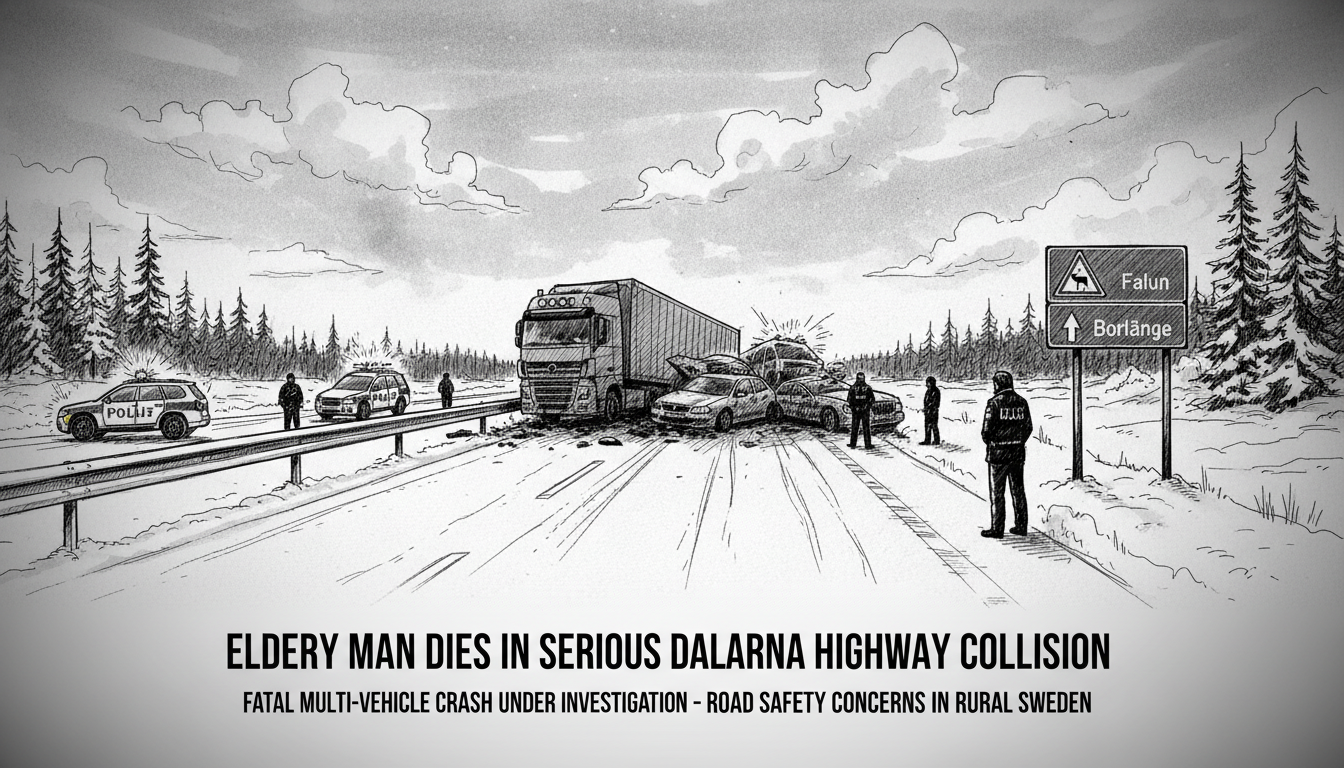
A quiet afternoon on the E16 highway between Falun and Hofors turned tragic this week. A 75-year-old man died following a serious multi-vehicle collision. The accident involved two passenger cars and a truck. It caused major traffic disruptions during the evening commute. Police have notified the man's next of kin. They have seized one vehicle for a technical examination. An investigation into the crash is now underway.
This stretch of road cuts through the heart of Dalarna county. It is a region known for its serene lakes and deep forests. The E16 is a vital artery for both local commuters and long-distance freight. Accidents here resonate through small, close-knit communities. News travels fast in towns like Falun and Hofors. Everyone feels the loss when a neighbor is gone.
Sweden's road safety record is generally strong. The country has long championed the Vision Zero policy. This ambitious goal aims to eliminate all traffic fatalities and serious injuries. The policy has driven major infrastructure changes nationwide. It has led to lower speed limits in urban areas and safer pedestrian crossings. Yet, rural highways like the E16 present ongoing challenges. They mix high-speed travel with changing weather and wildlife.
This fatal crash raises hard questions. It comes during a period of intense debate about Sweden's aging road network. Many regional highways need upgrades. Maintenance budgets are often stretched thin. The collision also highlights the human cost behind the statistics. Each number in a traffic report is a person, a family, and a community in mourning.
For international readers, this story reflects a broader Swedish societal trend. There is a deep cultural emphasis on collective safety and responsibility. Road design prioritizes human life over convenience or speed. Public discourse often focuses on systemic prevention rather than individual blame. The investigation will likely examine road conditions, vehicle safety, and driver behavior. Its findings could influence future safety measures on similar routes across the country.
The local response will be characteristically Swedish. There will be quiet support for the grieving family. Community networks, often strengthened by traditional associations, will mobilize. This tragedy is a stark reminder. Even in one of the world's safest countries, the journey home is never guaranteed. Our thoughts are with the man's family and all those affected by this sudden loss.