
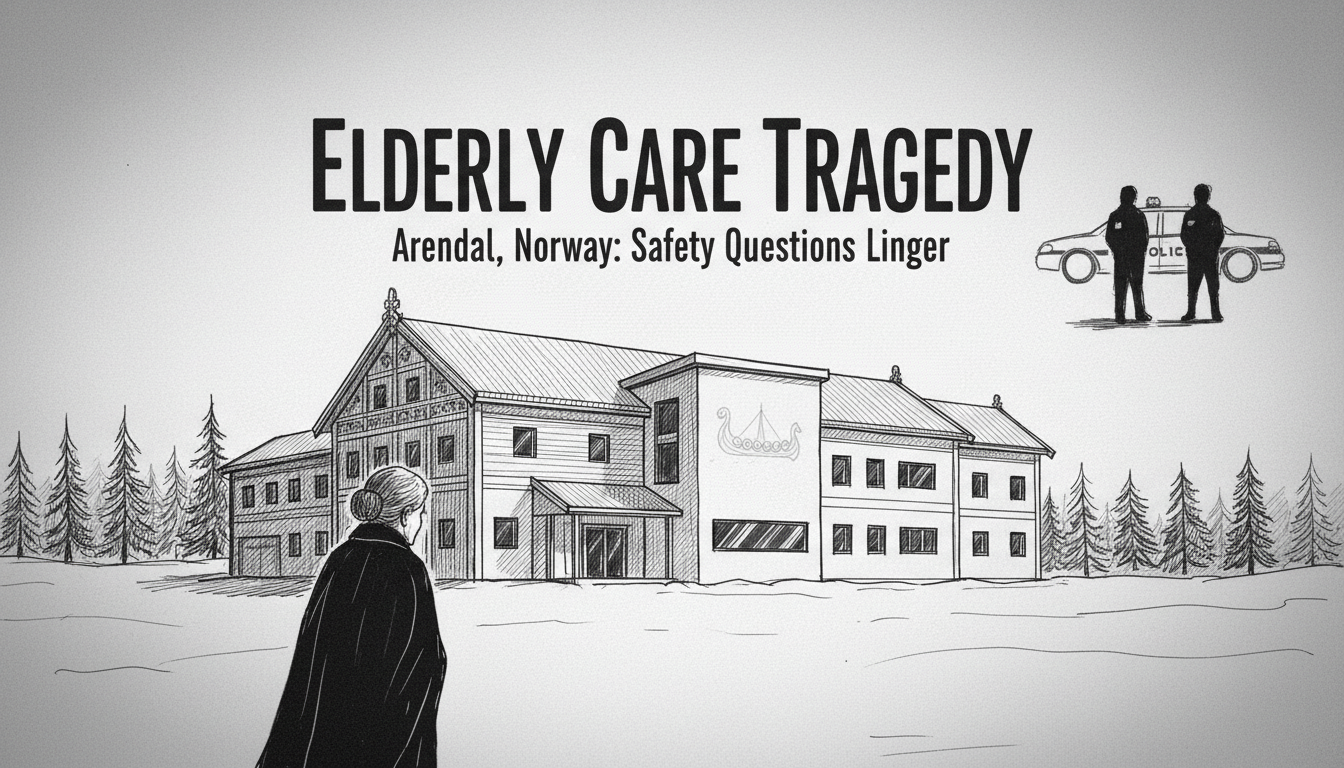
An elderly woman has died following a serious incident at a municipal care institution in Arendal, Norway. Police confirmed the death occurred in October after an altercation between two residents. Authorities are now awaiting a forensic report to determine the exact cause of death. The case highlights critical questions about safety and oversight in Norway's elder care system.
Police officials stated no weapons were involved in the incident. One person has been charged with causing bodily harm. The municipal chief for Arendal declined to comment further on the ongoing investigation. She cited standard regulatory procedures for following up on such serious matters. The family of the deceased has announced a press conference for early December. They initiated this public statement independently of the municipality.
This tragic event occurs within a broader national context. Norway's elderly care system, while generally well-regarded, faces increasing strain. An aging population and staffing challenges create complex operational environments. Municipal institutions like the one in Arendal are responsible for providing safe housing for vulnerable citizens. Incidents of resident-on-resident altercations, though rare, prompt serious reviews of protocols and staffing levels.
For international observers, this case offers a window into Scandinavian social welfare models. Norway's system is decentralized, with municipalities holding primary responsibility for elder care. This structure aims for local adaptability but can lead to variations in service quality and oversight. The national supervisory authority for health and care services typically investigates such serious events. Their findings often lead to revised guidelines for all municipalities.
What happens next will be closely watched. The police investigation and the forensic report will establish the factual sequence. Parallel administrative reviews by the municipal and state supervisory bodies will examine systemic factors. These could include staff training, facility design, and intervention protocols. The family's decision to hold a press conference suggests they seek public accountability beyond private bureaucratic processes.
This is not the first time such incidents have prompted national debate in Norway. Past cases have led to increased funding for staff training and improved facility designs. The core challenge remains balancing a homelike environment with necessary safety measures for a frail population. The outcome in Arendal may influence policy discussions on resource allocation and regulatory frameworks for years to come. The well-being of society's oldest members remains a definitive measure of its social contract.