
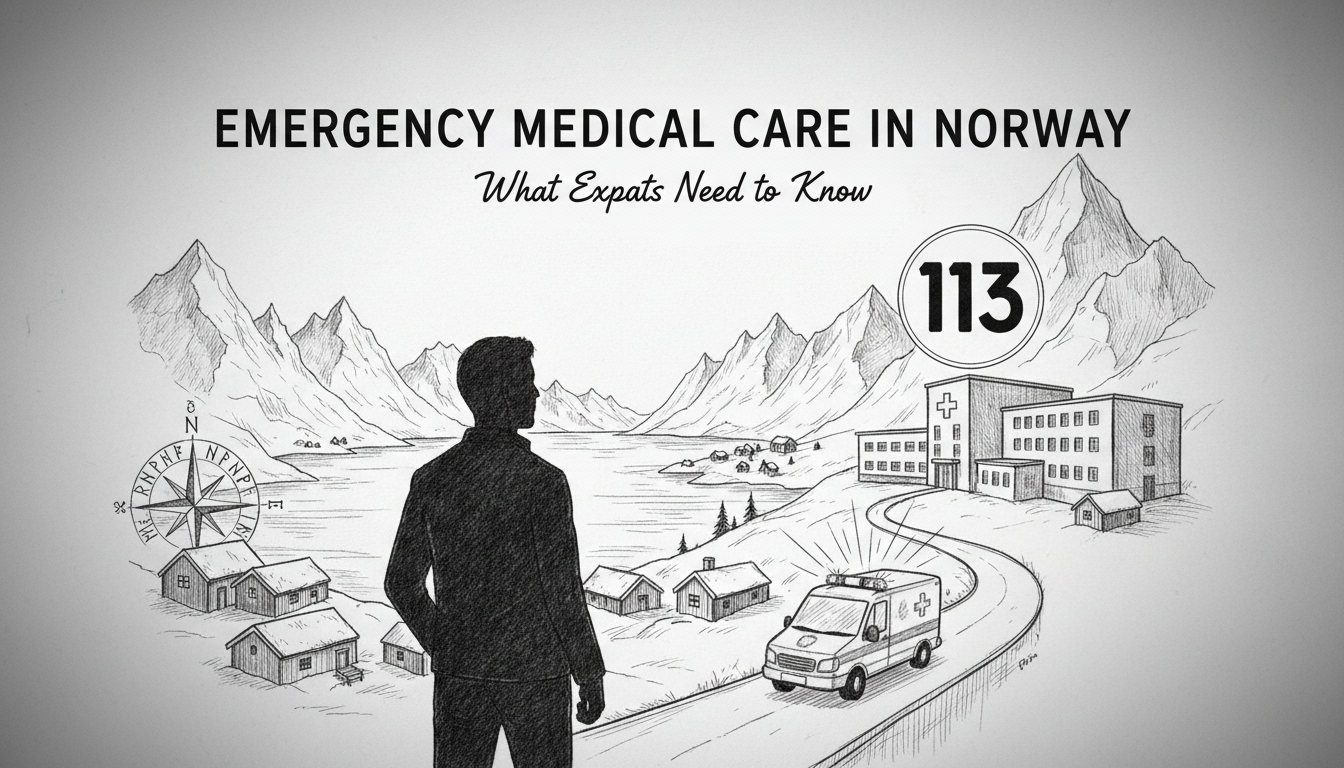
A British engineer in Oslo broke his wrist skiing. He called 113. An ambulance arrived in eight minutes. He paid nothing at the hospital. This experience surprises many newcomers. Norway's emergency medical system works differently. Understanding it prevents costly mistakes.
How Norway's Emergency System Operates
Norway has a tiered emergency response system. The national emergency number is 113. This connects to the Emergency Medical Communication Centre. Operators assess urgency using the Norwegian Index for Emergency Medical Assistance. This protocol determines response priority. Life-threatening cases get immediate ambulance dispatch. Less urgent cases receive telephone advice or clinic referrals.
Ambulances are operated by municipal health services or private contractors like Falck Norway. Response times average 12-15 minutes in cities. Rural areas may wait longer. Air ambulance services like Luftambulansetjenesten cover remote regions. Helicopter dispatch occurs for critical cases far from hospitals.
Tools
Call home for less
Save up to 90% on international calls to family and friends.
Links may be monetized via affiliate partners.
Emergency rooms exist at all public hospitals. Private clinics like Volvat and Aleris handle minor emergencies. They charge consultation fees from 1,500 NOK. Public hospitals provide free emergency care for residents. This includes EU citizens with European Health Insurance Cards.
Costs and Insurance Realities
Emergency medical care costs nothing at public hospitals for residents. Norway's National Insurance Scheme covers this. Non-residents and tourists pay full costs. A simple emergency room visit can cost 3,000 NOK. An ambulance ride averages 2,500 NOK. Intensive care reaches 15,000 NOK daily.
Expats must secure proper insurance immediately. The public system requires registration with the National Population Register. This process takes 4-6 weeks. During this gap, private insurance is essential. Companies like Gjensidige and Tryg offer expat health plans. Annual premiums range from 8,000 to 15,000 NOK.
Dental emergencies follow different rules. Public coverage excludes most adult dental care. A weekend tooth infection requires private clinics. Emergency dental visits cost 2,000-4,000 NOK. Some employers provide dental insurance through providers like DNB.
Practical Steps During Emergencies
Call 113 for life-threatening situations. These include chest pain, severe bleeding, or unconsciousness. Describe symptoms clearly. State your location precisely. Operators speak English. Follow their instructions exactly.
For non-urgent issues, contact the municipal emergency clinic. In Oslo, this is Legevakten Oslo. Their phone number is 116 117. Wait times average 2-3 hours. Bring your ID and insurance documents. Expect to pay a 450 NOK copayment if registered.
Download the Helsenorge app. This official platform shows wait times at emergency clinics. It provides medical records access. The app includes symptom checkers. Over 2 million Norwegians use it regularly.
Keep emergency contacts accessible. Program your general practitioner's number. Save your insurance policy details. Note your blood type and allergies. Carry your Norwegian ID number at all times.
Navigating Language and Cultural Differences
Medical staff speak excellent English. Written forms often appear only in Norwegian. Translation apps help with documents. Some hospitals provide interpreter services. Request this when booking appointments.
Norwegian emergency care emphasizes patient responsibility. You might receive home care instructions instead of hospitalization. Follow-up occurs through your fastlege (GP). This system reduces hospital overcrowding. It confuses expats expecting immediate specialist attention.
Prescription medications require pharmacy visits. Emergency rooms do not dispense drugs. Apotek1 and Vitusapotek operate 24-hour locations in major cities. Bring your prescription and ID. Expect to pay full price without a Norwegian prescription card.
Frequently Asked Questions
What number do I call for medical emergencies?
Call 113 for life-threatening emergencies. This connects to ambulance services. For non-urgent issues, call 116 117. This reaches the municipal emergency clinic. Both numbers have English-speaking operators.
How much does an ambulance cost in Norway?
Ambulance rides cost approximately 2,500 NOK. The National Insurance Scheme covers this for registered residents. Tourists and uninsured expats pay the full amount. Air ambulance services cost significantly more.
Do I need private health insurance as an expat?
Yes, during your registration period. The public system requires National Population Register enrollment. This takes 4-6 weeks. Private insurance from Gjensidige or Tryg fills this gap. Annual premiums start at 8,000 NOK.
What documents should I bring to the emergency room?
Bring your passport or Norwegian ID. Show your European Health Insurance Card if applicable. Provide your insurance policy details. Include your Norwegian ID number if assigned. Carry any existing medical records.
Can I visit any emergency room in Norway?
Yes, but public hospitals serve your municipality first. Private clinics like Volvat accept all patients. They charge consultation fees from 1,500 NOK. Public hospitals provide free emergency care for residents.
How long are emergency room wait times?
Life-threatening cases receive immediate attention. Non-urgent cases wait 2-3 hours average. The Helsenorge app shows real-time wait times. Oslo's Legevakten publishes daily averages on their website.
What constitutes a medical emergency in Norway?
Life-threatening conditions qualify. These include heart attacks, strokes, and severe injuries. Difficulty breathing requires immediate care. High fever in infants needs urgent attention. When in doubt, call 113 for assessment.