
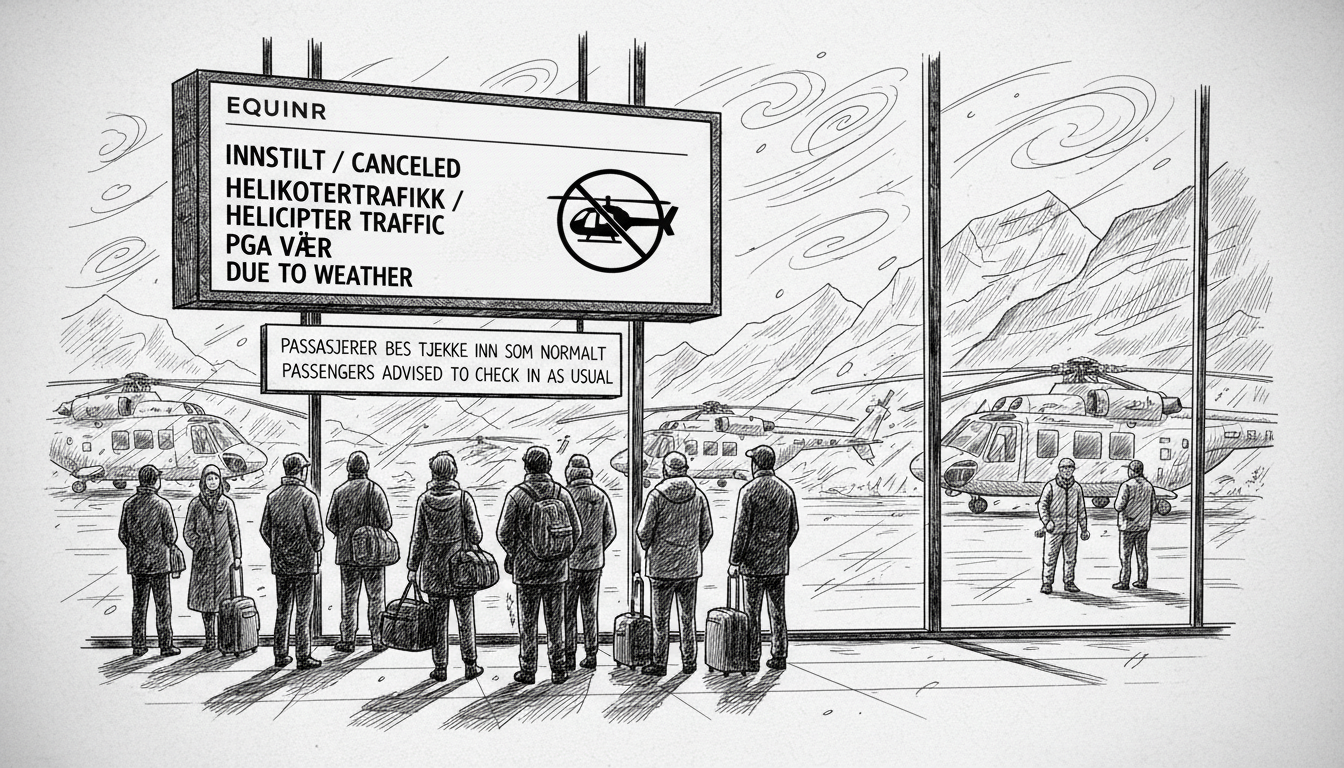
Equinor has suspended all helicopter traffic from Sola Airport until further notice. The energy company announced delays affecting flights from the Stavanger-area heliport on Tuesday. Weather conditions forced the temporary shutdown of helicopter operations. Passengers should still report for regular check-in despite the cancellations. The heliport website confirmed the service disruption earlier today.
Helicopter transport remains crucial for Norway's offshore energy operations. Workers rely on these flights to reach North Sea oil and gas installations. Weather-related stoppages occur periodically along Norway's coast. The region experiences frequent challenging weather patterns that impact air travel. This particular suspension affects one of Norway's busiest heliports for energy sector workers.
Norway's strict aviation safety regulations mandate such cancellations during poor weather. The country maintains some of Europe's most rigorous flight safety standards. Helicopter operations face particular scrutiny following past incidents in Norwegian offshore aviation. These temporary groundings demonstrate the system's commitment to worker safety over operational convenience.
International energy workers and Norwegian employees alike face travel disruptions. The suspension impacts both shift workers heading offshore and those returning to mainland Norway. Delayed rotations can affect workforce planning on offshore platforms. Energy companies typically have contingency plans for such weather-related interruptions. The Norwegian offshore industry has developed robust protocols for managing these periodic transportation challenges.
Sola Airport serves as a critical transportation hub for Norway's energy sector. Located near Stavanger, the facility handles thousands of offshore workers annually. The region represents the heart of Norway's oil and gas industry. Major energy companies maintain headquarters and operational centers throughout the Stavanger area. Weather disruptions here ripple through the entire North Sea energy production chain.
What happens when weather grounds these essential flights? Companies typically reschedule workers for the next available transportation window. Offshore installations continue operating with current crew members extending their shifts. The safety-first approach means occasional delays but prevents potentially dangerous flight conditions. Norway's offshore transportation system has evolved through decades of North Sea operations to balance efficiency with absolute safety priorities.
The current suspension shows how weather continues to challenge even advanced transportation systems. Norway's approach prioritizes human safety above all other considerations. This reflects the country's broader safety culture within its dominant energy sector. The temporary disruption serves as a reminder of the environmental challenges facing North Sea operations.