
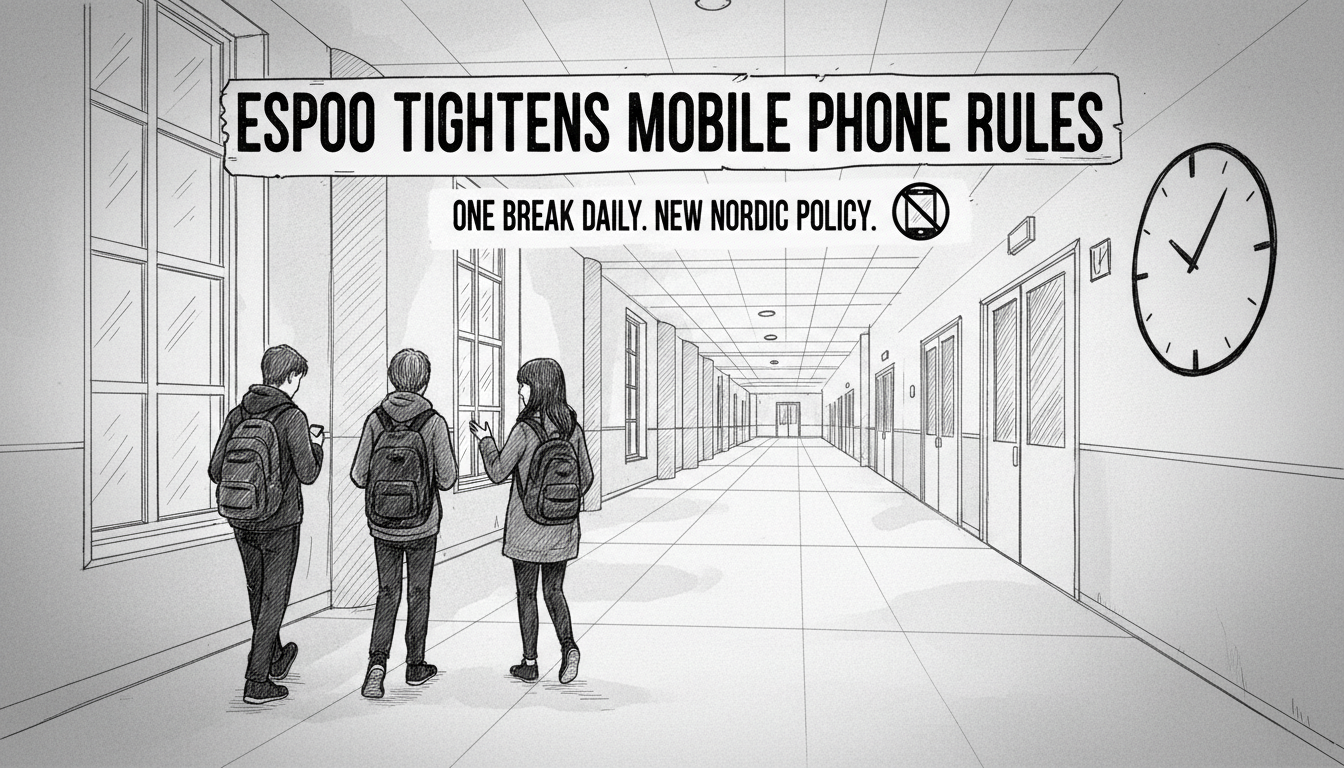
The City of Espoo has announced a significant tightening of mobile device policies across all its Finnish-language upper secondary schools. Starting at the beginning of 2026, students in grades 7 through 9 will lose the freedom to use their phones freely during school breaks. The new policy, described as a compromise by officials, will restrict phone use to just one designated break period per day, explicitly excluding the lunch hour. This move centralizes a decision previously left to individual school principals and marks a clear shift in the city's approach to digital discipline in education.
Juha Nurmi, the Director of Finnish-language Basic Education for Espoo, framed the decision as a balance between competing interests. The city conducted consultations with parents, teachers, and the youth council during the autumn. Nurmi stated that the resulting policy reflects a compromise between these different viewpoints. The decision to preserve one break for phone use acknowledges the practical reality for many Espoo teenagers. Young people in the city often manage their own transportation to extracurricular activities, requiring coordination during the school day. The lunch hour was specifically excluded as a phone-eligible break to ensure students focus on eating their provided school meal.
This is not Espoo's first intervention on the issue. The municipality previously restricted phone use for younger pupils, where devices have been completely banned throughout the entire school day and in after-school clubs. The latest policy change specifically targets the 13-16 age group in upper secondary schools. For high schools, existing agreements with students will continue, with a focus on ensuring rules are clear and widely communicated. The definition of 'mobile devices' is broad, encompassing smartphones, tablets, and smartwatches. Each school will now determine which specific break period will serve as the designated phone time.
The policy shift reflects a broader, ongoing debate in Finland and across the Nordic region about technology's role in childhood development and education. Finnish schools have traditionally enjoyed high levels of autonomy, making this city-wide mandate notable. The decision points to growing concerns among educators and parents about social fragmentation, distraction, and the impact of constant connectivity on adolescent well-being and peer interaction. It also highlights the practical challenges of modern parenting, where children's independent schedules necessitate digital communication, even during school hours. The three-year lead time before implementation in 2026 suggests officials anticipate a period of adjustment and aim to set clear expectations for incoming student cohorts.
From a political and administrative perspective, the move demonstrates how local Finnish municipalities wield considerable power over educational policy within the national framework. Espoo, as Finland's second-largest city and a major tech hub, is often seen as a policy trendsetter. Its actions are closely watched by other municipalities. The explicit effort to balance stakeholder opinions—parental concern, teacher authority, and student autonomy—is a classic example of the Finnish consensus-driven governance model. While framed as a child welfare issue, the policy is also a logistical response to the management challenges phones pose in school environments. The real test will be in consistent enforcement across dozens of schools and whether the compromise satisfies any of the parties completely, or simply becomes a new source of minor daily friction.