
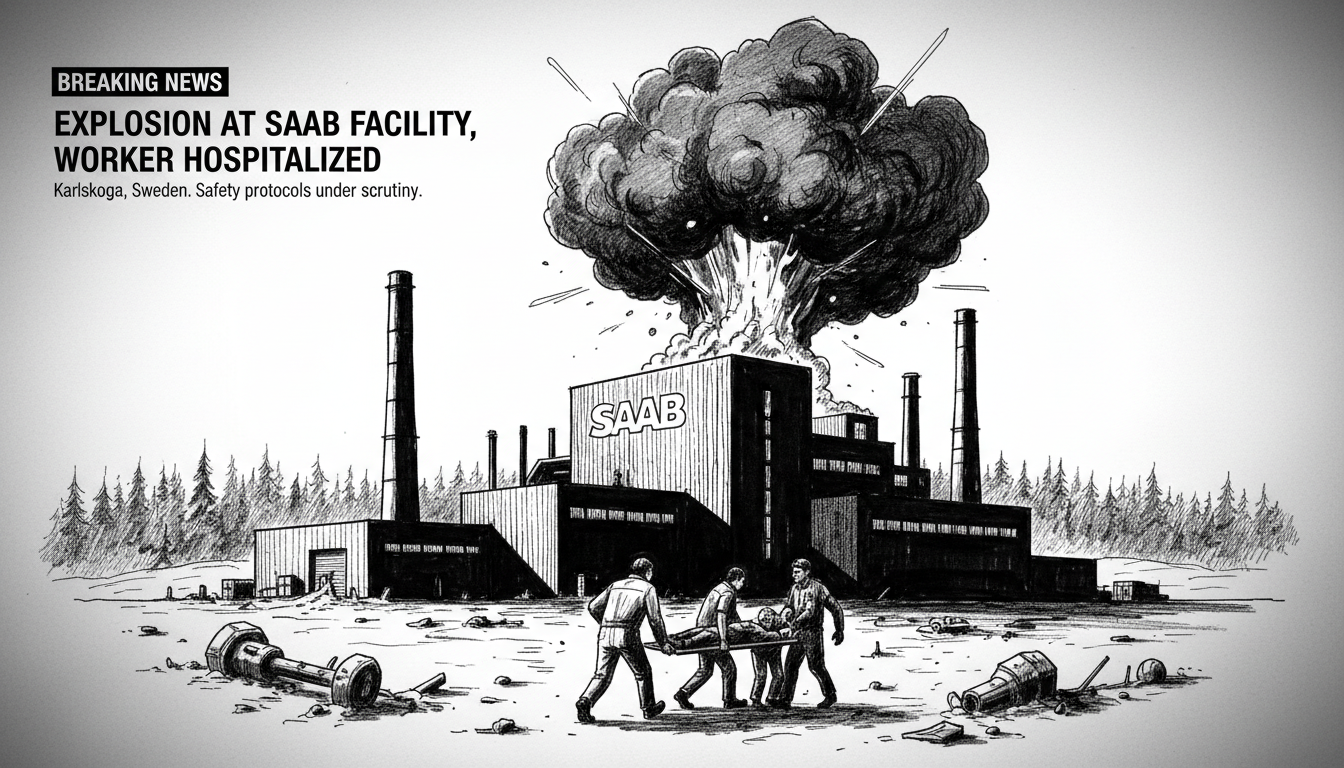
An explosion rocked the Björkborn area of Karlskoga this afternoon, sending emergency services rushing to a Saab defense systems facility. The loud bang, reported around 1 PM, originated from a bunker on the company's premises. This incident highlights the inherent risks in Sweden's vital defense manufacturing sector, a cornerstone of the nation's industrial identity and security policy.
Saab, a global name in aerospace and defense, confirmed a workplace accident occurred at its Karlskoga site. Company press chief Mattias Rådström stated in a release that one person was transported to a hospital for care. Rescue services and police responded to the scene but have since left. Authorities confirmed the injured individual was conscious and able to speak when taken away by ambulance.
Both police and Saab have launched investigations into the explosion, which is being treated as a workplace accident. Saab emphasized that safety is its highest priority and that a thorough review of the incident is underway. For now, police have no further information to share. This event immediately draws parallels to Sweden's strict workplace safety culture, governed by the Swedish Work Environment Authority. High-profile incidents in industrial towns like Karlskoga are rare but scrutinized heavily, given the nation's pride in its engineering and manufacturing standards.
Karlskoga, a city in Örebro County, has deep historical ties to defense manufacturing, famously linked to Alfred Nobel. The Saab facility there is integral to local employment and the national economy. An accident here resonates beyond the factory gates, touching a community where industry and daily life are closely intertwined. For international observers, it's a reminder that even in a nation known for meticulous safety protocols, high-tech manufacturing carries real-world dangers. The investigation's findings will be crucial, not just for Saab but for public confidence in the sector's regulatory oversight.
What happens next involves multiple layers of Swedish bureaucracy. The police investigation will determine if any criminal negligence occurred. Concurrently, the Swedish Work Environment Authority will conduct its own mandatory review. Saab will face intense pressure to provide transparent answers to its workforce and the public. The worker's recovery is the immediate human concern, but the long-term implications involve potential operational changes, renewed safety drills, and possibly broader discussions about the defense industry's footprint in such communities. This is more than a local news brief; it's a test of Sweden's industrial safety narrative on the global stage.