
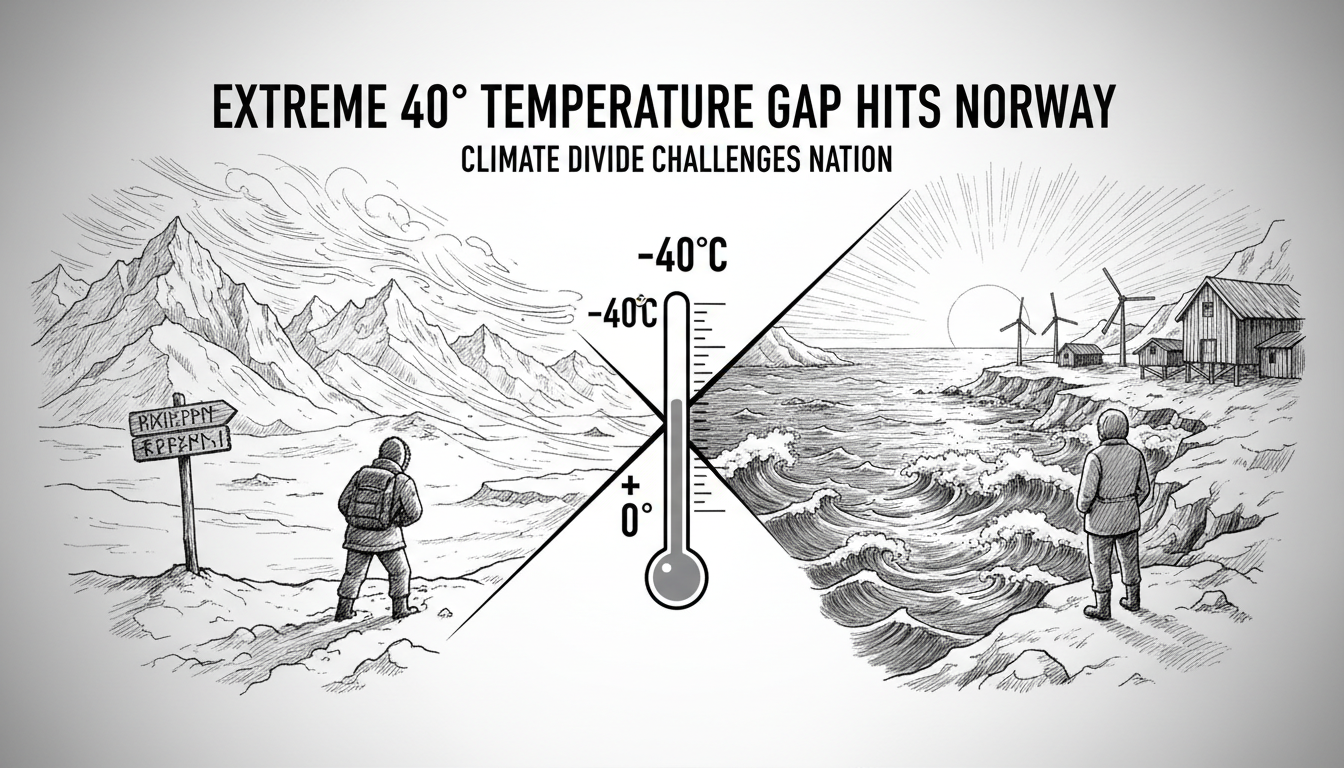
A dramatic weather contrast gripped Norway this week. The coastal village of Ulvik in Vestland recorded a mild 12.2 degrees Celsius. Meanwhile, the inland Arctic community of Kautokeino plunged to a frigid -27.9 degrees. This created a staggering 40.1-degree temperature difference across the country overnight.
Meteorologists attribute the split to distinct weather systems. A low-pressure system in the south brought rain and mild air to the western fjords. Concurrently, calm winds and clear skies allowed cold air to settle over the Finnmarksvidda plateau. 'We live in a long country, so it creates large variations,' explained a duty meteorologist. They noted such contrasts are typical for December but less common when occurring simultaneously.
The extreme gap highlights Norway's unique climatic challenges. Its long shape stretches from the temperate Atlantic coast to the high Arctic. This creates vastly different living conditions and infrastructure demands. Energy consumption for heating in the north can be ten times higher than in the south during winter peaks. This impacts national energy policy and grid management.
The situation is now shifting. A low-pressure system is moving northward. It will bring milder nights to Kautokeino and the Finnmark region in the coming days. The mild weather will continue on the Vestland coast through the week. However, winter conditions are forecast to push southward by the weekend. This could bring sub-zero temperatures, at least overnight, to more populated areas.
These swings have real consequences. For the oil and gas industry, operating in the Barents Sea, such rapid changes affect offshore logistics and worker safety. In politics, the Storting often debates regional support and energy subsidies. These are crucial for northern municipalities facing harsh winters. The current government must balance climate goals with the practical energy needs of a dispersed population.
The weather event is a stark reminder of Norway's geographic reality. Policy decisions made in Oslo's government buildings must account for conditions from the southern fjords to the Arctic north. As global climate patterns shift, understanding these local extremes becomes more critical for national planning and resilience.