
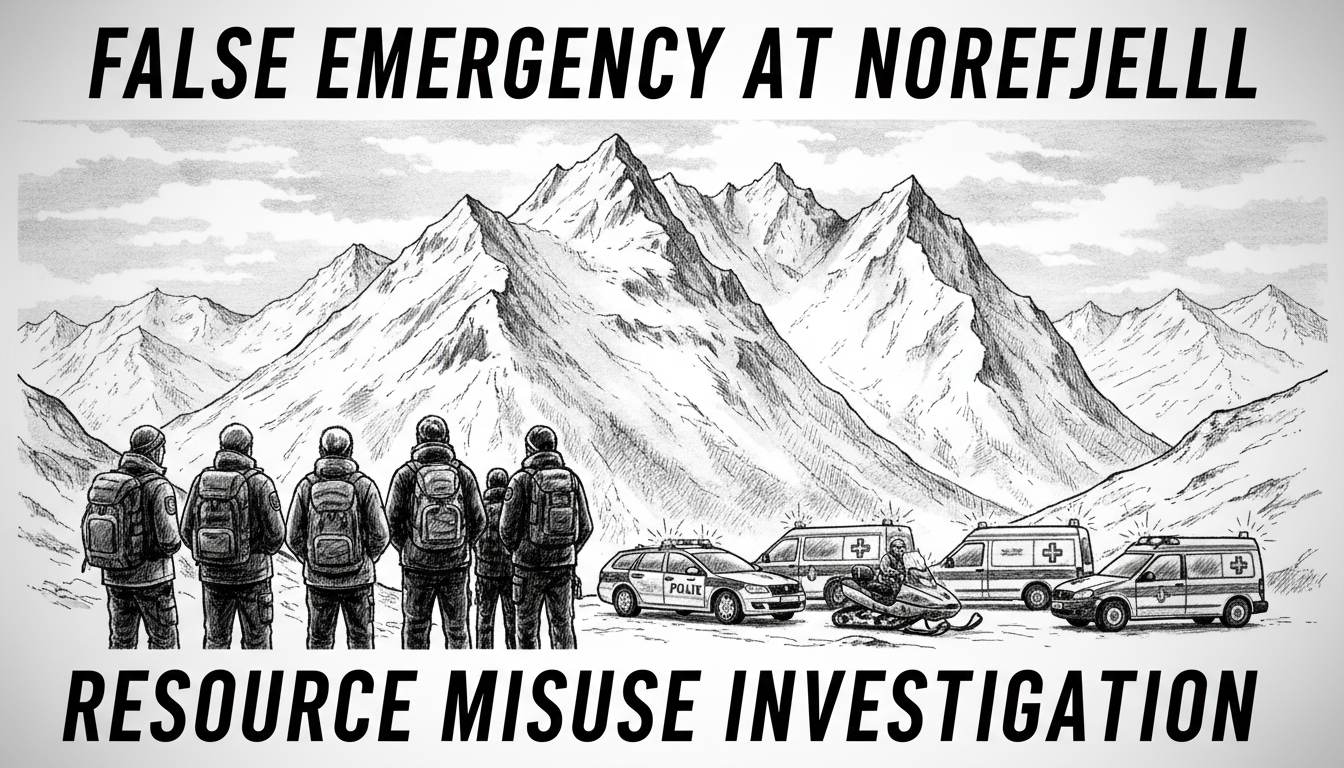
Norwegian emergency services mobilized a major response to Norefjell mountain in Buskerud county this weekend. Police, fire departments, ground ambulances, and air ambulance resources deployed following a cardiac arrest report. Authorities later confirmed the emergency call was false. No individuals required medical assistance at the popular skiing destination. Police have opened a formal investigation into the incident.
This false alert represents a serious misuse of Norway's emergency response system. The coordinated response involved multiple agencies traveling to the mountainous region. Such incidents drain critical resources that could be needed for actual emergencies. Norefjell's remote location made this deployment particularly resource-intensive.
Norwegian law treats false emergency reports as criminal offenses. Perpetrators face potential fines or imprisonment under section 182 of the Penal Code. The justice system takes these violations seriously given their life-threatening implications. Emergency services cannot risk assuming any report might be false.
This incident occurs amid ongoing debates about emergency service funding in rural Norway. Mountain communities like those near Norefjell require specialized response capabilities. The air ambulance service plays a crucial role in these regions. False alerts jeopardize the sustainability of these expensive services.
What motivates someone to make false emergency reports? Some seek attention while others may intend to test response systems. Regardless of intent, the consequences remain serious. Emergency responders risk their safety traveling at high speeds. They also face emotional distress when discovering no actual emergency exists.
Norwegian emergency services maintain impressive response times despite challenging geography. This efficiency makes them vulnerable to abuse through false reporting. The system operates on trust that citizens will use it responsibly. Incidents like the Norefjell case undermine that trust.
The police investigation will likely examine communication records and witness statements. Identifying the caller represents the immediate priority. Modern technology usually enables authorities to trace emergency communications. Successful prosecution requires conclusive evidence about the caller's identity and intent.
Local officials express concern about such incidents affecting community safety. False reports create unnecessary risks for both responders and residents. They also damage public confidence in emergency systems. The Norefjell case highlights ongoing challenges in maintaining emergency service integrity.
Norwegian emergency response protocols emphasize verification while prioritizing speed. This balance becomes difficult in remote locations where verification options are limited. The system must err toward responding rather than risking a real emergency going unanswered. This inherent vulnerability will continue to challenge authorities.