
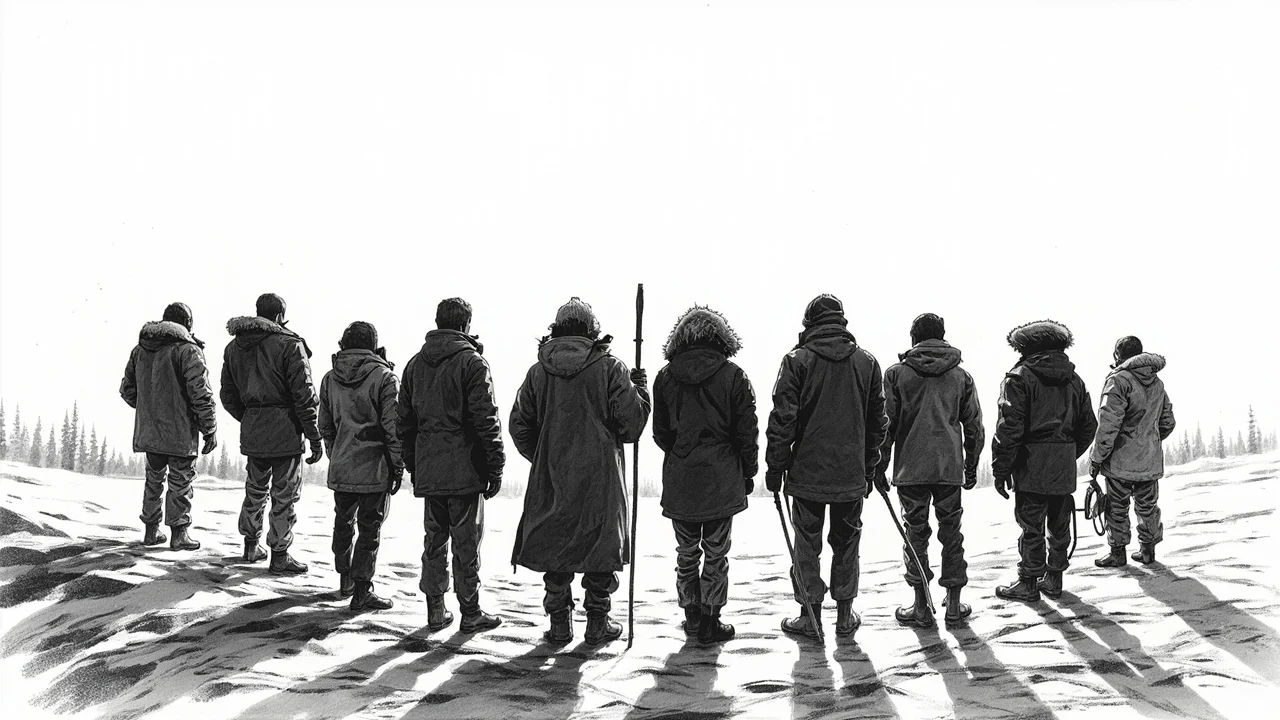
Finland's Aalistunturi activists have announced they will appeal to the Rovaniemi Court of Appeal after a district court ordered them to pay nearly 35,000 euros in damages and legal costs. The Lapland District Court found seven protesters from the Elokapina and Metsäliike groups guilty of disobedience and criminal trespass for blocking a logging road in January 2023, delaying state forestry enterprise Metsähallitus's operations.
Activists have condemned the ruling as contrary to a sense of justice, while a crowdfunding campaign supporting them raised 22,000 euros in under two days. This rapid financial support highlights the polarized national debate surrounding forest conservation and civil disobedience in Finland's northern wilderness.
The District Court's Ruling and Legal Grounds
The Lapland District Court in Rovaniemi delivered its verdict on Thursday, sentencing the activists to pay a combined total of nearly 30,000 euros in damages with late interest, plus close to 5,000 euros in legal costs. The case stemmed from a January 2023 protest where activists blocked a road leading to logging sites in the Aalistunturi area of Finnish Lapland.
The court determined the activists committed criminal trespass by setting up a camp on a forest road under Metsähallitus's administration. This action physically prevented logging machinery from accessing the planned cutting area. The court also found them guilty of disobedience toward police, as they refused orders to leave the site. Police subsequently detained the activists and took them to a cell in Rovaniemi.
Metsähallitus had pursued damages from the activists, arguing their camp directly delayed scheduled logging operations in the Aalistunturi region. The court upheld this claim, leading to the substantial financial penalty.
Activists' Response and Public Support
Immediately following the verdict, the activists declared their intention to challenge the decision in a higher court. “To Metsähallitus we want to say, we will meet in the Court of Appeal,” activist Saga Kampman said in a Metsäliike press release. Another protester, Ida Korhonen, who was detained during the action, focused on the public support they received.
“Even though the district court's decision was contrary to a sense of justice, it was wonderful to notice what amazing support and solidarity people from all over Finland have shown,” Korhonen stated. This support was quantified swiftly through a crowdfunding campaign on the Mesenaatti platform.
The campaign reached its initial goal by offering supporters posters, postcards, and even camping gear used during the Aalistunturi protest. The 22,000 euros collected in less than 48 hours will likely aid in funding the upcoming appellate court process, demonstrating a significant base of public sympathy for the activists' cause.
The Context of Forest Protest in Lapland
The Aalistunturi protest is part of a longer series of environmental actions targeting forestry in Finland's northern old-growth forests. Groups like Elokapina, the Finnish branch of Extinction Rebellion, and the domestic Metsäliike network argue that state-owned Metsähallitus engages in unsustainable logging practices that damage biodiversity and carbon sinks.
Lapland's forests are a particular flashpoint, with activists and some scientists contending that these ecosystems are especially vulnerable and critical for climate resilience. The protesters' chosen method—physically blocking access roads—is a direct action tactic designed to cause economic delay and generate media attention for their conservation message.
This case intersects with ongoing political discussions in the Eduskunta about balancing Finland's economically crucial forestry sector with increasingly urgent biodiversity and climate targets. Finland's international commitments under EU biodiversity strategies often form a backdrop to these domestic conflicts.
The Path to the Court of Appeal
The appeal process will move the case from the Lapland District Court to the Rovaniemi Court of Appeal. This is a standard procedural step in the Finnish legal system, allowing for a re-examination of both the facts of the case and the application of law. The appellants will argue that the district court erred in its judgment, likely reiterating their position that their actions were a necessary and proportional response to the environmental threat they perceive.
The court will review whether the penalties for trespass and disobedience are justified and whether the claimed damages attributed to the protest delay are accurate and lawful. This legal battle is set to extend for many more months, keeping the issue of protest rights and forest management in the public eye.
The strong crowdfunding response suggests the activists have substantial moral and financial backing for this extended fight. It also signals that fines, often used as a deterrent against civil disobedience, can sometimes galvanize further support and draw more attention to the activists' underlying cause.
A Broader Debate on Civil Disobedience
This case feeds into a wider European conversation about the limits of protest and the legal consequences of civil disobedience aimed at climate and environmental issues. Similar cases have emerged in other Nordic nations and across the EU, where activists increasingly resort to direct action, facing significant legal and financial risks.
The Finnish legal system's handling of this appeal will be closely watched by both environmental groups and authorities. A confirmation of the heavy fines could set a precedent for the financial risks of similar future actions. Conversely, a reduction or overturning of the penalty could be seen as a validation of the protest methods, potentially encouraging further demonstrations.
The core conflict remains unresolved: the tension between the right to protest, the protection of property and economic activity, and the urgent calls for more aggressive environmental protection. The Aalistunturi case, now headed to the Court of Appeal, is one legal manifestation of this much larger and persistent societal debate in Finland. The final ruling will have implications not just for these seven individuals, but for the landscape of environmental activism in the country.