
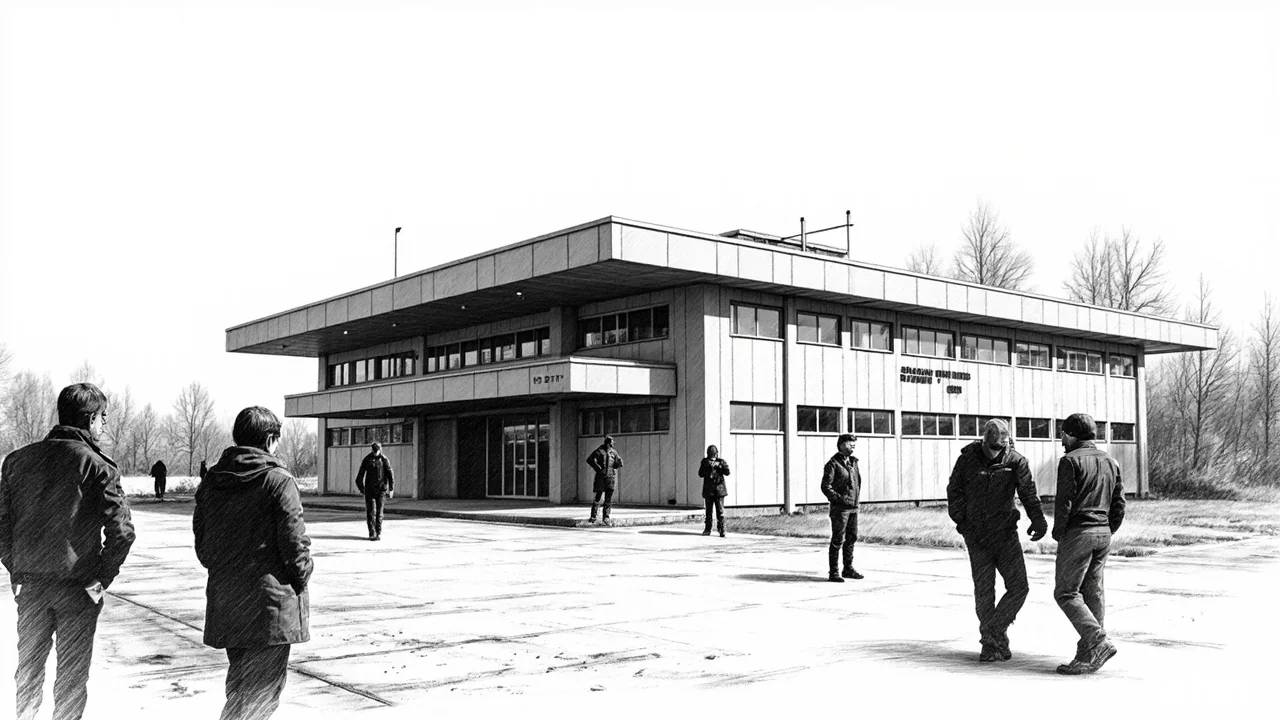
Finland's transport agency Traficom will close its Imatra driver licensing and testing service point at the start of 2027, a decision that came as a surprise to local driving schools. The move is part of a competitive tendering process for road traffic permit and examination services across the country, which will leave the city of Imatra without a direct Traficom-operated facility.
Driving Schools Voice Frustration and Concern
The announcement has sparked immediate concern among driving school operators in Southeastern Finland. Timo Tapaninen, the regional manager for Epic-autokoulu, whose area covers the entire southeast from Lahti downwards, stated the news was a shock. 'It certainly shook us. The information came as a complete surprise to us as well,' Tapaninen said. He strongly criticized the decision's impact on the region, arguing, 'In my opinion, Imatra has already been disciplined and impoverished quite enough. And in addition to Imatra, this decision affects other municipalities in the nearby area.'
For driving schools, the practical implications are significant. The closure affects schedules, travel connections, and the ability of parents to transport their children for tests. A manager from CAP-autokoulun echoed the sentiment of unequal treatment, stating the shutdown 'certainly does not feel like equal treatment.' The removal of a local service point forces all licensing activities—including theory exams, practical driving tests, and permit applications—to be centralized elsewhere, increasing travel time and logistical complexity for instructors, students, and their families.
The Traficom Tender and Service Provider Shift
The decision stems from Traficom's ongoing competitive tender for road traffic license and examination services. Currently, these services in Imatra are provided by Traficom's contract partner, Ajovarma, under an agreement that runs until the end of this year. The new tender process, which will define service provision from 2025 onwards, did not include a service point in Imatra in its planned network for the start of 2027. This indicates a strategic consolidation of service locations by the transport authority, though Traficom has not publicly detailed the criteria for selecting which points to maintain or close.
This move reflects a broader trend in Finnish public administration of centralizing services to achieve cost efficiencies. However, it often creates a tension between national budgetary goals and the principle of regional equality, especially in less populous areas outside major urban centers. The Southeast, with its scattered population and longer distances between towns, is particularly vulnerable to reduced service accessibility, raising questions about citizens' equal access to essential public services regardless of postal code.
Regional Impact Beyond Imatra's Borders
While the city of Imatra is the direct location losing its service point, the repercussions will ripple across a wider area. As Timo Tapaninen noted, the decision 'affects other municipalities in the nearby area.' This includes towns and communities in South Karelia that have relied on the Imatra point for convenient access. Residents may now need to travel to larger hubs like Lappeenranta or Kotka, journeys that can take over an hour by car from some locations, creating a substantial barrier for young learners and those without reliable private transportation.
The closure also poses a business challenge for driving schools. Increased travel time for test appointments means less efficient use of instructors' and dual-control vehicles' time, potentially increasing operational costs. These costs could be passed on to students in a region where economic challenges are already a concern. Furthermore, the added logistical hurdle may discourage some individuals from pursuing a license, indirectly affecting mobility and employment prospects in Southeast Finland.
A History of Service Cuts and Community Resilience
The reaction from driving school professionals touches on a deeper sentiment of regional neglect. The comment that 'Imatra has already been disciplined and impoverished quite enough' references a longer history of structural changes and public service reductions experienced by the city and its surrounding region. Industrial transitions and population decline have shaped Imatra's recent decades, making the loss of a state service point feel like another symbolic and practical blow to the community's infrastructure and self-sufficiency.
This context makes the Traficom decision more than a simple administrative adjustment, it is perceived as part of a pattern that diminishes the quality of life and accessibility in Eastern Finland. The debate taps into the ongoing national discussion about how to maintain viable services across the entire country while adapting to demographic and economic realities. It raises the question of where the line is drawn between necessary efficiency and the erosion of regional equality guaranteed in the Finnish constitution.