
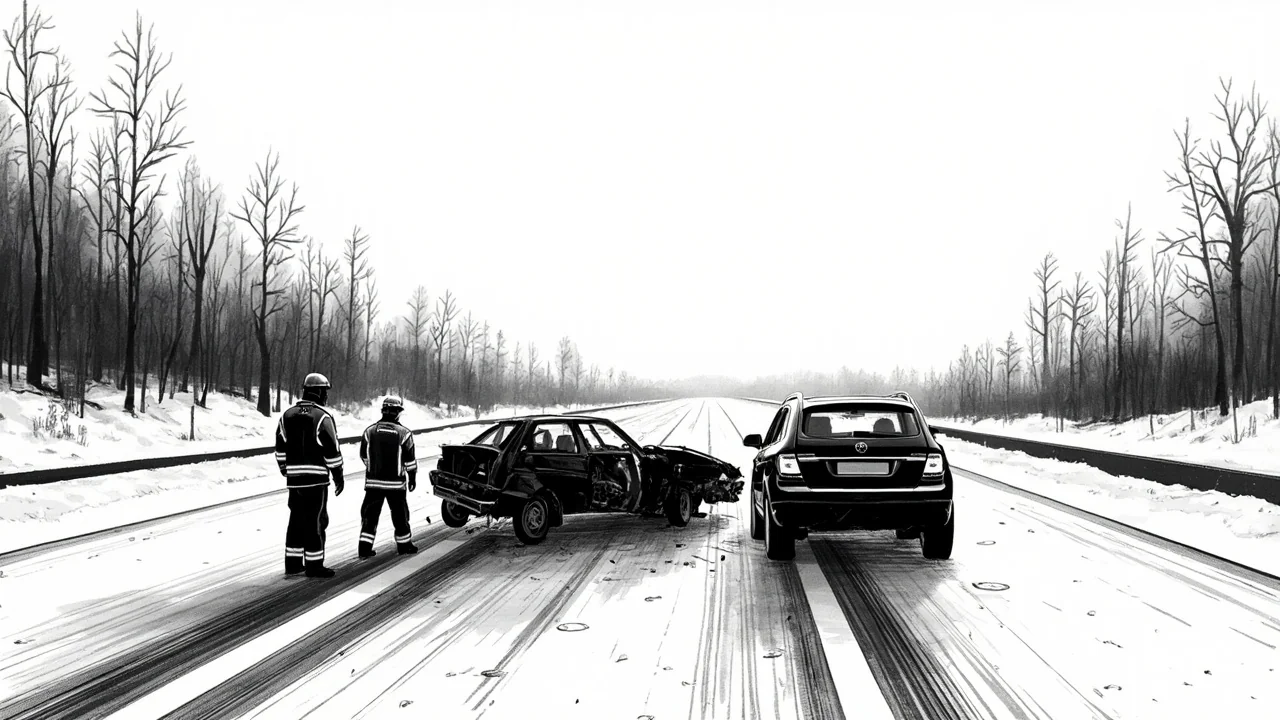
Finnish roads experience over 10,000 injury accidents annually, with icy conditions contributing to roughly a third during winter months. A stark example occurred on Tuesday when a passenger car lost control on a slippery ramp at the ABC Viipurinportti service station in Lappeenranta, Southern Finland. The vehicle struck a lamppost, toppling it, and ended up resting on its roof, causing minor traffic disruptions during recovery operations. No serious injuries were immediately reported, but the incident underscores persistent seasonal hazards on Finland's transport network.
The Viipurinportti Ramp Incident
Emergency services responded to the Lappeenranta ramp after the driver lost control on the slick surface. The car's collision with the lamppost resulted in significant vehicle damage and required the utility pole to be righted. Traffic flow in the ramp area experienced brief interruptions as crews worked to clear the scene. Local police have launched a standard investigation to determine the exact cause, focusing on road conditions and driver behavior. Initial reports suggest speed was not excessive, pointing to the treacherous nature of compacted snow and ice common in the region during early spring.
This accident aligns with a predictable pattern in Finnish traffic safety data. The Finnish Transport and Communications Agency, Trafi, consistently notes a spike in single-vehicle incidents during transitional weather periods. "When temperatures hover around zero, black ice forms rapidly, especially on ramps and bridges," a Lappeenranta police spokesperson said in a statement. The Viipurinportti ramp, connecting a major highway to local services, is a known trouble spot during freezing conditions, according to municipal maintenance logs.
Winter Driving Hazards and Finnish Policy
The Lappeenranta crash brings Finland's winter road management strategies into sharp focus. The Finnish Transport Infrastructure Agency oversees a massive annual effort to maintain over 78,000 kilometers of public roads. National guidelines mandate specific plowing and salting schedules, but local municipalities like Lappeenranta manage their own urban networks. Budget constraints often affect response times, a point debated frequently in the Eduskunta, Finland's parliament. The Centre Party has repeatedly called for increased rural road maintenance funding, while the Green League emphasizes alternative transport solutions to reduce overall traffic risks.
From a broader perspective, Finland's approach to road safety is heavily influenced by European Union directives. The EU's Road Safety Policy Framework 2021-2030 aims to halve serious injuries and fatalities, pushing member states to adopt stricter standards. Finland has historically exceeded many EU targets, but seasonal accidents remain a stubborn challenge. "Our goal is Vision Zero—no deaths or serious injuries on our roads," noted Finland's Minister of Transport and Communications in a recent parliamentary committee hearing. "This requires continuous investment in infrastructure resilience and driver education, particularly for winter conditions."
Infrastructure and EU Safety Standards
Examining the accident site reveals infrastructure considerations. The impacted lyhtypylväs, or lamppost, met current Finnish standards, but its collapse points to the force of the impact. EU regulations on passive road safety, such as those governing street furniture crashworthiness, are under constant review. Finland actively participates in these Brussels-led discussions, advocating for standards that account for Nordic winter phenomena. The Helsinki government district has allocated funds in the 2024 budget for upgrading roadside safety equipment on high-risk corridors, including areas in South Karelia, where Lappeenranta is located.
Local authorities in Etelä-Karjala (South Karelia) have launched seasonal awareness campaigns. These campaigns emphasize tire regulations—Finland mandates winter tires from December to February—and defensive driving techniques. However, experts argue that technical measures alone are insufficient. "Human factors adaptation to extreme conditions is critical," said a senior researcher at VTT Technical Research Centre of Finland, referencing ongoing studies into driver behavior on ice. "Education must evolve beyond legal requirements to build ingrained safety habits."
Economic and Social Impacts of Road Accidents
Beyond immediate safety, accidents like the one in Lappeenranta carry economic weight. Each serious traffic incident costs Finnish society an estimated one million euros in healthcare, emergency services, and lost productivity. The Finnish Motor Insurers' Centre reports that winter damage claims increase by nearly 40% compared to summer months. These costs factor into government planning, influencing everything from insurance premium regulations to infrastructure spending debates in Helsinki. The Social Democratic Party-led coalition has made transport safety a minor but consistent point in its policy program, linking it to broader welfare goals.
For residents of Lappeenranta, the crash is a localized disruption but also a reminder of systemic issues. The city has invested in improved street lighting and surface drainage in recent years, yet challenges persist. Public feedback channels show citizen concern over specific ramps and intersections that glaze over quickly. Municipal council meetings frequently feature debates on whether to prioritize more frequent salting or invest in longer-term surface heating solutions, a costly but effective technology used in some Finnish city centers.
The Path Forward for Finnish Road Safety
Looking ahead, Finnish authorities are combining traditional methods with new technology. Pilot projects using sensor networks to detect ice formation in real-time are underway in Lapland and could be expanded south. Data from these projects informs national policy and could shape future EU-wide initiatives. Furthermore, Finland's role in Arctic council discussions often brings its winter road expertise to the global stage, influencing international standards.
The Lappeenranta incident, while minor in scale, acts as a microcosm of Finland's ongoing battle against seasonal driving dangers. It highlights the intersection of local maintenance practices, national policy frameworks, and supranational regulation. As climate change introduces more variable winter conditions, with increased freeze-thaw cycles, the pressure on Finland's road safety ecosystem will only intensify. The ultimate question remains: Can continuous policy refinement and public vigilance keep pace with nature's unpredictability? The answer will determine not just statistics, but the safety of every driver on Finland's slippery roads this winter and beyond.