
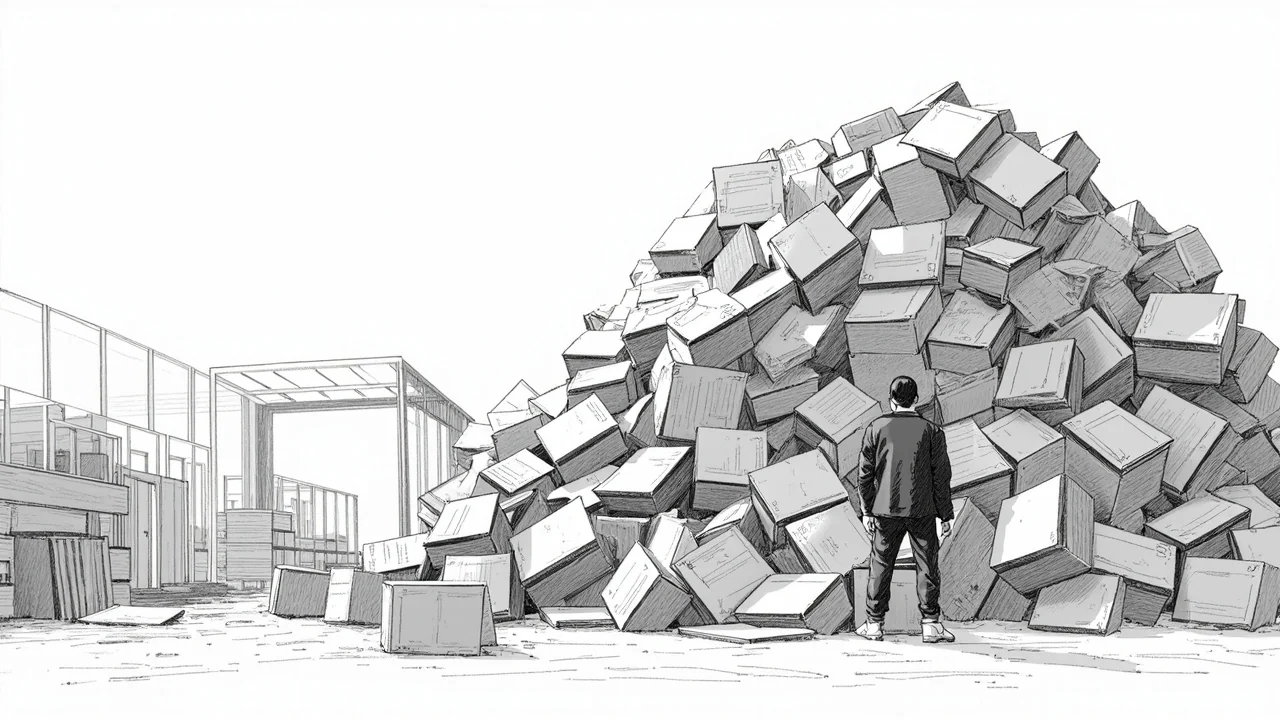
Finland's Uusimaa region will reduce cardboard packaging waste fees by 11 percent starting February 2026. The Uusimaa Waste Board made the decision, which will lower collection and transport costs for housing corporations and households. The new pricing model takes effect on February 1, 2026, marking a rare decrease in municipal service charges. This adjustment applies specifically to fees for emptying and transporting cardboard packaging, a significant segment of household recycling streams. The board's vote directly impacts the budgets of tens of thousands of properties across the capital region. The decision reflects a recalculation of operating costs and efficiency gains within the regional waste management system. It comes amid broader national discussions about packaging waste and the circular economy. The price drop is a tangible outcome of the board's annual fee review process, which typically receives less public attention than increases. For many residents, it will be a welcome deviation from the steady rise of living expenses. The implementation date over a year away allows for proper administrative adjustments and billing system updates. The board has not indicated if similar revisions are planned for other waste streams, such as biowaste or mixed waste. This targeted reduction highlights the specific economic dynamics of recycling cardboard, a valuable material in the secondary raw market. The move is consistent with Finland's national waste policy that aims to make recycling economically efficient. It also aligns with EU directives pushing for higher recycling rates and better cost recovery systems for packaging. The Finnish government has set ambitious targets for recycling household waste, and cost structures are a key tool. The fee change will be automatically reflected in the waste management invoices sent to property managers. Individual homeowners in detached houses will see the change on their direct municipal bills. The 11 percent figure represents an average reduction, with exact savings varying slightly between municipalities within the Uusimaa board's jurisdiction. This is because local handling costs can differ, though the regional board sets the baseline fee. The decision was made following a review of the previous year's operational data and cost projections. Lower-than-expected processing and logistics costs for cardboard contributed to the possibility of a price cut. The international market for recycled cardboard fibers also plays a role in the economics. Strong demand for these materials can improve the revenue side of waste management operations. This financial feedback mechanism can occasionally lead to lower fees for consumers, as seen in this case. The board operates on a non-profit basis, meaning fees are designed to cover costs rather than generate surplus revenue. When costs are lower than forecast, the board has the option to adjust future fees downward. This principle is central to Finland's public utility management model. The announcement provides long-term certainty for housing corporations as they plan their annual budgets for 2026. Many boards have grown accustomed to factoring in annual waste fee increases. This reversal requires a different kind of financial planning. The news was welcomed by the Finnish Real Estate Federation, which advocates for predictable housing costs. Their representatives noted that even single-digit percentage reductions help counterbalance other rising expenses. The Federation has long argued for more transparent breakdowns of waste management fees. This specific reduction for cardboard may prompt questions about the pricing of other recyclables. Finland's system separates cardboard, paper, glass, metal, and plastic at the source from households. Each stream has its own collection logistics and end-market, leading to different cost structures. Cardboard and paper have traditionally been among the most stable and valuable recycling streams. The country's high collection rates for these materials contribute to economies of scale. The Uusimaa region, which includes Helsinki, generates a large, consistent volume of cardboard waste. This volume makes the system efficient and helps control per-unit costs. The region's dense urban structure also reduces transportation distances compared to more sparsely populated areas. These geographical and demographic factors are baked into the regional board's calculations. The board's decision-making process involves representatives from its member municipalities. They review detailed reports from waste management experts before voting on fee schedules. The proposal for an 11 percent reduction passed during one of these regular administrative meetings. The minutes of such meetings are public documents, though they are rarely scrutinized outside of municipal circles. This particular decision gained attention because of its direct consumer impact. It serves as a practical example of how local governance can affect daily living costs. The timing is notable, as inflation and interest rates have put significant pressure on Finnish household budgets. While the relief is specific and delayed until 2026, it signals a potential shift in cost trends for public services. The Finnish Ministry of the Environment monitors these regional decisions as part of its national waste management oversight. The ministry's goal is to ensure the entire system moves toward greater cost-effectiveness. Reducing the financial burden on citizens for mandatory recycling is part of that strategy. The success of this fee model in Uusimaa could inform approaches in other regional waste management boards. Finland has several such boards, each managing waste for their respective regions. They operate under the same national framework but have autonomy over specific fees. This means a similar reduction in cardboard fees is not guaranteed in other parts of the country. Each board will conduct its own cost analysis for the 2026 billing period. Residents outside Uusimaa should consult their local waste management authorities for information. The national trend, however, has been toward more nuanced pricing that reflects the actual cost of managing different waste types. This move away from flat fees is encouraged by both national policy and EU circular economy action plans. The underlying principle is that accurate pricing provides an economic incentive for correct sorting by consumers. If recycling a material costs less, those savings can theoretically be passed on. The Uusimaa decision puts that theory into practice for cardboard. Looking ahead, the focus will be on whether the reduced fee can be maintained beyond 2026. That will depend on the stability of operational costs and the global market for recycled cardboard. The board will review the fees again next year for the 2027 period. For now, property owners have a clear date to mark in their financial calendars. The decrease, while modest on an individual invoice, represents a collective saving of millions of euros for the region. It is a reminder that the complex systems managing our waste have direct and sometimes positive financial consequences. As Finland continues to refine its circular economy, the cost to consumers remains a critical measure of success.
A Targeted Price Reduction
The Uusimaa Waste Board's decision to cut cardboard packaging fees by 11 percent is a precise intervention in the region's waste management economics. The reduction applies exclusively to the costs for emptying and transporting sorted cardboard from residential properties. This stream is collected separately in blue bins or sacks across the capital region. The board's mandate covers setting these fees for all member municipalities, ensuring a unified system. The fee structure is designed to be cost-covering, with revenue funding the collection trucks, sorting facilities, and eventual sale of the baled cardboard to recyclers. The board cited recalculated operational costs as the reason for the adjustment. This suggests that the actual expense of managing cardboard in 2024 was lower than previously budgeted. The savings are now being transferred forward to consumers through the 2026 price list. The long lead time is standard, allowing for contracts and billing software to be updated across the large, interconnected system.
The System Behind the Fee
Finland's waste management is organized through regional non-profit boards established by municipalities. The Uusimaa Waste Board is one of the largest, serving a population of over 1.7 million. Its decisions on waste fees are binding for local authorities within its area. The board manages the entire chain for certain waste streams, like packaging, from curb-side collection to final processing. For cardboard, the process involves collection, sorting to remove contaminants, baling, and selling the material to paper mills, often within Finland or the EU. The revenue from these sales offsets the system's operating costs. The remaining net cost is what is charged to households through the fees. When the sales revenue is higher or operational costs are lower, the fee can be adjusted downward. This creates a direct link between global commodity markets for recycled materials and local household bills. The system incentivizes efficient operations and high-quality sorting, as cleaner cardboard fetches a better price.
EU Context and National Goals
This fee reduction occurs within a strict policy framework set by the European Union and the Finnish government. The EU's Packaging and Packaging Waste Directive sets escalating recycling targets for member states. Finland has transposed these targets into national law, requiring high recovery rates for materials like cardboard. The government's waste policy emphasizes that the costs of managing packaging waste should be borne by the producers and users of that packaging, a principle known as extended producer responsibility. For household packaging, this cost is channeled through a producer responsibility organization, which then pays the waste boards like Uusimaa for the collection and recycling services. The board's fees are essentially its charge for providing this service. Therefore, the board's cost efficiency directly impacts the financial burden on the producer responsibility system, which is ultimately funded by consumers through product prices. A lower collection fee can contribute to a marginally lower overall cost of the system.
Implementation for Households
For residents, the change will be largely automatic. Housing corporations will see the reduced line item on their detailed waste management invoices from the local operator, which works under the board's pricing. The savings will then be factored into the monthly maintenance charges for apartment owners and tenants. For those in detached houses, the fee is typically included in the annual municipal waste management tax bill. The 11 percent reduction will be applied to the cardboard portion of that bill. The exact monetary saving will depend on the volume of cardboard a household generates, as fees are usually based on the size and type of property's waste container and collection frequency. A typical urban apartment building could save several hundred euros per year, while a single-family home might save a few dozen euros. While not a transformative sum, in a climate of rising costs, any reduction is significant. It also provides a clear, quantifiable benefit to citizens for participating correctly in the recycling system.
Future Implications and Stability
The key question now is whether this is a one-off adjustment or the start of a longer-term trend. The board's statement did not project future fee levels beyond the 2026 change. The stability of the fee will hinge on several volatile factors: global demand for recycled paper pulp, energy and fuel costs for collection vehicles, and domestic labor agreements. Furthermore, the quality of cardboard collected is crucial. Contamination from food waste or other materials increases processing costs and reduces the sale value of the bales. Public education campaigns on proper sorting are, therefore, an investment in keeping fees low. The board and municipalities may ramp up these efforts to protect the economic gains. If successful, the Uusimaa model could demonstrate that high recycling rates and consumer-friendly pricing are not mutually exclusive. As Finland works toward a more circular economy, the experience in its most populous region will be a critical case study in practical implementation.