
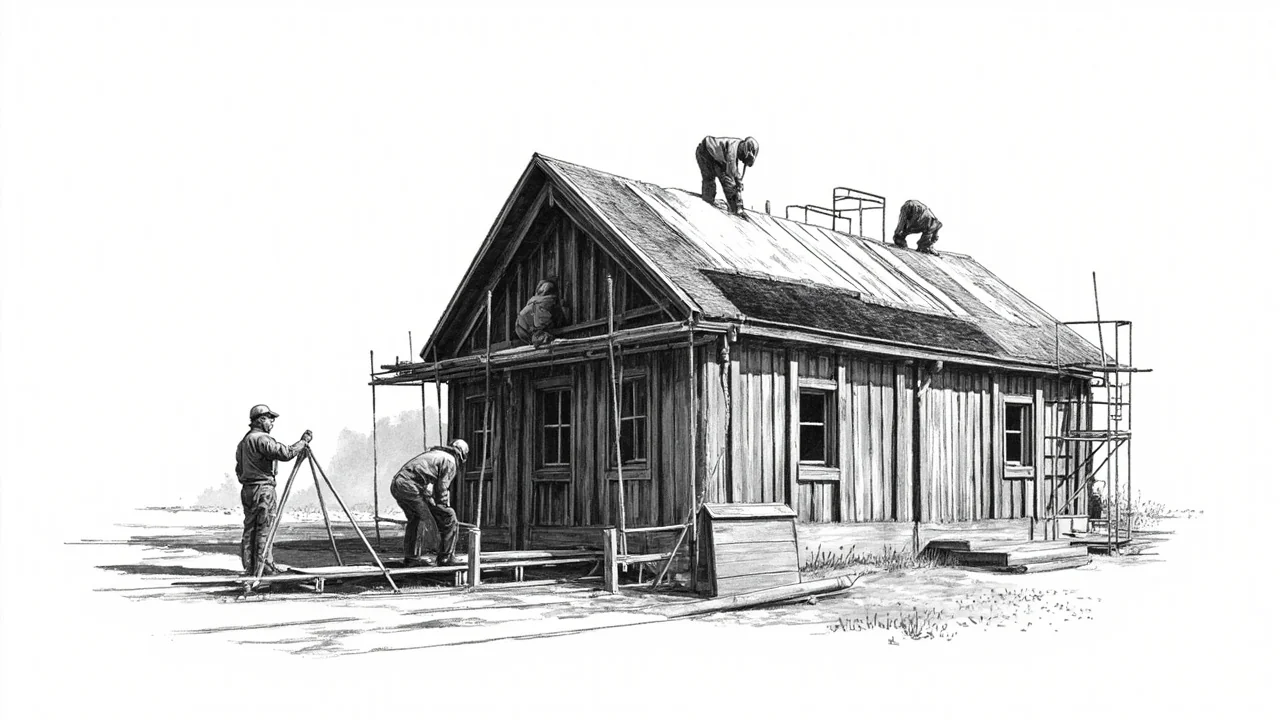
Finland’s Toivaka municipality has granted a 47,000 euro interim loan to the Ruuhimäki-seura association for the roof renovation of the historic Ruuhimäen kylätalo. The municipal board’s decision provides the crucial financing needed to preserve a key community building, ensuring its continued use for local events and gatherings in this Central Finland region. This move highlights the ongoing municipal support for maintaining rural cultural heritage infrastructure across the country.
A Municipal Investment in Community Space
The Toivakan kunnanhallitus, or municipal board, approved the nearly 47,000 euro loan specifically as välirahoitus, or interim financing, for the roof repair project. This type of loan is a common municipal tool in Finland for assisting voluntary associations and non-profits with large-scale maintenance projects they could not fund upfront. The loan terms and repayment schedule are established by the municipality, turning public funds into an investment in community-owned property. The decision follows a standard municipal process where the association’s application was reviewed by board members, who determined the project’s merit for the wider community benefit beyond just the association's membership.
The Role of the Ruuhimäki-seura Association
The Ruuhimäki-seura association is the voluntary community group responsible for the upkeep and operation of the Ruuhimäen kylätalo, or village house. Such associations are foundational to Finnish civil society, particularly in rural areas, managing local heritage sites, organizing events, and fostering community cohesion. The group applied for the municipal loan after identifying the urgent need for a new roof, a significant capital expense. Their voluntary work in maintaining the building for public use positions them as a key partner for the municipality in preserving local culture. The loan agreement formalizes a partnership where public funds support private civic action for the public good.
The Significance of Village Halls in Finnish Culture
Kylätalot, or village halls, serve as vital social hubs throughout the Finnish countryside. These buildings host everything from village meetings and educational courses to recreational clubs, private celebrations, and public elections. The Ruuhimäen kylätalo is one of many such structures that represent a tangible link to Finland’s agrarian past and the cooperative spirit of its rural communities. Maintaining these buildings is a constant financial challenge, often falling to local associations. Municipal support, like the loan from Toivaka, is frequently essential to prevent the deterioration and potential loss of these community assets. Their preservation is widely seen as crucial for maintaining social connectivity and cultural identity in sparsely populated areas.
Understanding Municipal Financing for Culture
The decision to grant this loan reflects a broader policy within Finnish municipalities to allocate resources for cultural and social infrastructure. Municipal budgets routinely include provisions for grants and loans to support associations undertaking projects that align with public goals for community vitality. This funding mechanism is distinct from direct operational subsidies, as it requires repayment, creating a sustainable cycle of investment. The evaluation process for such loans considers the building’s historical value, its current and future use by the public, and the financial plan presented by the association. This careful stewardship of public funds ensures taxpayer money is used effectively to leverage volunteer effort for significant community outcomes.
The Practical Impact of the Roof Renovation
The immediate practical impact of the 47,000 euro loan is the facilitation of a complete roof renovation, a critical structural repair that protects the entire building from weather damage. Without a sound roof, the interior of the village hall—including any historical features, insulation, and event facilities—is at risk of water damage, mold, and decay. Securing the roof guarantees the building’s longevity for decades to come, safeguarding the community’s investment in the property. It allows the Ruuhimäki-seura association to plan future events and minor improvements with confidence, knowing the essential envelope of the building is secure. The project also provides local employment for skilled tradespeople specializing in renovation work.
A Model for Rural Heritage Preservation
The Toivaka municipality’s action represents a replicable model for rural heritage preservation across Finland and in other Nordic countries facing similar demographic challenges. By providing interim financing, the municipality enables a necessary major repair without requiring the volunteer association to raise the full sum independently, a process that could delay work until irreversible damage occurs. This model balances public responsibility with private initiative, ensuring community assets are maintained without placing the full financial burden on municipal coffers or a small group of volunteers. It acknowledges that while a village hall may be legally owned by an association, its function and value are truly communal and worthy of public-sector support.