
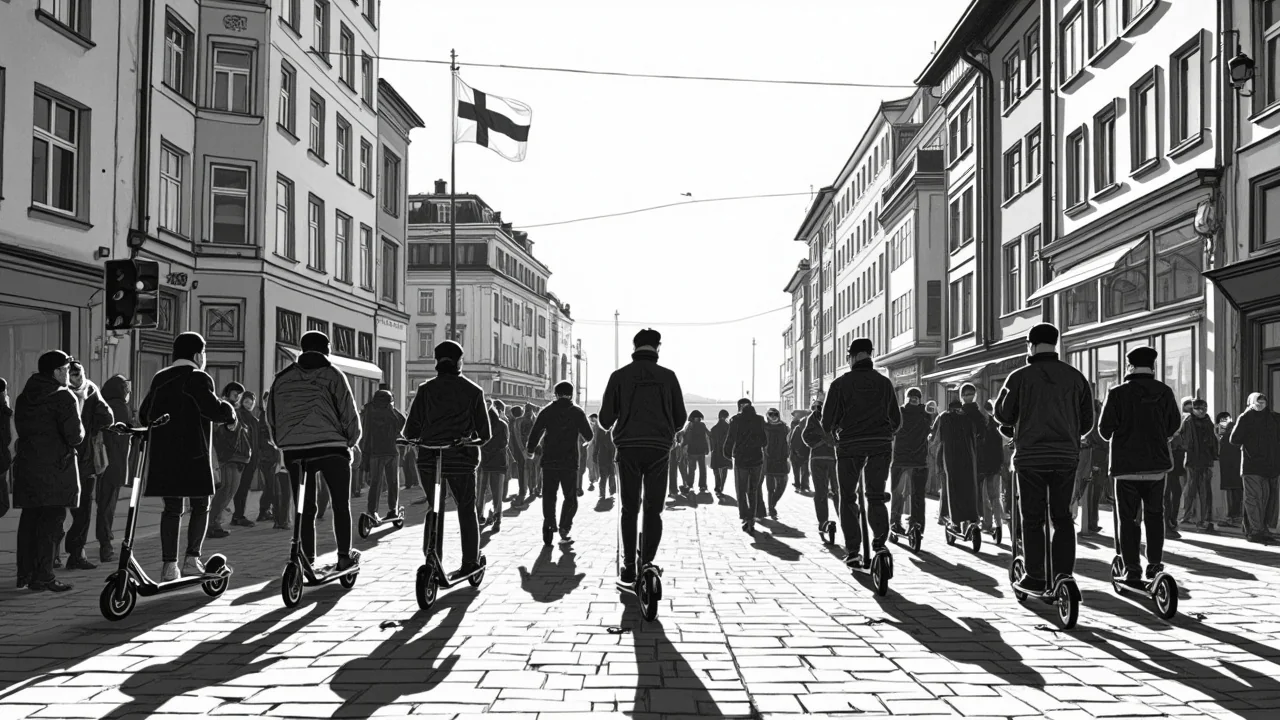
Finland's capital Helsinki faces a specific challenge with the estimated 1,500 electric mopeds weaving through its central grid streets, a situation highlighted by a recent incident where a rider drove against traffic before mounting a sidewalk. Police suspect the driver of endangering traffic safety. While authorities describe the issue as marginal nationwide, it concentrates in the dense downtown core, creating a distinct urban puzzle of mobility, regulation, and safety.
A Downtown Nuisance or a Systemic Issue?
Helsinki Police Department's head of traffic control, Dennis Pasterstein, frames the problem in clear terms. "On a nationwide level in Finland, it's a marginal issue, but in Helsinki's downtown grid-plan area, it's a kind of challenge. I wouldn't call it a problem," Pasterstein stated. He clarified that while these light electric vehicles cannot commit major traffic offenses, their frequent presence on sidewalks creates a sense of insecurity for pedestrians. Pasterstein pointed out a dual failure: both ignorance and disregard for Finland's traffic rules. He specifically noted that many drivers, often from abroad, may not know the regulations they are breaking.
The Delivery Driver Dimension
The issue is visibly tied to the city's food delivery ecosystem. Electric mopeds are a common sight under Wolt and Foodora couriers. These vehicles, like electric scooters, can be operated without a driver's license in Finland, lowering the barrier to entry for gig economy work. This spring, Foodora's CEO Einar Toivonen addressed the question of whether couriers breaking traffic rules was a significant concern. "I don't personally see it. Of course you can see individual cases, but we haven't seen it in statistics as a significant problem," Toivonen said. He affirmed that Foodora must take responsibility for ensuring its couriers are aware of traffic rules, acknowledging a duty of care while downplaying the scale of the issue.
Safety Risks for All Involved
Beyond pedestrian discomfort, Pasterstein emphasized a direct safety threat to the riders themselves. These vehicles often come equipped with summer tires but are used year-round, a dangerous practice in Finland's icy winter conditions. Their light construction offers little protection in a collision with a car, tram, or even a stationary object. The combination of potential rider inexperience, inadequate equipment for all seasons, and the pressure to complete deliveries quickly creates a cocktail of risk factors that extends beyond simple traffic nuisance to genuine personal danger for the couriers.
Regulatory Gray Zones and Enforcement Hurdles
The situation exists in a regulatory gray area. The vehicles fall into a category that grants them access to both cycle paths and roadways under specific conditions, but their increasing power and speed blur the lines. Enforcement is logistically challenging for police. Identifying and stopping individual mopeds for minor infractions in heavy traffic is resource-intensive. The practical outcome is often reactive policing, responding to incidents like the one last week, rather than systematic prevention. This reactive model does little to alter long-term behavior patterns among riders who may feel the economic pressure to prioritize speed over strict rule adherence.
Looking for Solutions Beyond Enforcement
Addressing the challenge may require moves beyond mere law enforcement. Potential pathways include mandatory, platform-provided traffic rule education in multiple languages for couriers, clearer municipal signage in high-traffic areas designating where these vehicles can and cannot go, and possible technical geofencing solutions integrated into delivery apps that could slow vehicles in pedestrian zones. Collaboration between the City of Helsinki, police, and the delivery platforms will be crucial. The goal would be to create a system where the economic model of rapid delivery does not inherently incentivize traffic violations. As Pasterstein noted, the issue is currently concentrated. This offers Helsinki an opportunity to develop a targeted, effective response before a marginal challenge evolves into a widespread problem, setting a precedent for other Finnish cities likely to encounter similar issues as these vehicles proliferate.
Ultimately, the question for Helsinki is how its famous functional urban design adapts to this new variable. Can the city integrate this new form of mobility without sacrificing the safety and order that defines its streets? The answer will depend on whether all stakeholders can move from acknowledging a "challenge" to agreeing on concrete, collaborative steps forward.