
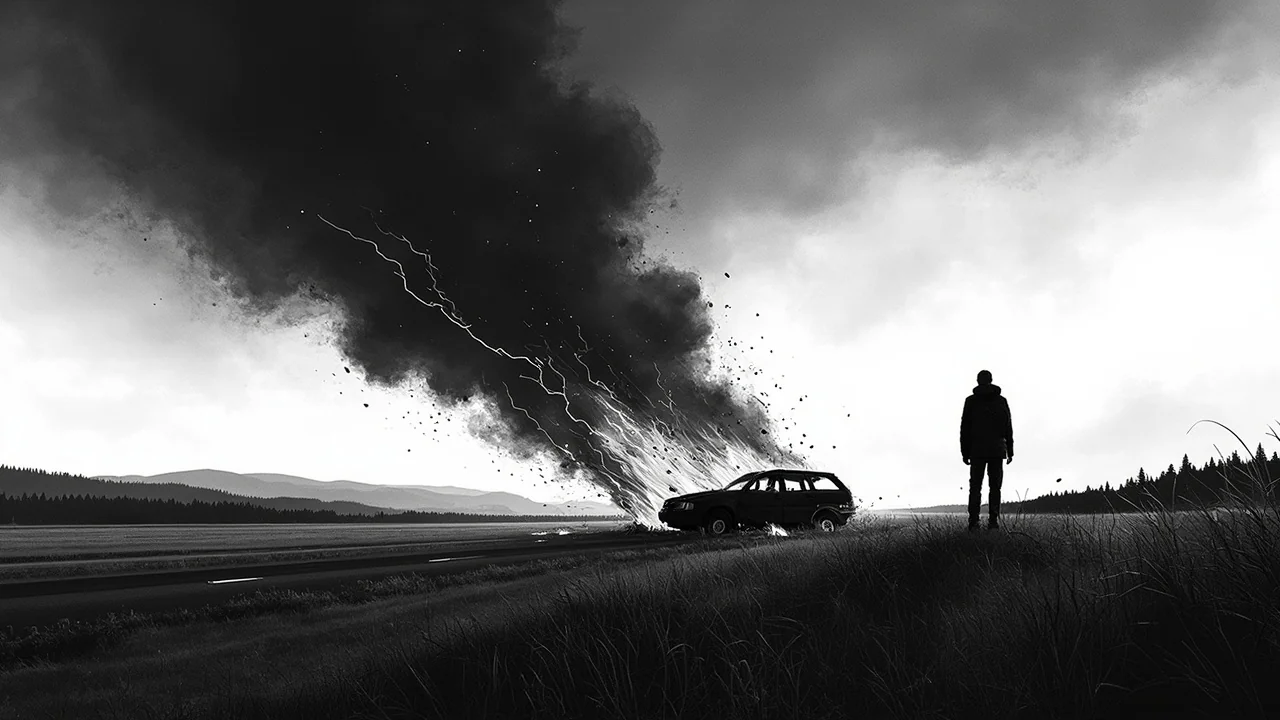
Finland’s Highway 12 was the scene of a dramatic vehicle fire near Iitti on Monday morning, resulting in the total loss of a car but no injuries to its driver. The Kymenlaakso Rescue Department received the emergency call at 11:15 AM after the passenger car, traveling toward Kouvola near the Kymiring area, caught fire. The quick-thinking driver managed to steer the burning vehicle to a bus stop, a move that provided a safer location away from high-speed traffic. Rescue personnel extinguished the blaze, but the car was left completely unusable. Authorities confirmed the driver was the sole occupant and emerged physically unharmed from the incident, which caused temporary disruption on the major route.
The Incident Unfolds on a Major Route
Highway 12 is a significant transport artery in the Kymenlaakso region, connecting cities and facilitating daily commutes and freight movement. The fire occurred near Iitti, a municipality known for its racing circuit, the Kymiring, which is a landmark for motorsport enthusiasts. The driver’s decision to pull into a bus stop likely prevented a more dangerous situation involving other vehicles on the busy highway. The Kymenlaakso Rescue Department’s response involved standard fire suppression protocols for vehicle fires, which can be complex due to flammable fluids and modern vehicle materials. The fact that the driver escaped without physical harm is the primary positive outcome from what could have been a fatal event.
Vehicle Fire Statistics and Common Causes
While this specific fire’s cause remains under initial review, vehicle fires in Finland, though not everyday occurrences, present a consistent risk. Data from the Finnish National Rescue Association (SPEK) and earlier statistics from the Finnish Transport and Communications Agency (Traficom) indicate that several hundred vehicle fires are reported annually. These incidents can stem from multiple sources, including electrical faults within the car’s wiring system, problems in the engine compartment related to fuel lines or oil leaks, and exhaust system issues. Older vehicles may be at heightened risk due to wear and tear on critical components, but fires can occur in models of any age. Accidents causing fuel spillage are another, though less common, catalyst. The investigation into this Highway 12 fire will seek to pinpoint the origin to determine if it was mechanical, electrical, or otherwise.
Emergency Response and Driver Safety Protocols
The successful outcome here highlights the importance of both driver awareness and efficient emergency response. Finnish rescue services train extensively for vehicle-related incidents. Upon arrival, their priorities are ensuring no one is trapped, controlling the fire to prevent explosion risk, and preventing the spread to nearby structures or vegetation. For drivers, the standard safety advice is clear: at the first sign of smoke or smell of burning, signal and pull over safely as soon as possible, just as this driver did. Once stopped, occupants should immediately evacuate the vehicle, move a safe distance away, and call the emergency number 112. Attempting to fight a vehicle fire with a personal extinguisher is not recommended unless it is a very small, contained flame and one has appropriate training, personal safety must always come first. The driver’s actions in this case align well with these safety guidelines.
Aftermath and Vehicle Fire Investigations
Following the extinguishment of the blaze, the scene on Highway 12 was secured and cleared. The destroyed vehicle will be examined as part of the standard procedure. If a technical fault is suspected, the findings may be relevant for broader vehicle safety. In Finland, such information can feed into general safety advisories. The incident also serves as a public reminder of vehicle maintenance. Regular checks, particularly of electrical systems, fluid levels, and the condition of lines and hoses in the engine bay, are a key preventive measure. While modern vehicles are designed with numerous safety features, they remain complex machines operating under high temperatures and stresses, making vigilance essential. The driver involved will now navigate the insurance and vehicle replacement process, a significant inconvenience but a minor concern compared to the potential for injury.
A Routine Emergency with a Best-Case Outcome
Monday’s event on Highway 12 represents what rescue services might classify as a routine emergency—a contained incident with a successful resolution where life was not endangered. It underscores the unpredictable nature of mechanical failures and the value of calm, prompt reaction. The Kymenlaakso Rescue Department completed its task efficiently, and traffic disruptions were minimized. For the public, it is a snapshot of a day where routine travel took a dangerous turn but concluded without tragedy. It reinforces the message that while vehicle fires are frightening, knowing and executing the correct safety steps—pull over, get out, get away, call for help—fundamentally changes the potential outcome. As the investigation closes, the story will likely remain a brief note in local logs, which is precisely the kind of conclusion emergency responders hope for every time the alarm sounds.