
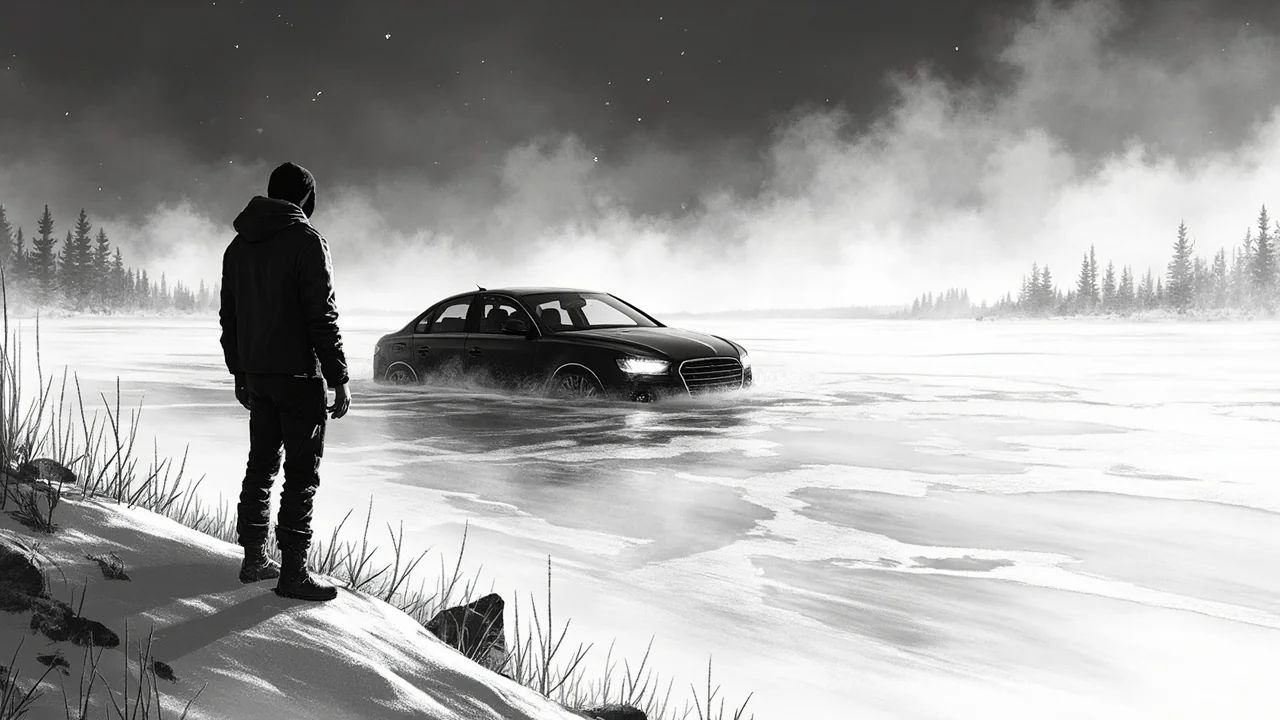
Finland's spring ice conditions are claiming vehicles, as a motorcyclist drove into weak ice on Lake Kallavesi in Kuopio on Saturday afternoon. Emergency services received a call from passers-by in the early evening who spotted an open hole in the ice under the Pölläkänniemi bridge, with tracks from a moped or motorcycle leading into it. Rescue workers called to the scene found a hole broken in the ice, and a motorcycle's tail light was visible in the water. The incident serves as a stark annual reminder of the dangerous transition period on Finnish lakes as winter turns to spring.
A Chilling Discovery in Savolanniemi
The incident occurred at Savolanniemi, a popular recreational area in Kuopio. According to the initial report, people out for a walk noticed something was wrong when they saw the unnatural opening in the ice sheet and the vehicle tracks that disappeared into the dark water. The location under the bridge is a known spot for ice fishing and winter walking, but the consistency of the ice can vary dramatically, especially near structures and with increasing sunlight. The rescue mission shifted from a potential rescue operation to a recovery one, highlighting the immediate danger of cold water immersion.
The Seasonal Danger of Deceptive Ice
This accident is not an isolated event but part of a predictable pattern in Finland each March and April. The ice, which may still appear solid and capable of supporting weight, undergoes significant weakening from below as water temperatures rise and from above as the sun's intensity increases. The Finnish Rescue Services and the Ministry of the Interior routinely issue warnings during this period, advising against driving any vehicles on ice. While foot traffic may still be safe in some northern areas, the central and southern parts of the country see rapid deterioration. The motorcycle involved in this case, likely a light motorcycle or a heavy moped, would have required ice thickness of at least 15-20 centimeters, a condition that can no longer be reliably assumed.
Rescue Operation and Public Vigilance
The Kuopio Rescue Department responded promptly to the public's alert. Their discovery of the motorcycle's tail light glowing beneath the surface confirmed the worst. Recovery operations in such conditions are complex and hazardous for the rescue personnel, requiring specialized equipment and protocols to ensure their safety on the compromised ice. The fact that the alarm was raised by observant citizens underscores the critical role the public plays in safety. Many similar incidents in remote areas go unreported until it is too late. The authorities have not released the identity of the rider, and the investigation into the exact circumstances is standard procedure following such a tragic event.
A Recurring Winter's End Tragedy
Statistics from previous years show that similar accidents happen annually. The allure of an ice road or a shortcut across a frozen lake often outweighs the perceived risk, especially after a long winter when the ice has been trustworthy for months. However, the structural integrity of spring ice is fundamentally different. It becomes 'candled' or columnar, losing its flexural strength even if it retains considerable thickness. This phenomenon makes it particularly treacherous for vehicles, which concentrate weight on small tire contact points. Local authorities across the lake-rich Finnish landscape use this and other incidents as a somber opportunity to reiterate their safety messages through local media and social networks.
The Broader Context of Finnish Ice Safety
Finland has a deep cultural relationship with its frozen waterways, encompassing transportation, recreation, and tradition. This relationship is guided by a strong ethos of personal responsibility and common-sense caution, often passed down through generations. Official guidelines are clear: avoid driving on ice in spring, always check local conditions, never go out alone, and carry ice picks and a safety line. Despite these widespread advisories, the transition season consistently produces avoidable accidents. The incident in Kuopio is a heartbreaking example of how quickly routine travel can turn fatal when natural conditions change silently beneath the surface. It prompts communities to once again discuss and reinforce the timeless message: no ice is completely safe ice, especially under the spring sun.
As the days grow longer and temperatures fluctuate above and below zero, the ice covering Finland's thousands of lakes will continue its inevitable retreat. This natural process, while marking the welcome arrival of spring, carries a inherent and deadly risk for those who misjudge its pace. The tracks leading into the dark water at Savolanniemi are a silent testament to a mistake made too late, a visual echo that rescue workers and safety advocates hope will resonate as a warning to others. The collective hope is that increased vigilance and respect for the changing environment will prevent other families from facing a similar loss when next winter's ice begins to thin.