
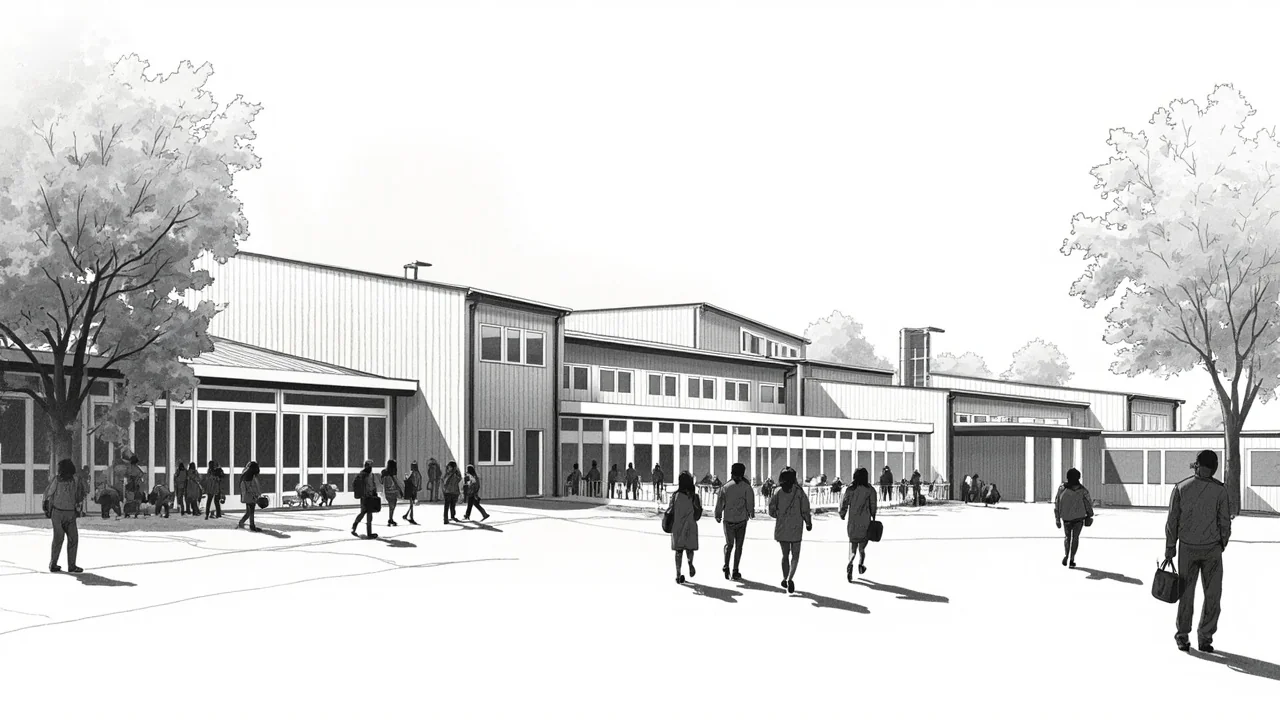
Finland's education system is adding a new pathway for international students with the launch of a state-funded English-language high school program in the city of Jyväskylä. The national Ministry of Education and Culture has granted the Gradia educational consortium a permit to start the program at Jyväskylä Lyseo High School in August 2026. The program is specifically designed for students whose language skills are not sufficient for mainstream Finnish or Swedish-language upper secondary education.
Gradia-lukioiden rehtori and performance area director Samuli Laitinen describes the program as practically identical to a Finnish-language high school curriculum, but with all instruction and daily practices conducted entirely in English. The decision followed a clear need identified through collaboration with key local stakeholders.
A Response to Local Demand
"All the key stakeholder groups saw that Jyväskylä needs an English-language high school to complement the international study path," Laitinen said, referencing the collaborative mapping exercise conducted with the City of Jyväskylä, local universities, and area businesses. He stated that this unified local support strongly underpinned their decision to apply for the operating permit. The program is not an International Baccalaureate track but rather a Finnish national curriculum delivered in English, leading to the same matriculation examination.
This model provides an alternative for students who are integrating into Finland but for whom intensive Finnish or Swedish study would be a significant barrier to accessing high-quality secondary education. It offers a stable, state-funded educational structure for teens in international families, children of returning expatriates, or new residents still acquiring local language skills.
Filling a Gap in Educational Options
Currently, students without strong Finnish or Swedish skills in the region have limited public options. They might seek expensive private international schools, attempt to enter the demanding IB program if their academic record is exceptionally strong, or face the daunting challenge of entering a Finnish-language school with limited support. This new program aims to fill that gap within the public education framework, ensuring accessibility.
For a city like Jyväskylä, which hosts a major university and aims to attract international talent and businesses, the lack of such a program was seen as a hurdle. The ability for international employees to secure a predictable, high-standard education for their teenage children is a key factor in relocation decisions. The program's establishment is a direct infrastructural investment in the city's international competitiveness.
Distinguishing from Existing IB Programs
It is crucial to distinguish this new English-language track from existing International Baccalaureate programs offered in some Finnish schools. The IB is a separate, globally recognized diploma with its own curriculum and assessment. The Gradia program will follow the Finnish national core curriculum for upper secondary schools, as mandated by the Finnish National Agency for Education. Students will study the same subjects and eventually sit for the Finnish national matriculation examination, just like their peers in Finnish-language schools.
The difference is solely the language of instruction. This makes the qualification fully equivalent to any other Finnish high school diploma for the purposes of university applications within Finland. For universities, it simplifies the admissions process as they are evaluating familiar credentials. The program’s graduates will be fully eligible to apply to Finnish higher education institutions.
Broader Trends in Finnish Education
This development in Jyväskylä reflects a broader, albeit cautious, trend in Finnish education to accommodate a growing multilingual population. While the primacy of Finnish and Swedish education is firmly maintained, there is recognition of the need for transitional or alternative paths for integrating young people. Similar English-language high school programs exist in a handful of other larger Finnish cities, including Helsinki.
The establishment of the program requires careful planning over the next two years. Gradia and Jyväskylä Lyseo will need to recruit qualified teachers who are not only subject experts but also proficient in delivering the Finnish curriculum in English. They must also prepare teaching materials and establish student recruitment criteria. The permit from the ministry ensures the program meets national standards for quality and content.