
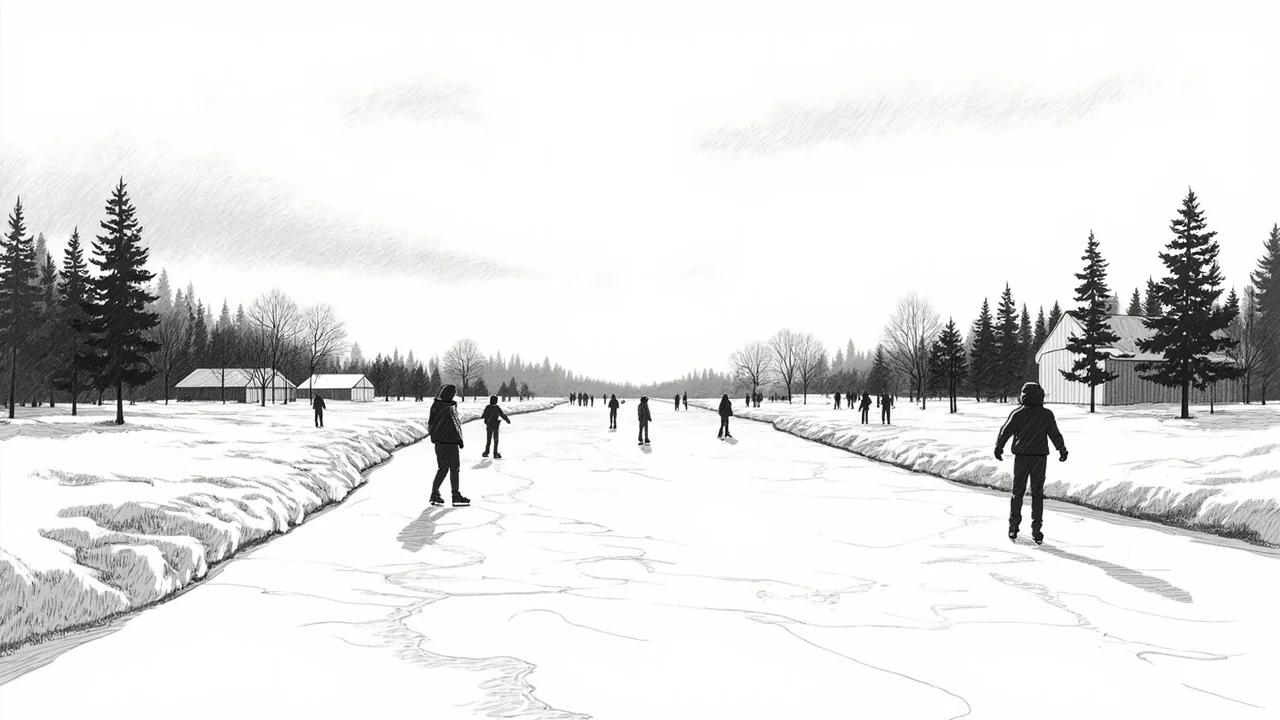
Finland's annual winter infrastructure mobilization has begun, with ice-clearing work commencing today on the popular recreational skating track on Lake Jyväsjärvi in the city of Jyväskylä. Contractor Jukka Häkkinen from Country Häkinen started the mechanized clearing work this Friday, with the goal of opening the track for public use by Saturday, January 17th, if work proceeds according to plan. This localized project represents a microcosm of the nationwide effort to maintain public winter amenities, a task that balances municipal budgets, climate considerations, and the ingrained Finnish cultural expectation of accessible outdoor activity during the coldest months. The timely opening of such tracks is closely watched by citizens and local governments alike, serving as a barometer for seasonal normalcy and community well-being.
Municipal Winter Maintenance in Focus
The work on Lake Jyväsjärvi is not an isolated event but part of a structured municipal responsibility. Cities across Finland allocate specific portions of their public works budgets for the creation and maintenance of winter sports infrastructure, including illuminated skiing trails, ice skating tracks, and hockey rinks. The decision on when to begin ice preparation involves constant monitoring of temperature data by local officials. A sustained period of temperatures below -5 to -10 degrees Celsius is typically required to produce ice thick enough to safely support clearing equipment and, subsequently, public use. The contractor, Jukka Häkkinen, represents the small-to-medium-sized enterprises commonly hired by municipalities for these seasonal specialized tasks, highlighting the public-private partnership model prevalent in Finnish local service provision.
The Cultural and Social Significance of Icerinks
Beyond the practicalities of ice thickness and plowing schedules, the opening of a retkiluistelurata (recreational skating track) holds deeper significance. For many Finns, access to free, maintained outdoor ice is considered a fundamental part of the winter season, contributing to public health and social cohesion. These tracks are often used by families, school groups, and individuals of all ages for exercise and leisure. The activity is deeply embedded in the national identity, promoting physical resilience and a connection to nature amidst the dark winter. The anticipation for the Lake Jyväsjärvi track's opening, therefore, carries an emotional weight that transcends simple recreation, it is about the continuation of a cherished seasonal rhythm and the communal enjoyment of the Finnish landscape in its frozen state.
Economic and Logistical Considerations
From a policy perspective, projects like the Jyväskylä ice track involve careful logistical and economic planning. Municipalities must balance the public demand for these facilities with their operational costs, which include equipment fuel, contractor fees, and potential liability insurance. The timing of the opening is critical, starting too early risks safety on thin ice, while starting too late draws public dissatisfaction. Furthermore, the increasingly unpredictable winter weather patterns associated with climate change present a growing challenge. Warmer autumns and winters can delay ice formation, compress the usable season, and increase the cost-per-day of operation, forcing city planners to re-evaluate long-term investments in winter infrastructure. This makes the successful and timely opening of tracks like the one on Jyväsjärvi an important indicator of a "standard" winter from an administrative viewpoint.
Expert Perspective on Public Space Management
While specific comments from Jyväskylä city officials were not in the source material, the practice can be contextualized by broader expertise in Finnish public administration. Specialists in municipal management often note that the provision of winter amenities is a non-negotiable service in most Finnish communities, akin to street lighting or snow plowing. The benefits are framed in terms of preventive healthcare—encouraging active lifestyles to reduce public health costs—and social welfare, providing safe, free activities for all income levels. The decision-making process typically involves the city's sports and recreation department, which assesses weather data and consults with technical contractors before giving the green light for work to begin. This model ensures accountability and prioritizes safety while striving to meet public expectations.