
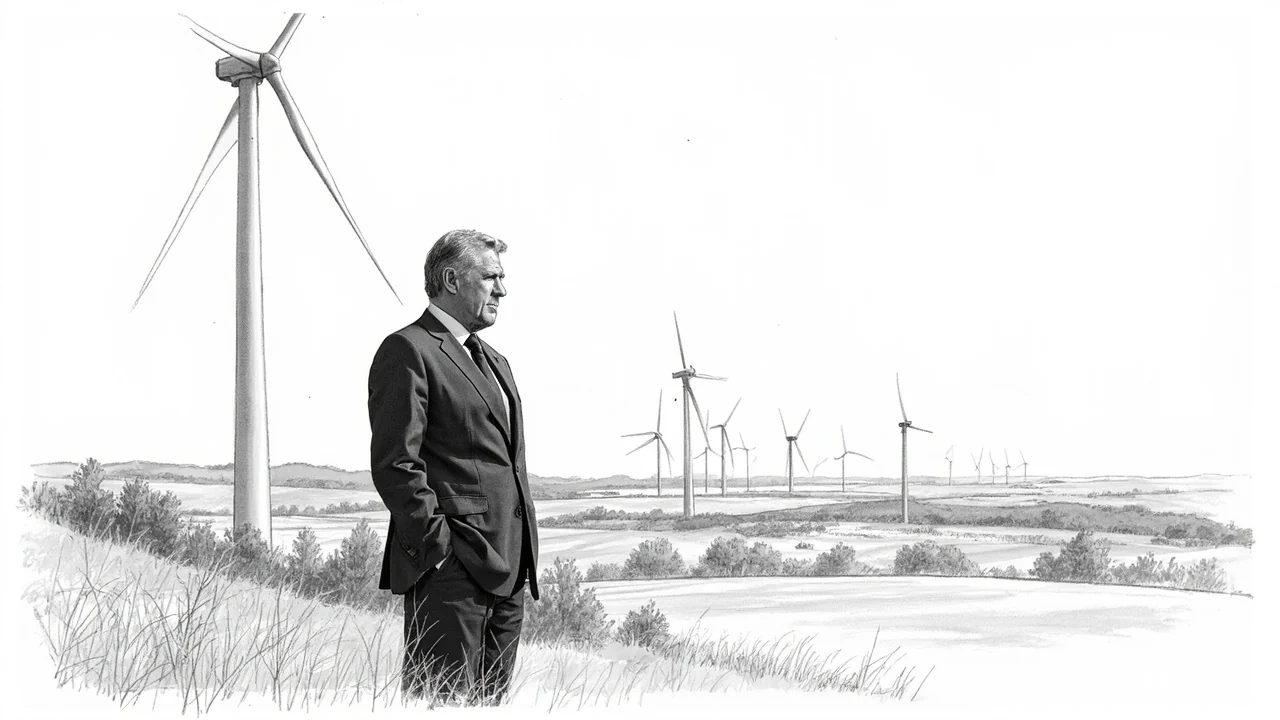
Finland municipal power dynamics face a direct test in Pieksämäki, where the mayor has deployed a rarely-used executive override to challenge a committee’s rejection of a major wind energy project. City manager Emilia Savolainen has announced her intent to use her ‘otto-oikeus’ or ‘right of requisition’ to bring the Lamustenmäki wind farm proposal back to the city board, overturning the technical committee’s negative decision last week. This move directly pits municipal executive authority against committee-level planning approval, creating a procedural clash that could set a precedent for similar clean energy projects stalled in local Finnish politics. The dispute centers on an ‘osayleiskaava’ or detailed local master plan required to advance the wind park, highlighting the intricate regulatory hurdles for renewable infrastructure.
The Clash Over Lamustenmäki
Last week, Pieksämäki’s technical committee voted to reject the detailed plan proposal for the Lamustenmäki wind farm. Such committees, comprised of elected council members and experts, typically hold significant sway in local zoning and planning matters. Their decisions are based on technical reviews, environmental impact assessments, and often, local public opinion. The committee’s rejection signaled a major roadblock for the project's developers. Mayor Emilia Savolainen’s subsequent announcement to invoke her otto-oikeus suspends the committee's decision and forces the city board, a higher executive body, to make a final ruling. The power is derived from the Finnish Local Government Act, designed to resolve deadlocks but used sparingly to avoid undermining committee work and political consensus.
The Legal Lever of Executive Power
The otto-oikeus is a specific legal instrument available to a city manager or mayor in Finnish municipal governance. It is not a veto but a procedural tool to requisition a matter from a subordinate board or committee for decision by a superior body, typically the city board or council. Its use indicates a significant disagreement on an issue deemed important enough to require higher-level political arbitration. For Mayor Savolainen to employ it, she must believe the technical committee’s decision contradicts the broader interests of the municipality or fails to align with strategic goals, such as regional energy plans or economic development agreements. The move immediately transfers the political responsibility for the wind farm decision to the city board, whose members face a direct vote with heightened public and media scrutiny.
National Energy Goals Meet Local Resistance
This conflict in Southern Savonia reflects a recurring tension across Finland between national renewable energy targets and local planning autonomy. The Finnish government and the EU have ambitious goals for wind power expansion, but final siting decisions rest with individual municipalities. Projects often face opposition over landscape impacts, property values, and noise concerns. The Pieksämäki case is a procedural escalation of this common struggle, moving it from a technical debate into a high-stakes political arena. The city board’s forthcoming decision will be scrutinized by other municipalities with pending wind farm applications, as it may demonstrate a pathway for executives to push through contested projects deemed regionally or nationally significant.
Historical Context and Political Risk
Examining the history of otto-oikeus use reveals its rarity and political sensitivity. Frequent use can erode trust between a mayor and the council's various committees, poisoning collaborative governance. For Mayor Savolainen, a former technical committee chair herself, the decision to override her former peers carries personal and professional risk. It signals a conviction that the committee’s assessment was flawed or that the project's benefits—such as tax revenue, land lease payments to landowners, and progress toward carbon neutrality—outweigh local objections. The debate in the city board will now encompass not just the wind farm's merits but also the fundamental question of which level of local government should have the final say on transformative land-use projects.
What Happens Next in Pieksämäki
The immediate next step is the formal handling of the Lamustenmäki detailed plan by the Pieksämäki city board. The board will review all existing documentation, likely hear additional reports, and ultimately vote to either uphold the technical committee's rejection or approve the plan, effectively green-lighting the project. Their decision can still be appealed by opponents to regional administrative courts, a process that can add years of delay. However, the mayor's intervention has reset the political process at the municipal level. The outcome will send a clear signal about the balance of power in Finnish municipal planning and the viability of using executive tools to accelerate the energy transition, setting a precedent that will be studied in town halls across the country.
The Broader Implications for Finnish Governance
This case in Pieksämäki transcends a single wind farm. It tests the resilience and flexibility of Finland’s highly decentralized model of governance. The otto-oikeus is a safety valve in the system, but pulling it recalibrates relationships between elected officials and the professional committees that serve beneath them. A city board approval could embolden other mayors facing similar deadlocks with strategically important projects, from mining to transport infrastructure. A rejection would affirm the power of specialized committees and likely slow the pace of similar renewable energy deployments. As Finland strives to meet its binding EU climate targets, the efficiency of its local planning bureaucracy becomes a critical factor, making Pieksämäki's upcoming city board meeting a landmark moment for both energy policy and the future of municipal authority.