
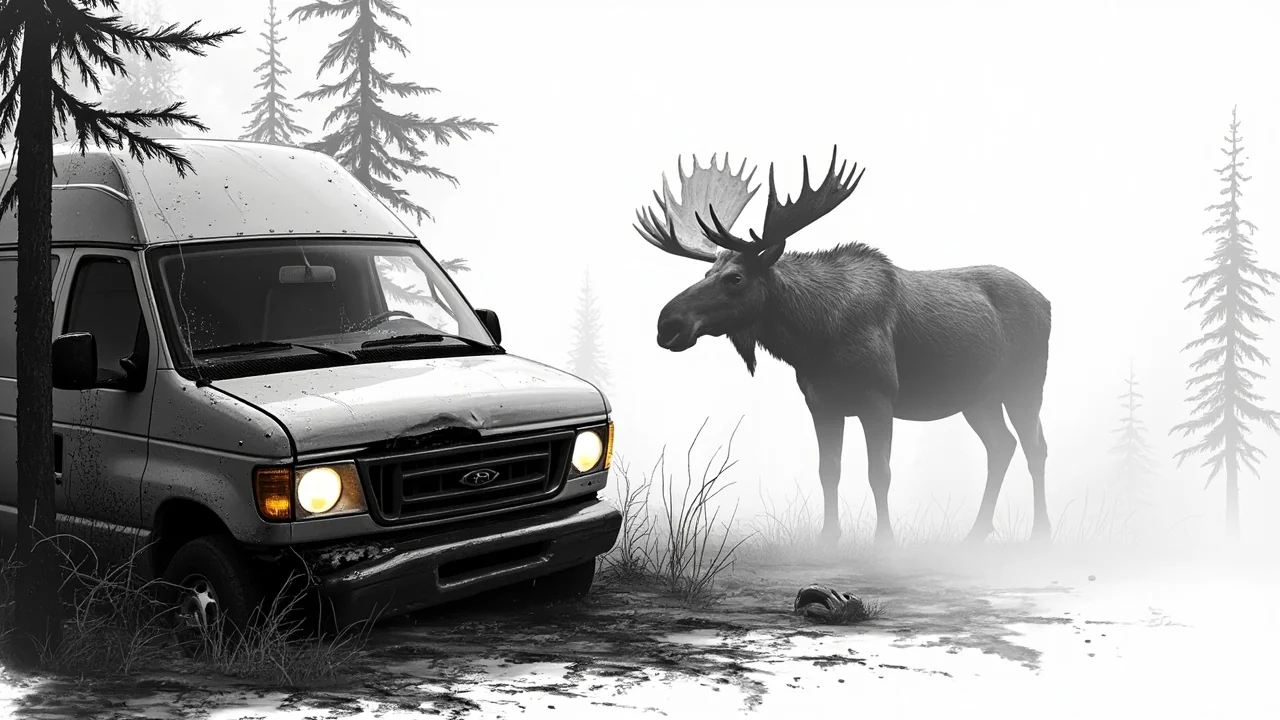
Finland’s roads saw another serious collision between a vehicle and wildlife when a van hit a moose on Mikkelintie in Kangasniemi on Monday evening. The impact occurred at the Vihaventie intersection around 6:22 PM, with the van traveling at an estimated speed of 60 kilometers per hour. The driver, who was alone in the vehicle, escaped without physical injury. The van, however, sustained damage that rendered it undriveable. The moose fled into the surrounding forest, leaving clear blood traces at the scene, indicating it was wounded. Police and the large game emergency assistance service, known as SRVA, were tasked with locating the injured animal.
Immediate Response and Search
Janne Vehviläinen, the on-duty fire chief from the South Savo Rescue Department, confirmed the details of the crash. The emergency response was initiated immediately following the alert. The primary concern shifted from human rescue to animal welfare and public safety, given the injured moose’s escape. An injured moose can be disoriented and potentially dangerous, posing a risk to people in the area and creating a hazard for other drivers on nearby roads. The SRVA team, a specialized volunteer network activated by police for situations involving injured large game, began their search operation in the forested terrain around Kangasniemi.
A Recurring National Hazard
This incident is not an isolated event but part of a persistent pattern across Finland, especially during autumn and spring. Moose collisions are a significant traffic safety issue, with thousands occurring annually. These accidents often result in severe vehicle damage, considerable financial costs, and, tragically, human injuries and fatalities. The animals, due to their large size and dark coat, are particularly difficult to see at dusk or dawn, which aligns with the timing of this Kangasniemi crash. The force of a collision with an adult moose, which can weigh over 500 kilograms, is tremendous, often causing the animal to crash through the windshield.
The Role of SRVA Networks
Finding the wounded moose is a critical step following such collisions, a duty that falls to the SRVA. This system relies on trained volunteers with tracking dogs and expertise in wildlife behavior. Their goal is to locate the animal quickly to end its suffering and to remove a potential danger from the vicinity. The process underscores a Finnish approach to wildlife management that balances hunting traditions with ethical responsibility toward animals. The success of the search depends on factors like the severity of the injury, weather conditions, and the terrain, making every case uniquely challenging for the response teams.
Safety Advice for Drivers
Authorities consistently advise motorists on how to reduce the risk of collisions with moose and other wildlife. Key recommendations include reducing speed in areas marked with wildlife warning signs, which are placed in known crossing zones. Drivers are urged to use high-beam headlights when possible and safe to do so, to increase visibility of animals’ reflective eyes at the roadside. Perhaps the most critical advice is to never swerve violently to avoid a collision with a large animal, as this can lead to a more serious crash with oncoming traffic or a tree. The recommended action is to brake firmly and steer straight.
Aftermath and Ongoing Concerns
The Kangasniemi case highlights the immediate and lingering consequences of such accidents. For the driver, the event is a traumatic shock, followed by the logistical and insurance-related challenges of dealing with a totaled vehicle. For the community, it is a reminder of the ever-present interaction between human infrastructure and natural habitats. The fate of the moose remained the unresolved question as the search continued. Every incident like this also feeds into broader discussions about road safety planning, potential mitigation measures like improved fencing or wildlife corridors, and population management of large game species.
A Persistent Challenge for Rural Regions
Areas like South Savo, with extensive forests and lower traffic density, are typical locations for these dangerous encounters. While major highways may have more frequent traffic, the visibility and speed on rural roads like Mikkelintie can create perfect conditions for sudden, unavoidable collisions. This geographical reality means residents in these regions live with a heightened awareness of the risk, especially during high-activity seasons for moose. The economic cost of these accidents, borne by individuals and insurance companies, adds up to millions of euros nationwide each year.
Looking Beyond the Single Event
While the focus in Kangasniemi was on the specific search operation, the incident is a data point in a much larger national statistic. It reinforces the need for continued public education and adherence to driving advice in risk areas. It also shows the importance of maintaining and supporting volunteer systems like the SRVA, which provide an essential service in the aftermath of these distressing events. The collision underscores a fundamental tension in a forested nation: sharing the landscape with majestic but massive wildlife always carries an element of risk, a reality faced by Finnish drivers every day.